Browsing Category

Science

Leonard Nimoy Welcomes Space Shuttle Enterprise to New York

Leonard Nimoy Welcomes Space Shuttle Enterprise to New York

On Friday, the Shuttle Enterprise landed in New York City mounted atop a Boeing 747 jumbo jet at 11:22 AM (EDT), after taking off from Washington D.C. earlier that morning. It was a historic day for science and space exploration: a day that marked the end, in spirit, of the STS (Space Transportation System) program and the beginning of a new type of space exploration vehicle that may one day take us back to the moon and beyond. In attendance for this momentous occasion was none other than Star Trek‘s original Spock, Leonard Nimoy.

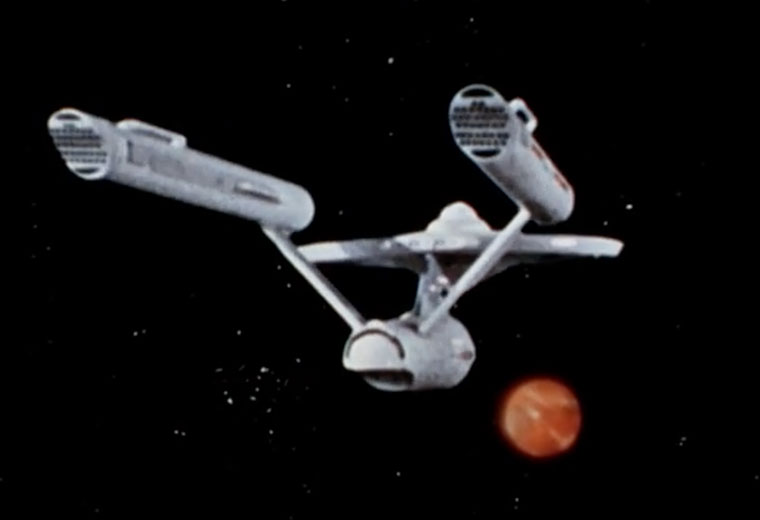
Star Trek and the space program have had a long and storied history. Beginning in the mid-1970s, a write-in campaign by Star Trek fans to petitioned President Gerald Ford to rename the prototype space shuttle from Constitution to Enterprise.

When this ship was first built, it was named Constitution. Star Trek fans can be very persuasive. They sent a lot of letters to president Gerald Ford and the president logically decided that the ship should be named after our spaceship Enterprise.

Leonard Nimoy and Senator Charles Schumer at the arrival of Shuttle Enterprise in New York City

Leonard Nimoy and Senator Charles Schumer at the arrival of Shuttle Enterprise in New York City

Shuttle Enterprise flys above New York City aboard a Boeing 747

Shuttle Enterprise flys over New York City aboard a Boeing 747

What is so remarkable about the Enterprise is that it was the first space shuttle built by NASA that would determine the fate of all future space flights using the STS design. To our greater relief, astonishment, and most certainly pride, the Enterprise, named after Star Trek’s famed space exploration cruiser both literally and spiritually, did indeed surpass our expectations. With some design improvements and slight modifications, NASA continued to use the STS space shuttles for nearly four decades in scientific discovery and space exploration.

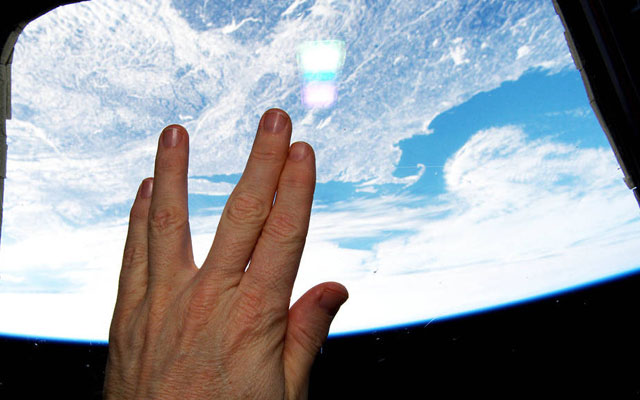
Even more telling of Star Trek’s intimate connection to NASA’s ongoing mission was the fact that Leonard Nimoy, Spock himself, was present at Enterprise’s beginning and end. “This is a reunion for me,” Nimoy said in a speech on Friday discussing the Enterprise’s final landing. “Thirty-five years ago, I met the Enterprise for the first time.” He recalled that his memory of the Enterprise’s departure from the ground on February 15th 1977 was still vivid today as it was when it first took off. Leonard Nimoy bid his final farewell to the legendary craft by offering his famous catchphrase: “Live long and prosper.”

Even Gene Roddenberry himself was present at the Enterprise’s dedication ceremony in 1976. Though he sadly passed away before he could ever see the Enterprise in its final flight to mark the end of the now historic STS program, the famed space shuttle will always stand in memoriam to Rodenberry’s vision of the future and for all of Star Trek.

This is a reunion for me,” Nimoy said during a ceremony on Friday after Enterprise touched down. “Thirty-five years ago, I met the Enterprise for the first time.”

NASA's orbiter Enterprise is greeted by members of the original Star Trek cast in 1976 at the Palmdale manufacturing facilties.

NASA's orbiter Enterprise is greeted by cast members from the Star Trek television series in 1976 at the Palmdale manufacturing facilties.

Leonard Nimoy watches as the Shuttle Enterprise taxis

Leonard Nimoy watches as the Shuttle Enterprise taxis

Now, we look to the future, the undiscovered country: a place of unimaginable wonder, beauty, and mystery. To boldy go where no man has gone before. That has always been our motto, and we shall continue to live up to it as we head into space with the new crew exploration vehicle (CEV) design to send humans back into space, back to the moon and hopefully far beyond to finally reach the cold, inhospitable surface of Mars.

Photos and video courtesy of Mashable.

How Google Goggles & Project Glass Makes Star Trek Technology a Reality

levar-burton-tng

Surely, fans of Star Trek: The Next Generation will remember LeVar Burton’s character, Geordi La Forge, one of the show’s most influential and inspiring characters. A person born with blindness, by today’s standards, would’ve been excluded from so many opportunities due to this crippling disability. In accordance with the humanist themes of Star Trek, it’s more than fitting to imagine an example of a disability today on Earth being surpassed in the future. In fact, it really does stand as a testament of human courage and ingenuity to see someone as brave and capable as Geordi rise to the occasion and overcome adversity, and due in no small part to his VISOR (Visual Instrument and Sensory Organ Replacement).

The VISOR not only allows Geordi to see things when his eyes are unable to, but they can even allow him to analyze his surroundings in wavelengths that are imperceptible to the human eye.

In the season one episode of TNG, “Heart of Glory,” Geordi uplinked his VISOR to a transmitter to allow the bridge crew to see what Geordi saw on an away mission. The images were a spectacular show of bright colors and vibrant hues representative of infrared and ultraviolet sources, such that Captain Picard regarded the display with a single word: “Extraordinary!” It was a scene that roused more envy, awe, and appreciation rather than pity among Geordi’s friends as they saw his blindness as more of a gift than an actual disability, as evident in Picard’s reflection: “Now I’m beginning to understand him [Geordi].” It was a demonstration in Star Trek that proves the best way to learn from others is by putting oneself in another’s shoes to see what he or she sees.

How is Geordi’s VISOR related to Google Goggles and Project Glass and how is it so remarkable? Imagine more than 20 years ago, you saw that episode when it first aired and someone next to you said: “I bet Google is going to come out with a device or an app that allows computers to compile and visualize data from their surroundings and interpret reality in the same way our brains make sense of everything around us. Amazing, huh?” Your first reaction might’ve been: “What’s a Google?” All jokes aside, one might have a negative reaction in the 60s if one’s friend said Star Trek communicators will turn out to be cell phones more than thirty years later, and that the technology would become so advanced that everyone would have them. Why should we expect any less when it comes to Google Goggles? Why shouldn’t we expect this new invention to become the prerequisite design for Geordi’s VISOR?

Google's Project Glass

What are Google Goggles? Google Goggles is the next generation of computer technology. Just as Smart Phones and iOS devices were the next generation advances that combined cell phones and computers, Google Goggles are the next phase in computer technology that allows the user to compile information from a single image or collection of words and phrases. The process is technically a lot more complex that I made it sound. So the best way to explain this is with an analogy.

When you look at an object, your brain analyzes and synthesizes an accurate representation of that object in your mind; it is a way of bringing reality completely within the scope and grasp of your mind. You can look at something as seamless and simple as an apple and understand the concepts of color, taste, texture, and other things just from looking at it and experiencing it (i.e. seeing the apple and relating sight with your other senses). Your brain will compile information from that experience, analyze it, integrate its conceptual domains in your consciousness, and react from it; this information is both useful and necessary for your survival as an autonomous, free-willed individual. You may not notice it, but there is a whole complicated, multifaceted process involved in looking at an image and extracting useful data from it, not unlike the way a computer would analyze a data set to return a logical, mathematical conclusion. Just as a calculator uses a simple algorithm to determine that 1 + 1 is equal to 2, your brain uses a highly advanced algorithm to understand and form concepts from reality. While nature has had millions of years of trial and error to evolve a brain as complex as ours from the bottom-up, it is tremendously more difficult for scientists to work top-down to recreate a brain-like computer that can take a picture of an apple and analyze that image into bits of information and form concepts of taste, color, and texture from the experience. It would be like asking your inanimate digital camera trying to grasp the concept of “food” just from the image of an apple. All a camera could do is take a picture, render that image into bits of digital information, and re-render the info into a visual representation of reality; it can’t analyze or synthesize it beyond that. It can’t tell you how an apple is conceptually related to a human being any more than it can visually take a snapshot of a human being eating an apple; the software of a camera is direct and limited while the software of a human brain is so much more complex.

This is why the Google Goggles is so extraordinary! It is a computer feature that will analyze images taken by a camera phone for key words and phrases. We already have Smart Phone technology that can analyze a barcodes, conceptualize the codes on a very minimalistic level (by minimalistic, I mean preprogrammed), and finally return a webpage linked to the image. What is so remarkable about Google Goggles is that it can do more than just analyze a barcode: it can conceptualize words and search for key phrases on the internet to find even more relevant information. When Smart Phones was limited to a preprogramed software to analyze barcodes, Google Goggles is the next step in computer evolution that can analyze whole words and sentences from a picture. It may not grasp the full meaning of a sentence, but it can at least identify the individual words of a sentence. With object identity (such as distinguishing an apple from a human), the app would have some difficulty, but who’s to say that the current program can’t be improved upon to make that an eventuality?

When before taking a picture with a camera phone revealed nothing more than an image, now Google Goggles can allow one to take a picture of an object to recall more detailed information beyond what is revealed in just the image alone. Of course, it isn’t perfect: there are certain things it can’t do and object recognition is nowhere near as sophisticated as word/phrase identification, but the software can still do amazing things.

The video below explains more about Google Goggles.

Watch the video Google released to hype the development of Project Glass below.

Obviously, if we can design a computer program that analyzes its surroundings for conceptual feedback, then imagine the possibilities for artificial intelligence in the future. This is very much a Science Fact, no doubt, but why the reference to Geordi’s VISOR? How are the two related? Well, the VISOR works in very much the same way: the VISOR picks up visual information from the environment in more wavelengths than the human eye can detect and interpret those signals into a digital format that the brain can understand. In a sense, the VISOR is a piece of technology that is able to conceptualize its environment in a form more accessible to the human brain.

The main differences are (1) Google Goggles are more sophisticated in the sense that the program does the “thinking” for you and (2) the VISOR can pick up wavelengths outside of the visual region of the electromagnetic spectrum. I can see huge potential for Google Goggles as a visual aid for the blind sometime in the future. If a neuroscientist can bypass the eyes and apply visual-sensory input directly to the brain’s analytical regions (also known as association areas), then there is no reason not to expect microcomputers in the future that could potentially alleviate blindness in those that cannot see as well as offer Smart Phone/iPhone users a very interesting and useful app.

Strangers of the Cosmos: Bolians

star-trek-bolians

Bolians were primarily featured as minor characters in Deep Space Nine, The Next Generation, and Voyager. Their personae often ranged from cowardly to greedy, and their presence on the show seemed to serve the purpose of offsetting particular tones and moods. Well, the writers may not have done them much justice in the past, but in this installment of Strangers of the Cosmos, I plan to do just that: Give them the respect they deserve—or rather examine their biology a little further, which is more attention than they have gotten before.

Blue Blood and Blue Skin

Let’s start with the obvious details. One doesn’t need to be a biologist to figure out that they have blue skin. Like Andorians, Bolian blood is also blue. Assuming Bolians metabolize and transport oxygen the same way humans do (how else could they breathe in the same atmosphere as us), their oxygen-carrying proteins would utilize metal ions with an affinity to bind oxygen. In humans, hemoglobin uses iron(II) to bind oxygen; in fact, the red color in our blood comes from iron in its +2 oxidation state. In Bolians, the metal that binds oxygen is most likely copper(II) (again, in its +2 oxidation state). Copper(II) appears blue in solution, unlike most other transition metals with varying colors. Of course, skin color is independent of blood; the bluish tint in their skin is primarily due to pigments, the origins of which may be the result of natural selection for some unknown survival benefit. So remember: The color of blood-borne ions does not correlate with skin color; if it did, Vulcans would be green.

The Bolian “Flight or Flight” Mechanism

Don’t be confused by the subject title. I really meant “Flight or Flight” because Bolians seem to do a lot more running away than actual fighting on the show. In fact, Bolians were often presented as being overly cautious and paranoid on Star Trek. In the Deep Space Nine episode “The Adversary” (the season 3 finale) the Bolian security officer was always more jittery and paranoid about the Changeling imposter on the Defiant than everybody else. Though any person would be understandably paranoid if a potentially hostile Changeling was aboard a small ship, the Bolian remained more fearful and irrational than any other member on the Defiant.

Bolian Security Officer

In one scene, he almost shot Captain Sisko and Major Kira out of a sense of self-preservation and fear, as though his discipline as a Starfleet officer were somehow neglected. Another instance was on Empok Nor, where Nog, Miles O’Brien, Garak, and a team of ensigns visit DS9’s sister station to salvage technical parts and components.

When a group of drugged, psychotic Cardassians were let loose in the station to hunt down the intruders, it is the Bolian, among all the others, who prefers to hide rather than go after the assassins. In fact, the Bolian says he would feel a lot safer with Garak on the hunt for the two Cardassians, implying that he would rather have someone else do the fighting for him (and of course Garak was also a highly trained spy and assassin in the Obsidian Order, so that fact more than influenced the Bolian’s decision). Even when other Starfleet officers were willing and able to defend themselves, the Bolian insisted on hiding.

Bolian security officer aboard the USS Defiant; he nearly shoots Captain Sisko and refused to lower his weapon when ordered to do so by two superior officers.

It doesn’t mean Bolians would always run from a fight (they wouldn’t volunteer in Starfleet otherwise), but they seem to be more prone to fear than any other race on Star Trek. This “flight” instinct may have been a crucial part of their evolution. If they evolved on a planet where their species were constantly preyed upon and where a direct confrontation with predators would almost always lead to defeat (as implied on the Deep Space Nine episode “The Magnificent Ferengi” in which it is said that Bolians have always been physically weak), then natural selection would favor the fitness of individuals with a tendency to run and hide for self-preservation.

The fearful, cautious, even paranoid Bolians would naturally avoid danger and survive long enough to have a greater chance to pass on their traits to offspring, while brave Bolians who probably didn’t have the strength to overcome threats to individual survival would likely die out quickly. The early Bolians with the ability to hide better would persist, survive, and reproduce faster than those who chose to fight in unwinnable battles.

A race of cautious, paranoid individuals is the logical outcome of a form of natural selection that favors fear as a means of survival. As such, their natural instinct to hide or run from danger may have influenced their social behaviors, which would explain why they appear to be scared on the shows. Of course it’s difficult to prove that their concept of fear comes from this “flight” mechanism from the standpoint of only a few examples (and in science, it takes A LOT MORE than just two data points to confirm a hypothesis), but this is, after all, only harmless speculation.

The Hairless Phenotype and Reproduction

Members of the Bolian race tend to be completely bald, with the exception for the few females who had hair on The Next Generation. Assuming Bolian genetics is anything like human genetics and that they have gene-carrying chromosomes the same way we do, it can be inferred that the hair/bald phenotype is a sex-linked trait, meaning essentially that the expression of a given trait correlates with gender.

This is not to say, however, that the baldness trait in Bolians is anything like the baldness trait in humans (which is also a sex-linked trait), but rather that the expression of the hair trait may be activated by genes on one (or several) sex chromosome(s). It may be that the expression of the hair trait is activated by a combination of functional genes. If this were the case, then the actual gene that directly produces hair isn’t necessarily in females only; it could also be in men.

One of the abducting aliens on the TNG episode “Allegiance” who took on the appearance and role of a female Bolian with hair; though not actually a Bolian, it can be assumed that females with hair are not uncommon among Bolians as neither Picard nor anyone else found her appearance to be suspicious.

It is really impossible to determine whether the hair phenotype is located on the sex chromosome(s) in Bolians, but certainly the genes that activate hair production is likely located on the sex-chromosome. If anything can be inferred from Star Trek, it’s that Bolian hair could be an ethnic and/or “sexy” trait used as a means to attract the opposite gender, hence the reason why some Bolian females have beautiful, voluptuous hair. For the same reason that large breasts and hourglass hips in human women attract males to potential mothers (large breasts for maximum milk production and a wide pelvic bone to support fetal development), hair may be a sexual indicator of potential mothers in Bolian females. Therefore, the gene that produces hair may be present in all Bolian females but is only activated when a combination of factors are present, such as those that enhance fertility in women.

Mitena Haro

If this were the case, wouldn’t more females have hair because women with hair would probably reproduce and nurture their offspring better than bald women (and that males would prefer to mate with females with hair as opposed to unattractive, bald Bolians)? Instead, we’ve only seen one or two Bolian females on The Next Generation; all the rest were bald. It certainly may be the case that hair is not only a sexual indicator, but perhaps an ethnic trait as well. It’s possible that the Bolian species consists of many different ethnic groups from different regions on their home planet just like humans do. So hair may be apparent in certain ethnic groups where the association between hair and reproductivity was maintained by natural/sexual selection. If early Bolians migrated and diverged from this prime ethnic group and somehow lost that association (i.e. a new location means different selective pressures), then perhaps they also lost the “hair” gene. This would explain why so many Bolians, both male and female, are bald while only a few apparently still have hair.

Tom Caldwell holds a Bachelor’s of Science in biochemistry from UCLA. He is currently working towards a Ph.D. in molecular biology.

Science Fiction or Science Fact: NASA Developing Tractor Beams

NASA Tractor Beams

Back in August, I wrote a detailed scientific critique of one of Star Trek’s more elusive technological concepts: the tractor beam; the ability to tug objects using an electromagnetic field. Though I deemed the piece of technology as Science Fiction, a team of physicists and engineers at NASA’s Goddard Space Flight Center are planning and developing a laser that would act as a “tractor beam.” Not actually a tractor beam, this device uses electromagnetic wave fronts and directed photons to guide and pull tiny particles from a distance.

The mechanics behind the tractor beam are essentially the same as what was previously demonstrated with lasers. Scientists at the Australian National University were able to use a directed laser beam to carry microscopic glass particles midair across a distance of 5 feet. It works by shining a “hollow laser” at a target (i.e. tiny glass particles) such that the laser heats up a narrow band of air molecules surrounding the target but the interior of the laser (in direct path of the target) remains cooler. The particles would remain in the interior of the laser because the heated molecules surrounding it would exert a pressure against the target, so the particles could float effortlessly to or from the laser source.

Tractor Beam Optical Trapping

The only drawback with this technology is that it requires a gaseous medium (i.e. atmosphere); this means that it wouldn’t work in the vacuum of space. However, NASA scientists, Barry Coyle, Paul Stysley, and Demetrios Poulios may prove that a working tractor beam in space is not only possible, but may be more practical than conventional sample collection.

NASA Scientists
Goddard laser experts (from left to right) Barry Coyle, Paul Stysley, and Demetrios Poulios
Photo Credit: NASA’s Goddard Space Flight Center, Debora McCallum

The technique uses optical solenoid beams. When the laser is directed against tiny particles (i.e. dust), it propagates a force on the particles against the direction of the laser beam. It is not actually a tractor beam as one may see on Star Trek; it is more akin to pushing a floating ball in pool water: it generates enough momentum to move on its own. Like the floating ball analogy, this laser beam simply exerts a force on something to allow it to move on its own; it doesn’t pull or tug anything.

The good news is that the force exerted by this laser is independent of atmosphere, meaning that it can work in space. This holds great potential for space exploration! The best application for such a device would be to capture dust samples from a passing comet. Normally, we would fly a probe into a comet’s “tail” to pick up debris, but this is a very risky (and expensive) maneuver, especially since we have to do it “blindfolded.” But in the near future, we may use a laser beam to trap comet samples from a safe distance, and it would be of great benefit to science because analyzing its chemical composition alone would provide us with invaluable information regarding the formation of our solar system.

Unfortunately, this “tractor beam” can only be used for small-scale purposes, which limits the scope with which it can capture objects. The electromagnetic beam couldn’t possibly generate enough momentum to move particles larger than bits of rock, and even that would be hard enough. Well, guess that means we won’t be towing our shipment of grain to Sherman’s planet after all.

NASA has already demonstrated the potential of such laser beams in a laboratory setting, but they don’t plan on stopping there. They are currently working on new revolutionary techniques to optimize the tractor beam and make it more efficient, cost-effective, and practical to use.

For more information, visit NASA.

Science Fiction or Science Fact: Regenerative Medicine

bones-mccoy

Recently, we reported on the Roddenberry Foundation’s 5-million-dollar gift to the Gladstone Institute at the University of California, San Francisco to build a new stem cell research center in the name of Gene Roddenberry. It will help pave the way for the development of regenerative medicines that may one day cure chronic illnesses, from Amyotrophic Lateral Sclerosis to Diabetes.

Of course, on Star Trek, there is little mention of the common diseases with which we are so familiar today. It is implied that Mankind would one day cure and eradicate such diseases, no matter how debilitating. On several occasions, a Starfleet doctor would administer some magical serum that not only cures a harmful disease but actually strengthens the patient’s organ systems. But if there is anything consistent on Star Trek, it’s that nothing on the show is meant to be explained in terms of mysticism: that “miracle drug” McCoy, Crusher, Phlox, the Doc, and even Bashir give their patients is in fact a powerful example of regenerative medicine. Nothing fancy here, just real science at work.

In this installment of Science Fiction or Science Fact, we will discuss the science behind stem cells’ elaborate properties and why it is so important to start work on them today to make those wonder cures of Star Trek a reality tomorrow.

The Breakdown

In developmental biology, scientists study cellular phenomena of complex organisms in order to understand and rationalize the apparent body plans in different species. One of the foremost facets of developmental biology is embryogenesis: the way in which a single zygotic cell with a particular function could differentiate and “stem out” (if you will) into a diverse array of cells with different functions, shapes, sizes, genetic markers, and location in a fully matured organism.

Neuron vs. WAT

Believe it or not, these very distinct, unrelated cells have different functions, shapes, and sizes, but they came from the exact same source: pluripotent stem cells!

Stem cells are the reason for this phenomenon of differentiation. The first demonstration of the ability of hematopoietic stem cells to differentiate was reported in the February 2nd 1963 issue of Nature (vol. 197, page 452). It wasn’t until 35 years later that the Thomson group from the University of Wisconsin would derive human embryonic stem cells (hESC) from the inner cell mass of in vitro fertilized (IVF) blastocysts (reported in the November 6th 1998 issue of Science, vol. 282). Their analyses identified several genes (i.e. Oct4, Sox2, ALKP) that permit the self-renewal trait in embryonic stem cells.

Deriving stem cells is no easy task. It takes months of work: culturing blastocysts on a bed of fibroblasts, finding just the right conditions to support pluripotent stem cells, and then finally proving that they are, in fact, stem cells. Once you finally establish a line of embryonic stem cells, it will continue to grow, maintain its own passages, self-renew, and differentiate given a particular set of conditions. To make this concept a little easier to understand, consider the analogy of starting a bonfire using only two rocks, a collection of wooden logs, and lighter fluid: it is particularly tedious to start a bonfire without a match or lighter, but once the spark hits the wood, the fire will spontaneously grow and flourish. Just like embryonic stem cells, deriving and differentiating them are difficult, but when they finally do emerge, they practically maintain themselves! Today, we have 136 embryonic stem cell lines available for therapeutic and research purposes (see http://grants.nih.gov/stem_cells/registry/current.htm)

Well, that’s great! We can create immortal cell lines from destroyed embryos that can differentiate into any cell type. So what? Thomson’s discovery in 1998 sparked a paradigm shift in developmental biology. Embryogenesis was an unknown to scientists at the time: the physiological characteristics of the fetus were mystical to us, and the biochemistry that guides gene regulation was illusive, even contradictory. The discovery and derivation of stem cell lines not only provided us with invaluable insight into mechanisms that govern embryonic development but also inspired a completely new and revolutionary style of medicine: regenerative therapy, the theory and practice that could potentially treat, possibly cure, genetic and chronic illnesses. A stem cell line could be differentiated into insulin-producing beta cells to replace the dead ones in Type-1 (juvenile) diabetics. A stem cell line could even reprogram neurons to produce a vital neurotransmitter absent in patients with Parkinson’s Disease. Regenerative medicine really is the next great step in countermanding disease.

Stem Cell Differentiation Scheme

A General Scheme of Stem Cell Differentiation and Reprogramming

(A) Cloning (reproductive or therapeutic)
(B) Reprogramming adult cells into pluripotent stem cells
(C) Reprogramming adult cells into multipotent stem cells, then into a different adult cell in the same germ layer
(D) Reprogramming an adult cell directly into a new kind of adult cell

The Final Verdict

It should be obvious by now — it is a SCIENCE FACT! We’ve already shown that stem cells can be derived in the lab. The clinical applications of pluripotent stem cells are remarkably infinite! Even more astounding (and I certainly hope this circumvents all the ethical issues people have with stem cells today), Shinya Yamanaka reported that terminally differentiated (somatic) cells can be converted into pluripotent stem cells via reverse-differentiation (Cell, vol. 131, page 861). It works by activating the expression of genes that promote pluripotency in somatic cells, causing them to generate the same characteristics and functions as any embryonic stem cell, which is truly remarkable as it means that we no longer need to use human embryos and we can rely more on reprogramming adult cells (i.e. skin tissues). A video interview of his explanation of induced pluripotent stem (iPS) cells can be found on my previous article regarding Eugene Roddenberry’s donation to stem cell research.

With all the recent advances in biomedical science and the Roddenberry Foundation’s support for stem cell research, it should be apparent that we are making a bold step into a Golden Age of science, one in which Mankind would dominate disease and defy mortality (not overcome but defy). It was a dream and vision shared by Gene Roddenberry and all of his fans. It was the universal premise of Star Trek: Mankind shall evolve and journey proudly into the Undiscovered Country, a place and time where there is little room for disease and irrationality. This is the eternal promise of stem cell research. Let us continue our path to those great heights of knowledge and achievement from the farthest star…to the smallest stem cell.

Tom Caldwell holds a Bachelor’s of Science in biochemistry from UCLA. He is currently working towards a Ph.D. in molecular biology.

Roddenberry Foundation Donates $5 Million to Stem Cell Research

Rod Roddenberry

On October 19th 2011, the Roddenberry Foundation donated $5 million to the Gladstone Institute of the University of California, San Francisco. The generous gift will allow the biomedical research group to establish a new center for stem cell studies and regenerative medicine, which will be named in honor of the legendary founder of Star Trek: Gene Roddenberry.

Gene Roddenberry was an influential writer and producer of science fiction. His concept of Star Trek, an epic vision of a future graced by reason and peaceful exploration, forever changed the genre. Like many original film writers at the time, Roddenberry felt science fiction needed a serious rewrite, something that portrays Mankind in His finest moments, to make struggles more realistic and practical; he wanted a science fiction that not only encouraged its fans to make the world a better home but also represented science as an attainable goal rather than a mystical construct. “No more magical gadgets that launch spaceships to nearby planets,” was probably Roddenberry’s thinking when he conceived of Star Trek. “We are going to warp space in accordance with Einstein’s Theory of Relativity!”

Established by philanthropist Eugene “Rod” Roddenberry, Gene’s son, the Roddenberry Foundation honors and continues the progress toward that glorious future so imagined by the man himself, even after his passing. Their mission is to support the efforts of individuals, companies, and organizations to advance society on four different fronts: (1) Education, (2) the Environment, (3) Humanitarianism, (4) Science and Technology. On the fourth pillar, the Roddenberry Foundation fulfills a small, but very important aspect of Gene Roddenberry’s goals for a better future by donating the sum of five million dollars to the Gladstone Institutes in order to advance stem cell research toward clinical applications.

Rod Roddenberry Stem Cell Center
Rod Roddenberry announces the donation at the Gladstone Institute

Funding stem cell research is perhaps as crucial as space exploration is in supporting a dynamic, diverse world. In their promotion of stem cell research, the Roddenberry Foundation is in fact bringing Mankind a step closer to that future where “diseases are a thing of the past.”

Watch the video below, as Gladstone’s Dr. Shinya Yamanaka explains induced pluripotent stem cells.

Read the release below.

SAN FRANCISCO, CA—October 19, 2011—The Gladstone Institutes and the Roddenberry Foundation today inaugurated the Roddenberry Center for Stem Cell Biology and Medicine at Gladstone, a new unit founded on an unprecedented $5 million gift from the foundation that was established to honor the legacy of Star Trek creator Gene Roddenberry.

“This gift is our largest to date, and with it, we hope to help accelerate advances in biomedical research,” said Gene Roddenberry’s son Rod Roddenberry, who is co-founder and chair of the board of directors of the Roddenberry Foundation. “In addition, if our support can inspire one child to become a scientist, one organization to become more charitable, one person to simply invest himself or herself in improving the future of our world, then our foundation can be a catalyst in making the future envisioned through Star Trek a reality.”

The center will build on Gladstone’s existing expertise in stem cell science, helping to speed the process by which discoveries are turned into therapies for a host of devastating illnesses.

“Today’s biggest challenge for solving disease is getting the investments required to transform our basic-science discoveries into health solutions that can alleviate human suffering,” said Deepak Srivastava, MD, who directs both stem cell and cardiovascular research at Gladstone. “We are a basic science institute—but with the purpose of solving three major disease groups.”

Indeed, Gladstone focuses on disease areas that afflict millions of people and their families: cardiovascular disease, viruses such as HIV/AIDS and neurological conditions such Alzheimer’s disease. Alzheimer’s alone afflicts 5.4 million people in the United States at an annual cost $183 billion, estimated the Alzheimer’s Association. Without a therapeutic breakthrough, the number of Americans with Alzheimer’s disease is expected to double by 2050.

On top of this, no single disease-modifying therapy exists for Alzheimer’s or other devastating neurodegenerative diseases, said Steven Finkbeiner, MD, PhD, a senior investigator at Gladstone, adding that it takes an average of 12 years and as much as $1 billion to develop a drug for a neurodegenerative disease. “The tsunami is coming and we have nothing in the drug pipeline to treat Alzheimer’s,” he added.

Research at the new center can help to change that, in part by building on pioneering work done by Gladstone senior investigator Shinya Yamanaka, MD, PhD. In 2006, Dr. Yamanaka and his Kyoto University team discovered how to reprogram skin cells into cells that, like embryonic stem cells, can develop into other cells in the body. This discovery of induced pluripotent stem cells, or iPS cells, has since altered the fields of cell biology and stem cell research, opening promising new prospects for both personalized and regenerative medicine. Dr. Yamanaka currently divides his time between Kyoto and San Francisco, as the director of Kyoto University’s Center for iPS Cell Research and Application (CiRA)—which focuses on drug discovery and regenerative medicine—and as a senior investigator at Gladstone.

To further develop Dr. Yamanaka’s iPS technology in order to create patient solutions, the Roddenberry Center for Stem Cell Biology and Medicine at Gladstone today is also announcing a collaboration agreement with CiRA. This accord will clear a path for these two leading stem cell centers to freely exchange materials and knowledge—all in order to accelerate the advancement of their stem cell research results into therapeutics to improve human health.

Ideally suited to do that, iPS cell technology and subsequent cell-reprogramming discoveries opened the door for scientists to create human stem cells from the skin cells of patients with a specific disease for research and drug discovery, rather than using conventional models made in yeast, flies or mice. As a result, the cells contain a complete set of the genes that resulted in that disease—representing the potential of a far-superior human model for studying disease development, new drugs and treatments—while also avoiding the controversial use of embryonic stem cells.

“The Roddenberry gift will help us create the human, iPS-based disease models that we need to accelerate the development of drug therapies for a host of devastating diseases, honoring Gene Roddenberry’s call to ‘live long and prosper,’” said Dr. Srivastava.

About the Gladstone Institutes
Gladstone is an independent and nonprofit biomedical-research organization dedicated to accelerating the pace of scientific discovery and innovation to prevent illness and cure patients suffering from cardiovascular disease, neurological disease or viral infections. Gladstone is affiliated with the University of California, San Francisco.

About the Roddenberry Foundation
The Roddenberry Foundation supports and inspires efforts that create and expand new frontiers for the benefit of humanity. It funds innovative solutions to critical global issues in the areas of science and technology, the environment, education and humanitarian advances.

About CiRA
Following the generation of human iPS cells by Dr. Shinya Yamanaka and his team in November 2007, Kyoto University established the Center for iPS Cell Research and Application within the Institute for Integrated Cell-Material Sciences (ICeMS) in January 2008 to further promote scientific advances in the fields of induced pluripotency and reprogramming. CiRA is the world’s first institute to focus specifically on these areas, and its researchers strive to realize the potential medical benefits of these cells as rapidly as can safely and responsibly be done. CiRA became an independent institute in April 2010, under the leadership of Dr. Yamanaka.

###

For more information, visit the Roddenberry Foundation.

Photo: Roddenberry Facebook page.

Science Fiction or Science Fact: The Strangers of the Cosmos

star-trek-aliens

Previously, science determined the implausibility of silicon- and ammonia-based life. Silicon is an element similar to carbon, which is why some astrobiologists consider it a candidate for the emergence of organisms; however, silicon compounds are limited to only a few stable molecular arrangements and crystals, so abiogenesis isn’t very probable.

Ammonia, on the other hand, has chemical and physical properties similar to water, though ammonia doesn’t promote the hydrophobic effect quite as strongly as water does, and, more importantly, stabilizing ammonia in the liquid state requires either (a) a below-zero global temperature or (b) an atmosphere nearly 12 thousand times as dense as Earth’s: the latter being difficult to find in the universe and the former hardly favoring the process of abiogenesis altogether.

But what of these strange new worlds, new life, and new civilizations so explored on Star Trek? Everything ranging from crystalline entities to Changelings, they appear to have such unique and exotic body plans that science couldn’t even begin to describe them or to determine how molecules could possibly compose sufficiently to generate these life forms. Indeed, they seem more fantasy than fact, and, unfortunately, there is a lot to biology that we still don’t understand, even of life on Earth.

We can hardly predict how life could emerge and evolve on exosolar planets; let alone how any alien could emerge from the abiogenesis of substances so unlike our own. That is why this article will discuss and speculate the different forms of life and their biology as presented on the shows. I present to you: the Strangers of the Cosmos.

Romulans and Vulcans

Romulans and Vulcans may be more plausible as water-based, carbon-based life forms on exosolar planets with Earthlike characteristics. Both breathe the same atmosphere, drink the same water, and even have nearly the same physical appearance as humans (minus the ears). There are also subtle differences: Vulcans are telepathic and Romulans are not, Romulans have head ridges and Vulcans do not, and one is a very warlike species while the other promotes peace.

Vulcan & Romulan

As most Trekkers know, Romulans are descended from Vulcans over the course of millennia and both evolved into separate races. This is a classic example of reproductive isolation in the theory of evolution that gives rise to speciation. When a population in one area experiences an emigration (i.e. half the population leaves to a different locale) and the original population is now located in two different areas, the two populations are said to be reproductively isolated, meaning that they don’t interbreed simply because they hardly come into contact.

Over time, both populations will accrue enough random mutations that natural selection affects both groups differently, and so the two groups would adapt preferentially to their respective environments and be so genetically different from one another that they would be unable to interbreed; this is known as a speciation event, in which one group evolves from an original group into a new species. However, Romulans and Vulcans are perhaps easier to interbreed than say humans and Vulcans; in fact, it has been stated on the shows that Romulans and Vulcans are so physiologically similar that they can mate without any medical intervention. This leads me to believe that Romulans and Vulcans haven’t speciated and are perhaps members of the same species, though different cultures.

Romulans and Vulcans both have green blood. The color of blood is determined, at least on Earth, by the assimilation of transition metals in their oxygen-carrying proteins. For all mammals and avian species, blood is red because the oxygen carrier, hemoglobin, uses iron, a transition metal that appears reddish brown in solution. For the horseshoe crab, hemocyanin utilizes copper, which is blue. Vulcans and Romulans have green blood, which, if their oxygen-carriers are anything like hemoglobin or hemocyanin, may be an indication that their proteins utilize nickel to bind oxygen (or copper if their blood contained a high salt content). Nickel is another transition metal similar to iron and copper, except that it emits a green color in solution.

Klingons

KlingonThe fiercest warriors in the galaxy, next to the Jem’Hadar and the Hirogen, Klingons are known for their codes of honor, battle hunger, brooding mentality, and their head ridges (at least up from the end of the TOS era). On Star Trek: The Next Generation episode “Ethics,” in which Worf becomes paralyzed and must deliberate between an honorable suicide or a risky, medical procedure to restore his spinal column, it is mentioned that Klingons have redundant body systems to allow them to “switch” to a back-up organ whenever one is damaged. Evolving on a world in which survival is threatened by predators and natural hazards calls for intense natural selection: any trait that increases a species’ fitness would be favored by its selective advantage over traits that would otherwise hinder a species’ survival. Natural selection may have favored the emergence of redundant organs in Klingon ancestors to maintain biological functionality in case the body was ever harmed. In fact, humans also have “redundant” organs (two kidneys, two lungs), though they evolved to work together and are no where near as sophisticated as the redundancy found in Klingons. This trait would, undoubtedly, remain an essential aspect of Klingon physiology if the selection for it was maintained by millions of years of violent lifestyles; considering they are a warlike race, the Klingons may have maintained the trait in the course of their evolution and, clearly, it still benefits them in battle.

Klingon head ridges are also a notable feature on the show. Not including The Original Series or the “Afflictions/Divergence” ark on Star Trek: Enterprise, almost all Klingons have head ridges, and many of them have different cranial patterns. The head ridges appear to be an exoskeletal extension of the Klingon’s spine over the cranium and ending just above the base of the nose. The head ridges were more pronounced and a lot broader in the Klingon’s evolutionary predecessor as shown in the TNG episode, “Genesis”; the purpose and function of the head ridges were likely to protect the Klingon from predators and enemies, a phenotype that may have had a greater advantage in some past when the Klingons were constantly hunting and competing for food and women.

Another observation I made about the head ridges is that they only seem to be similar in family units. For example, Worf, his borther Kurn, and his son Alexander all have similar cranial patterns obviously because the traits are heritable. But Worf’s head ridges by no means share the same resemblance with other Klingons’ ridges; in fact no two patterns are alike.

Just as humans have different appearances among different ethnicities (i.e. African, Asian, White, Latino), the Klingon head ridges may be an ethnic trend native to specific locales on Qo’nos, in which the frequency of a set of alleles that give rise to a particular cranial pattern is maintained by breeding within a population. Klingons with different head ridges may be a sign of a diverse culture.

In Star Trek VI: The Undiscovered Country, Klingon blood was shown to be pink in color, though it appears red in every other movie and episode where Klingon blood was “spilled.” The writers may not have thought this through enough to remain consistent with canon, but if there is ever a consensus among the Star Trek community that would canonize the pink blood phenotype, then their blood-borne proteins may assimilate cobalt, a transition metal that appears pink or violet in solution, instead of the reddish brown iron that we are used to on Earth or the greenish nickel (or high chloride copper) one finds in Vulcans and Romulans.

Andorians

Klingon

While on the topic of blood, let’s talk about blue blood. Andorians are a race on Star Trek with a similar code of honor as the Klingons, two antennae, white yellowish hair, blue skin, and blue blood. The color of their blood may indicate that their proteins carry copper, which appears blue in its highest oxidation state.

The antennae are also a unique attribute of Andorian anatomy. No one really knows why they need them or what they detect. Insects use antennae to detect food sources, sense environmental hazards, navigate terrain, and communicate with other insects. But Andorians clearly aren’t insects; they are warm blooded mammals (we know they’re warm blooded because their metabolism is higher than humans, generating much needed heat to survive the cold climates of Andoria, as inferred from the Enterprise episode “United”).

What could the antennae possibly be used for? On the episode “United,” Archer was able to defeat Commander Shran without killing him by cutting off one of his antennae (don’t worry, they grow back). The crippled Andorian said that he would make a “poor guardsman” without both antennae; in addition to the statement, he had poor balance for a few hours after the incident. The antennae may have had some previous function in detecting food sources in their evolutionary past, but since then Andorian physiology probably co-opted the antennae to help coordinate their movements the same way post-anal tails help cats maintain their balance and pelvic bones help humans stand upright.

Another point of interest regarding Andorians is their closely related cousins: the Aenar. The Aenar are a blind, telepathic race of Andorians that have a white pigment instead of blue; they reside in icy caves as shown on Star Trek: Enterprise. Like Romulans and Vulcans, the Aenar and Andorians have a common ancestor and both remain reproductively compatible, so they are technically the same species. By inferring from the blindness and telepathic abilities of the Aenar, the Aenar may have migrated to the polar ice caps from warmer climates (perhaps following game animals) and became an offshoot of the main Andorian evolutionary branch. In their new home, they may have lost the selection for eye sight as a new ability of telepathy emerged, allowing them to communicate, sense, and survive better in the environment of the planet’s less hospitable regions. As for the telepathy itself, no one could possibly explain scientifically how that emerged.

 
Tom Caldwell holds a Bachelor’s of Science in biochemistry from UCLA. He is currently working towards a Ph.D. in molecular biology.

Science Fiction or Science Fact: Silicon-Based Alien Life

Devil In the Dark

Previously, I posted a two-part article detailing the long, arduous process of abiogenesis as we understand it today, from the reduction of carbon, to the accumulation of bioorganic molecules, and finally to the generation of very simple organisms over the course of a billion years of torturous molecular evolution. Though that discussion was limited to the origin of life here on Earth, it considered the calculable probability of the origin of life similar to ours on other worlds with like characteristics (i.e. atmosphere, molecules, oceans). Even in the absence of absolute certainty, the emergence of carbon-, water-based life elsewhere in the Universe is most likely occurring on hundreds, if not thousands, of worlds. But what about the organisms showcased on Star Trek that appeared so different from us humans? Aliens that breathe toxic air? Aliens with a completely different genetic makeup than ours? Perhaps Q entities? Surely we cannot be so self-centered as to think that all life would look human, can we?

In this post, and in several weekly posts to follow, we will consider the scientific plausibility of the origin and evolution of life on worlds of which one can only imagine. The first topic of the week shall revolve around a very familiar, yet completely alien (excuse the pun), term of science fiction: silicon-based life.

The Breakdown

They were on several episodes of Star Trek: The Original Series, most notably “The Devil in the Dark.” The silicon-based lifeform from “The Devil in the Dark” was an intelligent creature that attacked and killed human trespassers in its territory.

Let’s first consider the scientific rationale for a living organism with silicon as its major elemental substituent.

Silicon is in the same group as carbon on the Periodic Table of Elements, which means essentially that both have the same number of outer shell valence electrons (four). In Layman’s terms, silicon and carbon share a similar electronic structure, one conducive to theoretically form similar molecular structures.

Periodic Table

In the atomic orbital diagrams for carbon and silicon (listed below), carbon and silicon each have a total of 6 and 14 electrons, respectively. These electrons fill up atomic orbitals (1s, 2s, 2p, 3s, 3p, etc.) starting from the smallest electron shell (lowest energy) to the highest electron shell (highest energy, circled in red for each atom). Electrons tend to be located in orbitals as far apart as possible (because they are negatively charged and negative charges repel one another), so they fill up orbitals in singles first, then in pairs. That is why the highest electron shells for carbon and silicon (2s, 2p and 3s, 3p, respectively) have two paired electrons in the s-orbital but 2 unpaired electrons in the p-orbitals.

Silicon and Carbon

The science may get confusing here, but the point I wish to strike home is that the valence shell structure for both atoms are similar. If we know carbon-based life can emerge from a series of organic reactions over the course of millions of years in a precise order, then why can’t silicon, an element with an atomic makeup similar to carbon, yield the same results in a sufficient environment? Like carbon, silicon compounds tend to be self-replicating in nature, and can potentially carry some form of coded “information” the same way DNA does. Indeed, science fiction enthusiasts marvel at the remarkable ability of silicon-based compounds to carry similar properties, though not perfectly, as carbon. After all, we do have examples of silicon-based materials that share the same molecular motifs as common carbon compounds.

Methane and Silane

Methane is the simplest organic compound in the universe. It consists of a central carbon atom covalently bonded to four hydrogens. Silane is the silicon analogue of methane: a central silicon atom bonded to four hydrogen atoms (listed above as white spheres). Both compounds are flammable and they exist as gasses at room temperature. However, unlike methane, silane is highly unstable.

Methane spontaneously reacts with oxygen to form water and carbon dioxide, but the reaction is often very slow (air oxidation of methane can take several years); this is due to the fact that methane is a very stable molecule, so its activation energy is high. An ignition is required to combust methane and convert it completely into carbon dioxide.

Silane, on the other hand, is extremely unstable. It explodes when it comes into contact with air; no ignition is necessary. The big question remains: why is methane so stable, yet its silicon analogue is so unstable? The answer has to do with molecular bonding. The stability of molecular bonds is very important in terms of life.

Here is a video of a reaction mixture that releases silane gas. Almost as soon as the gas is produced, silane explodes in contact with air.

From the Periodic Table above, carbon is found in the 2nd period, while silicon is just underneath it in the 3rd period. This means, that silicon has a higher electron shell, making it a much larger atom than carbon (as you can tell by the side-by-side comparisons between methane and silane above). The atomic size of carbon is just small enough to strengthen electron orbital interactions (hence, the reason why methane is so stable), but silicon is too large of an atom to stabilize bonding with hydrogen. Si-H bonds are very weak, and so they break spontaneously in the presence of any mild oxidizer, even weak ones like oxygen.

Furthermore, carbon’s atomic size is small enough to allow p-orbitals and s-orbitals to overlap, forming a very diverse combination of covalent bonds (i.e. single, double, triple bonds with hydrogen, nitrogen, oxygen, halogens, and other carbons, though carbon only forms single bonds with hydrogen). This is why a whole branch of chemistry, namely organic chemistry, is dedicated to the study and theory of carbon-based molecules. There are literally millions of different molecular arrangements for carbon-based compounds, which is why a billion years of trial and error by nature opted for self-sufficient, self-replicating carbon compounds as the building blocks of life: many different combinations means higher adaptability and variability at the molecular level.

Silicon is no where near as robust as carbon in terms of forming diverse arrays of molecules; it is mainly limited to single bonds because double and triple bonds are too weak. This presents a serious problem in terms of the emergence of silicon-based life: if silicon bonding is too unstable and limited to just a few molecular patterns, how could they possibly permit the emergence of adaptable silicon-based life? It gets worse…

Silicon’s covalent bonds are more ordered than carbon’s. That does not bode well for abiogenesis. Silicon is an atom that tends to form network covalent structures. Chemical bond energies with oxygen, for example, are simply too high to maintain silicon dioxide in the free form, so they tend to crystallize and form highly ordered structures (i.e. crystals, not membranes or polymers) in order to stabilize the molecular interactions between silicon and oxygen. In fact, crystallization of silicates strengthens these molecules so well that they become very resistant to breakdown, and living organisms require degradable compounds to support their energy demands (i.e. digesting proteins and carbohydrates from food to supply cells with energy). If silicon compounds are very hard to breakdown for energy utilization, then how could life possibly thrive off of it?

Take for example the silicon analogue of carbon dioxide. Silicon dioxide is nothing like carbon dioxide in terms of molecular structure and reactivity. It is essentially sand. When heated under intense pressures, silicon dioxide becomes glass, but other than that, little else can be formed under spontaneous conditions. Silicon-oxygen bonds are typically the most stable chemical bonds with silicon. They tend to form granules of sand that are insoluble in water (and water solubility is absolutely essential for organic compounds to promote the emergence of living organisms). Silicates could come in a variety of crystalline arrangements (i.e. hexagonal, cubic, rhombohedral, etc.), but they are only minutely different from one another in terms of molecular structure, and on the whole they tend only to form crystals and rocks, nothing complex, varied, or diverse as bioorganic compounds.

The Final Verdict

Biologically important organic compounds are typically amino acids, lipids, DNA, RNA, cholesterol, urea, sugars, benzene rings, hydrocarbons, and even more than I could possibly list in this post, and each classification of bioorganic compound has many more different arrangements and molecular combinations, so the possibilities for life are endless with carbon. But silicon couldn’t possibly be an elemental conduit through which life is able to blossom from lifelessness. Unfortunately, I have to remain skeptical and say that silicon-based life is very much Science Fiction. We have yet to discover silicon-based life, and until we do, it remains an improbability. Though I do stress that, as part of my scientific conservativism, just because silicon-based life is improbable, it isn’t impossible.

Microscopic DiatomsA microscopic view of diatoms. They are highly adaptable and versatile; diatoms can thrive in any body of water or wet soil.

There is an example of living organisms having evolved on Earth which have assimilated silica (silicon-based crystals) as part of their own biochemistry. Namely, these organisms, known as diatoms, utilize silica as part of their protective cell wall. They are microscopic and they tend to utilize food and energy in a similar fashion as cyanobacteria do, though they are not classified as bacterial; they are algae. Diatoms evolved from an adaptation to incorporate sand silicates as part of their cytoskeleton to protect themselves from environmental hazards. Over the course of millions of years, diatoms developed a biological function to synthesize silica from cellular reactions. In other words, they aren’t just harvesting silicon from the environment, they are actually processing it! Though bear in mind: diatoms are not silicon-based; they just happen to use silicon. This isn’t absolute proof that silicon-based organisms can thrive, let alone evolve, but it at least shows silicon can, more or less, have a biological basis.

On worlds with an abundance of silicates and organic compounds, I wouldn’t be surprised if organisms evolved to utilize silicon-based compounds for some chemical or survival purpose, but in the end, their actual cellular and body chemistry would very likely be carbon-based in origin.

 
Tom Caldwell holds a Bachelor’s of Science in biochemistry from UCLA. He is currently working towards a Ph.D. in molecular biology.

Diamond Planet Discovered by Astronomers

Diamond Planet

Last week brought news of an exciting new development in astronomy. Astrophysicists serendipitously discovered a planet one might find only in a science fiction show like Star Trek, but we now have evidence of an extraterrestrial planet made of diamonds. Yes, that’s right — a Ferengi’s dream come true.

From November 2008 to today, Bailes and colleagues have been conducting a pulsar survey using a radio telescope at the Swinburne University of Technology in Australia to identify, characterize, and document millisecond pulsars along the galactic disk. When their instruments measured a millisecond pulsar (PSR J1719-1438) about 4000 light-years away, they detected a companion “star” that appeared to be as massive as Jupiter yet had a density of around 23 g/mL (gas giants like Saturn and Jupiter have densities of 0.7 g/mL and 1.2 g/mL, respectively). The only known objects in the universe with a density close to 23 g/mL are ultra-low mass white dwarfs, but this object is even stranger than that.

This companion object doesn’t have as much mass to be considered a typical white dwarf, and spectroscopic analyses indicate that it mostly consists of carbon and helium, and perhaps trace amounts of heavier elements. Though carbon-helium white dwarfs are known to exist, this special object is more or less a planet than an average, everyday white dwarf, and its location orbiting around a pulsar makes it one of the most bizarre, yet fascinating, finds in astronomy since the initial discovery of pulsars themselves. Essentially, we have a highly dense astronomical object with a relatively cool core of crystalline carbon, and it is about the same size of Earth with the same mass as Jupiter; in other words: a planet that is very likely made of diamond. Here is a video that explains how the team made the discovery.

One of the most fascinating facets of pulsars is how they originate. Pulsars are formed from an accretion disk of hot, swirling gasses and stellar fragments left over from supernovae. The center of this accretion disk collapses under gravity, and if it is formed sufficiently close to a companion star, the accretion disk will actually leech stellar material from the companion star.

Diamond Planet Pulsar

Once the object reaches critical mass, the intense gravity collapses the atoms inside the object down to their individual neutrons; the pressure of which is equivalent to taking the mass of the Earth hundreds of thousands of times over and crushing it down to the size of Manhattan Island. This object is considered a neutron star, one of the densest objects known to exist in the universe. If spinning sufficiently fast enough (about 100 – 200 rotations per second), neutron stars may emit radio waves (sometimes they emit x-rays) at either pole, at which point the neutron star becomes a pulsar. This is why astronomers, like Bailes and colleagues, use radio telescopes to detect radio wave emissions far out in space. If they aren’t looking for extraterrestrial civilizations, then they are looking for pulsars. Here is recording of the Vela pulsar radio signal, formed by the conglomeration of supernova stellar fragments; very eerie, yet absolutely sublime (well, mostly eerie).

But what is so important about discovering a diamond-like planet in space? What is its relevance to pulsars and neutron stars? Other than the fact that it is a very awesome find, the data collected by Bailes and colleagues offer us a very keen insight into the origin and evolution of binary star systems. In fact, this is direct evidence that shows us how physics works in terms of white dwarf and pulsar formations. We first discovered these objects forty years ago and they were a complete mystery to us then; now, science has provided us with a very good idea as to how they formed and what their significance is in the universe. We can account for the formation of pulsars in binary systems (like the one described in this diamond planet discovery), but solitary pulsars are still difficult to explain. They seem to form spontaneously without a companion star from which to leech extra matter. Several more years of research and exploring will answer today’s most ponderous questions. Nonetheless, the discovery of a pulsar-companion mostly made of diamond is certainly deserving of significant recognition.

Science Fiction or Science Fact: Tractor Beams

Borg Tractor Beam

Whether employed to tow a shipment of grain to Sherman’s planet or to stop a fleeing enemy ship in the middle of space combat, tractor beams are a common technological theme of Star Trek.

Zero-point technology is one of the geekiest facets of science fiction to interest physicists ever since their initial conception; indeed, the ability to lasso an object from half a kilometer away using an invisible force field or energy stream interests even the least of science fiction enthusiasts. It is a featured characteristic of any advanced society we imagine would exist in the future, yet it is one of the most elusive pieces of technology one could ever conceive. In this post, science will determine just how plausible a tractor beam is.

The Breakdown

The tractor beam is a force field emitter that directs hypothetical particles known as gravitons to tether objects and, given the right signals, could manipulate the motion of the objects. I don’t know how plausible this explanation is in science (mainly because we haven’t yet discovered gravitons), but it seems to work on Scrubs.

When I think of tractor beams, I imagine a projection of magnetic fields that attract nearby objects toward the source of the field. It’s simple enough that we could potentially apply it in the future to perform many tasks (tractor beams being one of them). What’s more is that magnetic fields are a much more realistic approach than trying to invent some new phenomenon of science fiction that mystically molds energy into an invisible lasso using a yet undiscovered particle of physics. I’m not saying that’s impossible, I’m just saying it isn’t realistic. Before we can get into the engineering concept of a tractor beam, let’s first go over the science of magnetism and why it’s applicable for all intents and purposes.

Magnetic fields are lines of force propagated by moving charged particles (i.e. electrons in atomic orbiatls). Largely, a material’s magnetic strength is determined almost exclusively by the magnetic spin states of their orbital electrons. Atoms and molecules with unpaired electrons are paramagnetic because an external magnetic field propagated against these atoms causes them to align electron orbitals with the field and be attracted to the magnet. Atoms and molecules with paired electrons are diamagnetic because fields propagated against these atoms cause them to orient themselves in such a way as to oppose the magnetic field and be repelled by it. This is because the magnetic force applied to one paired electron is cancelled out by an equal, yet opposite, magnetic force applied by the other electron. This will be important later on when we get into the actual tractor beam itself.

Materials with unpaired electrons in which the atoms are oriented in the same direction (that is their magnetic moments are all aligned without the intervention of any external magnetic fields) tend to form strong magnets; these magnets are termed ferromagnetic. Iron is one metal that conducts magnetic charge very well due to its atomic structure, and molding iron in a manner that aligns the magnetic moments of all the atoms in it is one way to make a strong, ferromagnet (like the common U-shaped magnet below).

MagnetAnother important feature of magnetism is how they are created by charged particles. Using the Right Hand Rule (explained in greater detail in my post on shields), one can predict the direction of magnetic field lines propagated by an electric current. If an electron is moving toward you from your computer screen (the direction of your right hand thumb) and a magnetic field is propagated upward from your keyboard (direction of your right hand fingers), then the electron will react by moving toward the right (direction of your right hand knuckles). If it were a proton, it would move left (direction of your right hand palm). If an electric current were to run in a copper wire (from your eyes into the computer screen), then the magnetic field would be propagated clockwise around the current-carrying wire. The field would go counterclockwise if the current ran in the opposite direction.

Believe it or not, I was stuck on this last step for the past several weeks. I couldn’t think of a way to realistically use magnetic fields in such a way as to tug ships, asteroids, and other massive objects because all magnets could possibly do were attract or repel, not tug. After thinking and sulking in the meantime, I gained inspiration from my old physics text book: a solenoid!

SolenoidA solenoid is a metallic cylinder (usually with an empty, hollow interior, but an iron bar can be inserted to help conduct its magnetic charge) with a copper wire coiled around it a few hundred times. Applying an electric current through the copper wire establishes a magnetic field through the cylinder, and the field can be propagated in any direction for the purpose of attracting objects or repelling them. It all depends on the direction of the current through the wires and on the magnetic fields of the object in question.

Metallic and paramagnetic objects (like iron-nickel asteroids and other ships) can be pulled in toward the solenoid by mere virtue of the fact that they are attracted by magnetic fields. Diamagnetic objects (like comets) would be unaffected by any magnetic field. In any case, a very long solenoid with superconducting wires would be necessary to create a tractor beam-like device. A space ship with this kind of implementation could guide or attract (or even repel) metallic/paramagnetic/ferromagnetic objects through space. Though weak, solenoids could potentially set the framework for a working tractor beam in the future. Unfortunately, its limitations (see below) would make the design and implementation of solenoids as tractor beams hardly worthwhile.

USS Defiant uses its modified tractor beam

The Final Verdict

Tractor beams may not be entirely plausible (or even fulfill our greatest expectations if they are). Such a beam using electromagnetic designs (i.e. a solenoid) could be possible, but unfortunately I cannot say with any certainty that it will become that. As of yet, the tractor beam is still a facet of Science Fiction. Our magnetic solenoid is the closest we can get (probably ever get) to tractor beams, but with severe limitations and problems that may render it an impractical solution to zero-point technology (nothing is ever perfect).

For one, they are not actual tractor beams. The solenoid cannot simply tug on to an object and suspend it midair. In space, where gravity and air resistance are negligible, a solenoid would continue to pull objects in toward the tractoring ship even after the solenoid has been deactivated. A good workaround that I came up with would be to tug an object by initially using the solenoid, put it in motion, and then finally allow it move with you the entire way to your destination. The lack of air resistance in space can work in your favor because the vacuum of space does not impede the velocity of space ships, but sometimes, it can work against you.

Another limitation to using solenoids as a tractor beam is that when pushing objects away, the transmittance of momentum in a vacuum becomes an issue. Suppose a torpedo is on a collision course with the Enterprise and that Captain Kirk decided to use solenoids instead of tractor beams. Let’s next assume that torpedoes have magnetic fields. A magnetic solenoid can be applied against an incoming object such that the orientation of the magnetic field lines run anti-parallel to the magnetic field lines of the other object (in other words, the solenoid’s North Pole is facing the torpedoes North Pole). The opposition of the magnetic fields would repel the incoming object away from the Enterprise (given a sufficiently powerful solenoid and the right momentum), but there’s a catch. Due to Newton’s Third Law of Motion and the lack of air resistance, the force propagated against the torpedo would also be propagated against the Enterprise (every action has an equal, opposite reaction).

The momentum transferred against the other ship would be absorbed by the Enterprise as well, so the incoming torpedo would be repelled to an even lesser degree and may still be racing toward the Enterprise (it might not even slow it down if the object was more massive than the Enterprise). Luckily, since the Enterprise is pushed further away from the incoming object, it could work to Kirk’s advantage. A higher gain on the magnetic field would be required to effectively push objects away, but even that itself presents another severe limitation.

The strength of the magnetic field charged in the solenoid must have a Goldilocks medium, and here’s why. Imagine the Enterprise is trying to push an incoming torpedo away using a high-powered solenoid. The magnetic field can’t be too weak or else it would barely affect the momentum of the torpedo. It can’t be too strong either because the magnetic field would violently twist the torpedo around and reorient the torpedo’s field with the solenoid. The Enterprise’s repulsive beam becomes tractor beam of death; the torpedo is now racing toward the Enterprise at an even faster velocity than before because the solenoid is tugging it in toward the ship.

While torpedoes are much lighter than space vessels like the Enterprise, an anti-parallel, moderately-strong solenoid can still be a working solution to repel torpedoes, but what about much larger objects like asteroids or planetoids? Assuming they are diamagnetic and given a scenario in which an asteroid threatens a nearby planet, using a solenoid against these massive objects may very well push the Enterprise away from the asteroid at full force with little to no influence on the asteroid’s trajectory. Even worse, diamagnetic materials tend not to be influenced by magnetic fields because their electron orbitals reorient themselves to counteract any change in magnetic moments. No matter the strength of the magnetic field, a large, diamagnetic asteroid or comet inevitably spells doom for the Enterprise and whatever planet it threatens. It may actually work for iron-nickel asteroids (largely ferromagnetic), but a much, much, much higher gain on the solenoid is required to influence these massive objects

And finally, there is the issue of whether or not solenoids can even be practical. The magnetic field inside the solenoid center is at is strongest because the electrons encircling the cylinder propagate the magnetic field from either end inside the cylinder, but the motion of electrons around the cylinder have little (if any) affect on the space outside the cylinder. Thus, the magnetic field weakens and diverges outside the solenoid; in other words, solenoid-based tractor beams may only be effective if applied on objects at an extremely close range, perhaps inside the cylinder itself. Not a bad way to tug a shipment of grain to the famished Sherman’s planet, but repelling asteroids and torpedoes with this encumbering limitation is too close for comfort!

In 2010, a group of scientists at the Australian National University managed to create a tractor beam that was able to carry a few bits of glass midair across the length of an office desk. It works by using high-intensity lasers (termed “hollow lasers”) to heat up the air molecules around a narrow, cold center. Objects suspended in the colder region are repelled by the pressure surrounding the center and so they remain within this narrow band of cool air. A force applied on the object at this point allows it to move effortlessly through air without falling out of the tractor beam. Even if it falls or rises too close to the laser, the heated molecules bounce the object back into the colder region (like a ball bouncing against a wall). Prior to this paramount discovery, scientists had only been able to make oil droplets travel midair, riding a stream of light no longer than a few centimeters; this time, we were able to move glass particles 5 feet!

But like all things awesome in science, there is always a catch: it requires air. In order to create a pressure difference between the center and the space surrounding it to prevent the object from falling out if its tractor beam, air molecules must be able to get excited by the lasers and push against the air molecules inside the cold region. A tractor beam would work great in atmosphere, but in space it is no more elaborate than a simple laser shooting into the infinite expanse that is our Cosmos. Should a working tractor beam ever be developed for employment in space, it may not be this (or even solenoids). Until the next great physicist discovers gravitons or some similar particle of physics with the ability to suspend objects in space, we will have to make do without it.

 
Tom Caldwell holds a Bachelor’s of Science in biochemistry from UCLA. He is currently working towards a Ph.D. in molecular biology.

Science Fiction or Science Fact: Medical Hyposprays

Bones with hypospray

It is a major theme of science fiction that the doctors and physicians of the future use medical equipment that is much more advanced by today’s standards. A patient can walk into sickbay on the Enterprise with a broken bone and all Doctor McCoy has to do is give him a dose of some miracle drug to stop the pain, point a tiny laser at the injury to instantly reset the bone, and give him another dose of bad bedside manners to build character. One of the things commonly used in Star Trek is the hypospray. It is a device with the same function as hypodermic needles today save for one difference: the skin doesn’t get punctured with a sharp needle. This post will include a brief discussion on how a hypospray works theoretically and how practical its use is in the future.

The Breakdown

Ped-O-JetThe concept of hyposprays in Star Trek originated from an invention in 1960 (six years before the debut of The Original Series). Aaron Ismach constructed and patented a device (named the “Ped-O-Jet”) with a serological syringe attached to a pump that forces liquid through tight openings in the skin. The original intent of this device was to aid the World Health Organization’s (WHO) mass-vaccination campaign to immunize whole populations against smallpox, an initiative that successfully eradicated the virus in the world. Eventually, companies and research institutions recognized the potential of using a multiuse, needle-less injector, so they began developing and mass producing their own versions of the Ped-O-Jet, later to be given the generic term: jet injector.

Jet injectors work by forcing fluids through pores in the skin to allow sera delivery. Pores are just small enough to prevent large particles from passively entering the skin but large enough to allow the passage of water, ions, and biomolecules (i.e. sweat), so porous injections are not only possible, they are ideal. Often, the serum particles are larger than the pores themselves, so a higher fluid pressure is required to force open the pores for an efficient delivery. Here’s a video of how a single-use hypospray works.

The design of the jet injector was originally bulky and difficult to use, though commercial applications today use a much simpler, cleaner apparatus. The most common means of jet injection is used to deliver insulin to treat diabetes, a very worthy advantage in lieu of painfully sharp needles. Another advantage to using jet injectors instead of hypodermic needles is that each syringe can be used multiple times for multiple individuals, whereas hypodermic needles must be discarded after every use to prevent cross contamination. This absolves the consumer of fees required to dispose of hazardous waste.

Final Verdict

Pharmaceutical companies have already developed and patented several injector models and are FDA approved for clinical use while others are still in Phase I and Phase II trials for safety and effectiveness. One of the greatest accomplishments in medical science was the eradication of smallpox, and that would not have been practical without the application of jet injectors. Hyposprays, or jet injectors, whatever you want to call them, are indeed Science Facts.

One thing to note about hyposprays is that their use on Star Trek is entirely unrealistic compared to how they were meant to be used. First, patients receiving a hypospray injection in sickbay react to it as though there was no pain. Surely, the hypospray would be painless, but not comfortable; more on that below.

Secondly, Julian Bashir, Beverly Crusher, the EMH, and even Leonard McCoy are all guilty of improperly using the hypospray. On several occasions, they have injected their patients through their clothes. It’s meant to be in contact with the skin, otherwise the fluids won’t penetrate the pores; either they failed a few classes on first aid or they bought their medical degrees from a Ferengi.

And need I mention the blood screenings on Deep Space Nine? Perhaps I should. The hypospray is a one-way delivery mechanism; it forces fluids through the pores and into the epidermis where it passively diffuses into the bloodstream a few millimeters below the skin. If a doctor were to reverse the injection to use a high-powered vacuum to draw blood out of the skin, the hypospray would sheer the skin apart and cause the blood vessels to burst. Benjamin Sisko would be writhing on the ground from pain and agony if Dr. Bashir did that to him.

In addition to its benefits, there are limitations and side effects to jet injectors that have, on occasion, prompted the FDA to regulate its use. Here’s a list of problems commonly associated with jet injectors:

Not painful, but still uncomfortable

While jet injectors avoid the painful prick of sharp needles, patients still claim it feels weird or uncomfortable. This is understandable considering that a high-pressure pump is used to “force” open skin pores. I don’t know about you, but that’s not a very pleasant sensation.

Frequent use causes irritating burns and rashes

Patients who have used the jet injector multiple times have reported irritating skin lesions left by the injector. This is not surprising considering again that the jet injector is designed to forcibly open skin pores. It is only reasonable to expect skin irritations after applying it multiple times on the same area before it properly heals, so it isn’t so much an error in part of the injector but rather in the user. If there is one thing I hope the reader gains from reading this, it’s that when using a hypospray, DON’T use it on the same area of skin every time (and don’t go around performing blood screenings on potential Founders, it doesn’t work).

Expensive

While one advantage of using jet injectors is the significant reduction in fees for proper disposal, jet injectors are still expensive. An average injector can cost anywhere between $400 and $600; in addition to purchasing one, the consumer also has to buy a nitrogen tank to charge the injector, which can amount to $160 for a 20-pound canister and $50 to refill it when the pressure drops. The machinations in the injector are very complex and often require special maintenance; repairing broken injectors are also costly. The jet injector is a highly regulated piece of hardware, so production costs often include taxes, making it more expensive for the average consumer. Another reason why hypodermic needles are preferable to jet injectors is the fact that needles are cheaper and easier to use.

Cross contamination

Contrary to the claims of some developers that sharing jet injectors is safe, the FDA and WHO find that cross contamination can still be a consequence in sharing injectors. In 1985, there was an outbreak of hepatitis B related to a weight loss clinic in Brazil. According to a cohort study, the researchers (Canter, Mackey, and colleagues) identified the jet injectors as being the most probable source of the infection, mainly due to improperly sterilizing and reusing the same injector tips. After discontinuation of the jet injectors, the incidence of hepatitis B at this weight loss clinic dropped significantly. Canter, Mackey, and colleagues conclude that jet injectors still carry the risk of cross contamination. In other words, sharing jet injectors can be just as harmful as sharing needles.

Hyposprays are definitely possible in the future, but their widespread use may not be. They are expensive and the risk of inadvertently transmitting diseases severely limits multiple uses. However, this does not mean that hyposprays aren’t safe. In fact, companies are beginning to invest in the technology to make them more marketable; research and development will improve current designs so limitations today may be surpassed tomorrow, as all things usually are. I imagine a future where both hyposprays and hypodermic syringes have equal footing in clinical applications.

 
Tom Caldwell has a Bachelor’s of Science in biochemistry from UCLA. He is currently working towards a Ph.D. in molecular biology.

Science Fiction or Science Fact: Shields up!

In the last installment of Science Fiction or Science Fact, it was reasoned that the photon torpedo is a technological possibility. It may be impractical to utilize, but it would become a terrifying weapon of mass destruction. Just how can anyone defend themselves from that sort of firepower? Such a defensive capability is mentioned on the shows of Star Trek: the deflector shields. Star Trek describes the deflector shield as a force field that deflects massive objects (like torpedoes) and absorbs power from phaser impacts so that they do not damage the targeted ship. Are invisible energy shields possible? Can we raise our shields to defend ourselves from other technological possibilities like phasers and photon torpedoes? In this discussion, the fate of shield technology will be decided.

The Breakdown

The concept of a shield is a lot less conceivable than it sounds. Creating an invisible force field with the protective capability of disintegrating oncoming photon torpedoes and phaser fire is a very difficult engineering feat. Energy isn’t some mystical substance that can be molded and shaped into exotic space-filling structures; it is simply the capacity of a system to perform thermodynamic work. Energy is required to lower the entropy of a system already at equilibrium, and energy is liberated when a chemical reaction occurs spontaneously in a closed, isolated system. The terms “energy bubble” and “energy shield” are highly unrealistic in conventional physics. When constructing our hypothetical shield, we must refrain from science fantasy and the concept of a shield as a form of energy. In so far as physics is concerned, shield technology may require an application of electromagnetism.

I gained inspiration of a hypothetical shield from Michio Kaku’s “Physics of the Impossible,” a text that details the scientific plausibility of common themes in science fiction (yes, we scientists are total nerds). In it, Kaku describes a plasma window in which scientists have been able to partition a vacuum from an atmosphere using plasma conformed to magnetic and electric fields. That might not seem all too interesting, but think of it this way: the plasma shield is literally an invisible wall of superheated, ionized gas that is so dense and so compacted together by magnetic fields that even air molecules on one side cannot penetrate it. A window of thin plasma could be sufficient to replace the plexiglass windows on space shuttles used by NASA in the future, but I digress. From this information and my knowledge of basic electromagnetism, I have attempted to develop a plasma shield that isn’t dissimilar to the shield showcased on Star Trek.

Magnetic fields and electric fields are lines of force propagated by charged particles. One can visualize magnetic fields by sprinkling iron filings around a magnet; the iron filings will orient themselves along the magnetic field in the form of curved lines from north pole to south.

Magnet

Electric fields are a little harder to visualize and requires a more comprehensive experiment, but it is the same principle as magnetism: lines of force that travel from positive charge to negative.

One thing to note regarding electromagnetism is that both electric fields and magnetic fields are propagated perpendicular to one another from the same source. Magnetic fields and electric fields also influence the motion of charged particles. For example, an electron (negatively charged) establishes its own electric field by “absorbing” electric field lines in space; they tend to move against the flow of electric fields while protons (positively charged) tend to move with the flow of electric fields. When the electron is put in motion (i.e. an electric current through a copper wire), the electron propagates a magnetic field around the direction of motion in accordance with the Right Hand Rule.

The Right Hand Rule states that a uniform magnetic field (in the direction of your right hand fingers) will propagate a force on a moving charged particle (in the direction of your right hand thumb) such that the particle will have a tendency to move perpendicular to both the thumb and the fingers (in the direction of the palm if the particle is positively charged; in the direction of the knuckles if negatively charged). The net result of a moving electron (initially traveling up your computer screen) in a uniform magnetic field propagated into this computer screen will travel in a clockwise circle. Physicist J. J. Thomson applied this phenomenon to discover and precisely measure the mass of an electron; a very simple, yet elegant, application of mathematics and physics that eventually paved the way for future inventions, from mass spectrometers to plasma TVs nearly a century later.

Experiment

An electric field can induce a magnetic field perpendicular to itself, and a magnetic field can induce an electric field in the same fashion. It is the same principle on which wind turbines and nuclear reactors are based; one can use a spinning magnet in a wind turbine to generate an electric current in a set of wires. Or, one can use an electric current from a power source to charge a solenoid that propagates a magnetic field in order to operate a car engine. All these machines of science were developed on the understanding of electromagnetism, and one more machine might be added to this long list of creative inventions.

In reference to the images below of the Enterprise D, a theoretical shield generator would utilize a parallel plate capacitor charged by power source. The capacitor would establish an electric field (cyan dotted arrows) between the plates, which in turn establishes a magnetic field (orange arrows) around the capacitor. If one were to incorporate large enough capacitor with a sufficiently strong power source, a magnetic field can be propagated around the entire ship.

Galaxy Class

For the same reason an electron travels in a spherical shape when influenced by magnetic fields, plasma could be ejected at either the dorsal or ventral sides of the Enterprise to establish a spherical shell around the ship. Plasma is superheated, ionized gas and it can either be negatively charged or positively charged.

Shield Diagram

Plasma is an ideal source for the shield because it can be molded into any geometric arrangement (limited to the propagation of magnetic fields, of course); in this particular setup, the plasma shield would encompass the ship in doughnut form (shown in the image as cross sections). A very worthy rationale for plasma shields is that plasma, when condensed tightly enough around the ship, is hot enough to vaporize metallic objects like photon torpedoes (though several layers of plasma may be necessary to do that); furthermore, plasma has an electronic state that can absorb photons from focused laser beams, so it would be effective at protecting the ship from incoming phaser fire. Another advantage of using plasma as a shield barrier in space is that there are no air molecules to absorb heat from the plasma, so the energy contained in the shield will not dissipate to the vacuum of space. In other words, the shield will remain hot and stable.

Final Verdict

While shields may be inconceivable as a bubble of energy, they may exist in the form of plasma. In light of this argument, deflector shields may be a Science Fact, although that does not mean it is 100% possible. Like any other form of technology, there are limitations to its use.

Firstly, the magnetic fields propagated by the parallel plate capacitor would wane eventually as the charge on the capacitor approaches 100% because the current running through the circuit diminishes with time. One workaround for this would be to charge one capacitor to saturation then redirect current flow from the charged capacitor to an uncharged capacitor. This way, the magnetic fields won’t weaken while the shield is maintained.

Secondly, there is a Goldilocks medium for the magnetic field and the mass and speed of charged particles. The magnetic field cannot be too weak, or else the plasma will fly out into space and the shield won’t be intact. It cannot be too strong, otherwise the plasma would be bent in toward the ship and disintegrate portions of the hull. Optimization of the magnetic field depends almost entirely on the initial momentum of the particles in the plasma stream. One must adjust the force fields so that the plasma can be directed into a comfortable spherical shell around the ship: not too wide, not too narrow, but just right.

The last, and perhaps most severe limitation of plasma shields, especially with regards to space combat, is that the plasma shield is not only effective at blocking phasers and torpedoes from enemy ships, but it is also effective at blocking weapons’ fire from inside the shield. The ship’s weapons would be useless while the shield generator is active because the ship’s phasers and projectiles would not penetrate the plasma.

NASA is already developing a plasma shield for future space flights to Mars. When traveling beyond the confines of Earth’s magnetic fields, astronauts would become vulnerable to solar radiation and charged particles ejected from the sun. We have experienced cases in which circuits on deep space satellites were fried and rendered inoperable because solar flares destroyed them.

In the eventuality that Man takes another “small step” to the next planet in our solar system, we will have to protect our astronauts from solar flares. NASA’s plasma bubble is established by a wire frame network of charged plasma to induce a magnetic field around the ship. This design is similar to the one proposed here, except that my concept uses magnetic fields to conform a bubble of plasma in order to block phasers and torpedoes. While plasma shields are theoretically possible, we may not see brilliant space battles anytime soon. Nevertheless, NASA’s own inventions and efforts in the development of shield technology is very electrifying (excuse the pun), and this brings us one step closer to landing humans on another world for the very first time.

Tom Caldwell has a Bachelor’s of Science in biochemistry from UCLA. He is currently working towards a Ph.D. in molecular biology.