Browsing Category

Interview

JJ Abrams on Star Trek 2: No One Wants to Take a Step Backwards

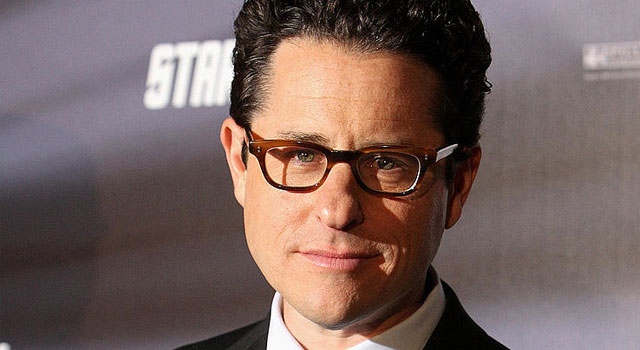
JJ Abrams

With the original release date of June 29, 2012 now scrapped, director JJ Abrams shed some light on the current status of the next Star Trek film, during a recent interview.

According to Abrams, both his team along with Paramount are focussed on the story and character development for the sequel and not jumping the gun to decide on locations, wardrobe, pre-production and visual effects budgets.

“There have been a lot of things that we’ve been working on, a lot of important elements that we just know we need to really nail down and solve.” Abrams said.

“Once you say, “We’re ready to go, but we don’t have a finished script yet,” or “I’m directing the thing and here’s the release date, but we don’t have a finished script,” what starts to happen – and I’ve seen this happen with a lot of friends of mine – is that you’re suddenly in production on a movie that they’re thinking, “Oh my god, we weren’t really ready. We thought we’d get it done in time, but we didn’t.” So, while we have a moment to say, “Let’s get the important things figured out,” then all the pre-production stuff will come. But, I just want to make sure that we’re putting the story and the characters, the cast and the crew, and most importantly the audience, first before we start talking about exactly which locations we’re going to be shooting at and what the wardrobe and visual effects budgets are.”

Regarding Paramount’s reaction to the delay of the film, Abrams said “All they care about – and I had this discussion very recently with Rob Moore – is that the movie be good. No one wants to take a step backwards.”

Read the entire interview at Collider.

Zachary Quinto Talks the Spock-Uhura Relationship, Villains, and Rebuilding the Vulcan Race

Zachary Quinto

Zachary Quinto answered a few questions regarding the next Star Trek film, which is slated to begin shooting later this year, during a recent interview with io9.

While Quinto has yet to read a script for the film, he does speculate on where he believes both his character and the Spock-Uhura relationship may be headed. He also discusses repopulating the Vulcan race and what he’s excited for in the next film.

When asked about Spock’s journey in the next film, Quinto said “I wonder about that. I would imagine (this is just speculative), his planet’s been destroyed, he feels a real imperative to rebuild his race. But he’s in love with a human. There’s probably some potential conflict in that dynamic, I would not be surprised, and I would be intrigued and excited by that if that were the case. Again, I have such implicit trust in all of those guys: Damon, Bob and Alex, and J.J. I feel like they’re going to take us where we need to go. And we’re going to follow them whole-heartedly.”

“I don’t see how they could just drop it. It may be fraught, I don’t know!” Quinto said, when asked about the Spock-Uhura romance.

When asked about being one of the last Vulcans, Quinto said “He’s not the only Vulcan, I think I said, “Of my planet’s nearly 6 billion inhabitants, approximately 10,000 have survived.” He’s not the only one. But the odds aren’t great. He has a bit of a cultural imperative to [help].”

“He turned his back by choosing not to go to the Vulcan Science Academy, but his culture has always been a very important part of who he is. It’s an integral part of his internal fabric. I think if he’s wrestling with feelings of guilt for having sort of embraced his humanity, then an event like this is the great equalizer, it levels the playing field. I don’t think he’s going to spend too much time feeling guilty. I think he’s going to spend a lot more time doing the logical thing. Which is to help repopulate, help support, and help rebuild the race of people. His father was full full Vulcan, and he has a responsibility there, and he loves his father very much. I don’t think he’s that torn about it. I think he’s done the best he can to straddle a really complicated circumstance.”

“I’m interested to see what the villain situation is. What are we fighting against, what is our mission? That’s going to be really cool for me. I’m really excited to see the direction in which they take my character in general. I’m excited to see when this movie takes place, in juxtaposition to when we ended the first one. Where do we pick back up? What’s happened to the characters since then? My sense is what’s the dynamic like between Kirk and Spock? Is it all smooth sailing? I imagine that they’re both so strongly willed, that there will be some continued friction… I’m just excited to read it and shoot it.” he said, regarding what he’s excited to see in the sequel.

[Quote Source: io9]

Terry Farrell Talks DS9, Being Paired with Michael Dorn, Jadzia’s Importance to the Show + More

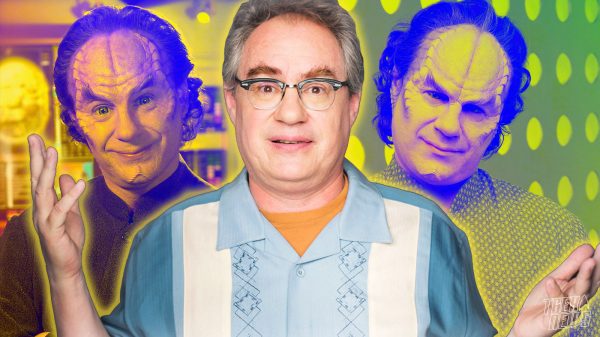
Terry Farrell as Jadzia Dax

Terry Farrell, the actress who played Jadzia Dax for six seasons on Star Trek: Deep Space Nine sat down with StarTrek.com to discuss her time on the show. During the interview Farrell talks about her time playing Jadzia, what intrigued her about the character, being paired with Michael Dorn, Jadzia’s importance, and more.

Below is a sampling of that interview

DS9 was already in production when you won the role of Jadzia Dax. What do you remember of that period when you auditioned, auditioned some more, met the Paramount brass, got the role, had costume fittings and makeup tests, then had to get on the set and start filming?

Farrell: Oh my God, I was a nervous wreck. I was really excited. After everything I had to do to get the role, I was then stunned when I got there and saw how big the set was. If I remember right, I was thinking, “This is enormous. This is the biggest set I’ve ever been on.” I’m talking about the OPS set, and it was so intimidating and overwhelming, and I was already so overtired from all of the makeup tests and all of the excitement. I was so skinny then. I wasn’t eating as healthy as I should have. I know I was smoking then, so that wasn’t good. But I felt like I was under an enormous amount of pressure. If I remember, pretty much everything else had been shot and we had to shoot my stuff because I was the last person hired. Then they changed my makeup. I guess I had a forehead and they didn’t like how that looked. So Michael Westmore came up with the spots and took out the forehead. So we had to re-shoot. And, you know what, I’m just not a good sleep-deprived person. Seriously, when we had our first Christmas break, I don’t think I did anything for those two weeks. I just turned the TV on and I don’t remember doing anything but staring at the television set. It was awesome. I learned so much. But it was really like being thrown in the trenches. I wish I could go back and do it again now. Knowing what I know now, I think I’m far better prepared to play Dax, just as a woman, as a human being on the planet, being 47 years old. I think I’d do a far better job of playing Dax right now.

Once you settled in, how easily did you slip into Jadzia and what intrigued you most about the character?

Farrell: I think what interested me most was trying to find her strength. She wasn’t defensive at all; she was always calm and relaxed and confident. She had a peaceful, mature way about her. I think that’s what I held on to. I don’t think I really attained that for myself, without being Dax, until I had a child. But I think that playing her was actually my anchor to feeling safe in the world at that time. Playing Dax made me feel like I was secure and I was safe.

DS9 was so dark, but Jadzia was so hopeful and positive – without being in anyone’s face about it. How important a role did you feel the character played within the context of the show?

Farrell: Avery (Brooks) used to always tell me that I was too open and, honestly, I think that’s just a part of who I am. I think that’s part of what I bring to the picture. I have a lot of energy. It’s hard for me to hone it in and relax and be stabilized. So I think that constant energy flowing through her was just being optimistic. I played Mimi in Mimi & Me, and it was really off the wall. That’s just how I channeled me being Terry. I think that’s my personality coming through.

Now flip that. How important was it to you as an actor to have those moments on DS9 where we saw a more serious side of Jadzia? You had many episodes that involved darker moments, among them the Mirror Universe shows.

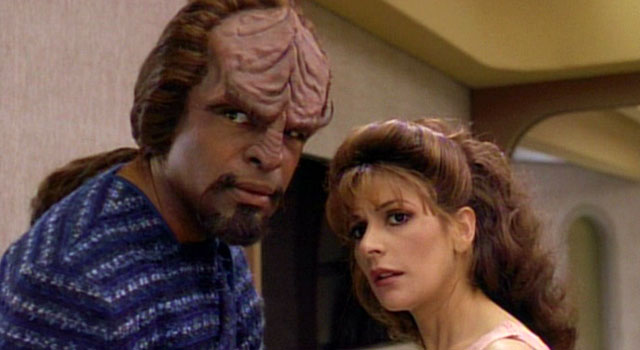
Farrell: Those I wish I could do again, the Mirror Universe episodes, because I didn’t quite trust that I was going to be OK. There was one show in particular (“You Are Cordially Invited”), which David Livingston directed. Worf (Michael Dorn) and Jadzia got married. David was really supportive and Michael and I and David all really worked together, and it was one of those magical shows to work on. Then we had the episode (“Change of Heart”) where Worf and I went on a trip and I almost died, and Worf had to make this decision whether to stay back and save me or go ahead with the mission. That was another one where I felt like we were all very connected. Those are a couple that stand out in this moment, talking to you. But a lot of them, especially in the first couple of years, I felt like I was a fish out of water. I didn’t feel comfortable. I was trying to figure out how this was working for me. I was still getting caught up in memorizing all my dialogue. I think it took a couple of years for me to feel like I was immersed in it and comfortable.

How did you and Michael Dorn react when the producers came to you and said, “We’re going to pair up Jadzia and Worf?”

Farrell: Oh, we’d thought we were so clever flirting with each so we’d have more stuff to do together, just because we were friends. Ha! You’d think they had that planned the whole time because it all just went so easily. And I loved it because Michael and I were such good friends. We could just hit heads and really talk things out. At the time it could be really irritating because we were so tired all the time. But taking that out of the equation, I learned so much from working with Michael, as a person and as a performer. He’s a very good friend. My husband reminds me of him in that they don’t say that “Enough is enough.” They’re just constantly picking at stuff. It’s like, “Enough already!” But it’s that need to make it perfect.


Jadzia & Worf’s wedding on Star Trek: Deep Space Nine

Read the entire two-part interview at StarTrek.com.

William Shatner Talks “The Captains” and the Cancelation of “$#*! My Dad Says”

shatner-shit-my-dad-says

William’s Shatner’s documentary The Captains premiered on EPIX last month. Since then, Shatner has hosted two outdoor screenings of the film in Los Angeles and New York. The now 80 year old Shatner discussed the film along with the cancelation of his CBS television show $#*! My Dad Says, which was cancelled earlier this year, in an interview with New York Magazine.

When asked if he knew the other Star Trek captains prior to filming the documentary, Shatner said “Not at all, hardly; just a respectful nod in their direction when I would see them. And even Patrick [Stewart], I’ve had dinner with him several times, and we’ve talked, and we’ve bonded, but I didn’t know him very well, and what I found is that I’ve now made five friends, because in that day or so that we spent together, we saw in each other a spirit that we identified … the devotion to being an actor, that at all costs. You know, other than Chris Pine, everybody became an actor as a youngster at great sacrifice, to a lot of criticism from their family and friends.”

When asked about the cancelation of $#*! My Dad Says, Shatner said “They shouldn’t have canceled $#*! My Dad Says; it was too popular. And we were getting it right. I don’t know what happened in CBS’s mind. I’m told that it’s in the top ten in Canada, and here it was in the top twenty most of the time; it was in the top 25 all the time. So I don’t understand that. But having stopped, and then that drain on my time stopped, I wanted to get some things done before the drain started again. And so when it was canceled, I had anticipated having more time to do things. So I’ve set up a one-man-show tour in Canada, and if it’s good enough I’ll bring it to the United States; that’ll take place in the fall. And I knew this film was going to be good and we tried to edit it and sand it down as best we could, it being a documentary and having rough sound and rough picture at times.”

To read the complete interview, visit New York Magazine’s Vulture blog.

Olivia Wilde Talks Star Trek and Strong Female Roles

olivia-wilde

In what seems to be a growing (and welcome) trend in Hollywood, another actress has admitted to her Star Trek fandom. Just two weeks after Mila Kunis talked up Trek to GQ Magazine, Cowboys & Aliens star Olivia Wilde admitted to her love of Star Trek during a recent interview.

“I grew up as a Trekkie, which is really funny. I think in Star Trek, there were always great female roles, but there’s no reason the captain shouldn’t be a woman” Wilde said.

She went on to say “I think we could do Captain Kirk as a woman.”.

Which raises some eyebrows and begs the question — Has she heard of a little show called Voyager? Regardless, it’s great to see some of Hollywood’s hottest young female stars talk about Star Trek in a positive light.

Wilde went on to talk about her hopes of starring in more Sci-Fi films, her admiration of Alien star Sigourney Weaver and her belief that the public will go see Sci-Fi films with a female star.

Who do you think the next Hollywood Trekkie out of the closet will be?

 
[Quote Source: io9]

Chase Masterson Talks DS9 and Comic-Con

chase-masterson

Chase Masterson, who played the Bajoran dabo girl Leeta on Star Trek: Deep Space Nine, recently sat down for an interview with BuddyTV. During the interview Chase talks about her experiences on DS9, Star Trek fans, and her San Diego Comic-Con panel “Obsession”, which takes place on Thursday.

Below is an excerpt from that interview.

What has been your experience with Star Trek fans over the years?

Chase Masterson: I am so utterly thankful and in awe that I’ve had the experiences overall that I’ve had withTrek fans. It breaks my heart — it seriously really irks me — what the media often does in exploiting the relatively very few that fit the stereotype they like to propagate. Trek fans are, by and large, the most intelligent, forward-thinking, globally aware and sensitive group of people I’ve ever met, or could ever hope to. They are extremely respectful and supportive – that’s one huge reason that I wanted to be on the show. And they also support the causes we care about. It’s a very active, kinetic group.

But they’re also like the coolest revolving door; simply put, what you put in is exactly what you get out.

It also bothers me when some actors ignore their Trek roots. I just want to say to them, “Excuse me, do you realize that without these people, you would probably be doing the Easter play in Fullerton?”

Do you have an acting role that was your favorite? Which one and why?

Chase Masterson: There’s obviously a special place in my heart for Leeta, for many reasons. But the role in which I have most respect for my own work is definitely that of Singer in Yesterday Was a Lie, a critically acclaimed sci-fi noir feature shot in classic black and white, which was released in 2009 and out on DVD through Entertainment One last year.

I play a jazz singer, and I sing four songs in the film. In addition to the richness of that, the character is written extremely well — the entire film is a tribute to writer/director James Kerwin’s genius. She’s the Trickster in the Jungian pantheon, the second lead in the film, and she leads the central character, Hoyle, on a journey to discover a secret she’s hidden from herself. She gets to employ different means to pique Hoyle’s interest, and the end result is an extremely thought-provoking exploration of sensitivity and responsibility in relationships. That’s something I believe strongly in. And it’s not necessarily a popular or often-done theme in Hollywood, onscreen or off. But people appreciate it, for exactly that reason.

It’s a very cool film, and we’ve gotten a stellar response. If you haven’t seen it, check it out.

Why do you think Star Trek fans tend to be more involved and engaged than fans of other shows?

Chase Masterson: The messages of the show lend themselves to deep thinkers. Infinite Diversity in Infinite Combinations. The Prime Directive. Heck, the Rules of Acquisition! (OK, maybe not.)

These are concepts that require thought and provoke conversation. The shows stand for precepts and visions of a better universe and world that isn’t an easy one to create but is somehow still looming in the distance of the most idealistic, hopeful parts of our hearts. Those concepts are based in justice. They’re based in ideas that are just plain right, and no matter how far removed people or relationships or societies get from justice, we know in our hearts what is good.

The other really attractive things about DS9 in particular were the flawed characters who were still heroes. We see that in ourselves; we’re not perfect, but we strive to redeem ourselves in the ways we can. Tough choices dictate our actions. There’s an anti-hero in all of us; we don’t always succeed in doing the right thing, and we don’t always want to. But we have our redemptive moments. That makes for the intriguing characters and situations, which Trek audiences thrive on and expect.

How do you think actual interactions between aliens and humans would go? Would it be anything like on Star Trek?

Chase Masterson: Hm. You mean like lots of scantily clad alien babes mercilessly heating up Starfleet?

Ooops. Sorry.

You mean like the Prime Directive and IDIC? Frankly, given human nature, I’m afraid it would be more likeMars Attacks, or vice-versa. Probably humans would screw it up out of either panic or thirst for power. I’m hoping that, if there is alien life out there, they’re more advanced than we are. Robert J. Sawyer mused on this subject in an extremely compelling way in his novel, Calculating God. I’m not sure that human society would be capable of making peace with alien races. At least not until we can learn to make peace with each other.

Do you have any new projects that fans might like to know about?

Chase Masterson: There are a few extremely cool things in the pipeline, both film and music. My first wide-release commercial CD will be out in the next few months — Thrill of the Chase — stay tuned for that.

The film I mentioned, Yesterday Was a Lie, is my latest completed project. It took a very long time — I actually produced it — and I’m getting back to work on other things now. But the time that it took was well-spent; we’re getting some excellent opportunities based on our work in that. Indie film takes way longer than any other form of entertainment, but I’m enjoying the process because it’s so highly creative and because we retain the right to do what we want to do.

Because of YWaL’s intellectual, science-fiction premise — the film takes place in non-linear time — the film is one that challenges its audience. The film got a lot of excellent reviews, but my favorite one was from Pop Matters, who said a lot of excellent things and then concluded with, “But be warned: it won’t hold your hand.”

Since you have worked as both an actress and a singer, which do you prefer?

Chase Masterson: People ask that, and it’s really hard to say. Singing is really just acting on key. The difference for me is in the aspect of team. I love working on the studio lots, where there is a real feeling of camaraderie, where everyone is happy to be at work, creating together. Music is also a very collaborative process, but for me anyway, it’s not as rich as film and TV in terms of its creative process. And its reach. So in the final analysis, acting wins over singing. But I’ll always do both.

Have you been to Comic-Con before? What are you looking forward to the most this year?

Chase Masterson: I’ve been going to Comic-Con since way before Comic-Con was cool. My first was in ’96. It’s a little amusing, frankly, to see all the shows & films scramble to get their geek on, even if they don’t have any actual geek cred. And it’s definitely a badge of honor to have been a part of the property that started it all — Trek cons existed even before Comic-Cons or any cons were widely produced, with the exception of Dr. Who. (But that’s such an awesome show, it’s ok.)

What do I like most? It’s always a big reunion. Big fun seeing lots of old friends from past work, with everybody celebrating new stuff.

You can read the complete interview with Chase Masterson at BuddyTV.

Exclusive Interview: Digital Extremes Creative Director Steve Sinclair Discusses Star Trek, The Video Game

Star Trek Console Game

Steve Sinclair, Creative Director of Digital Extremes sat down with us to discusses aspects of the highly anticipated Star Trek video game slated for 2012. Sinclair discusses how the game adds to the Star Trek universe, collaborating with Roberto Orci, and responsibility to fans.

What’s the storyline for the game and how soon after does it follow the events of the last film?

Can’t give it away, but I can tell you it takes place between the last Star Trek movie and the one that is in development. It’s being written by Marianne Krawczyk (God of War series) in collaborations with Bob Orci, who is writing the next film. The game story isn’t recreating events from any film – it stands on its own.

Why did it take until now for a game tie-in to the film to be announced, as many people expected it to be announced within a year of the release of the film?

The game isn’t a “tie-in” for a movie… this is a piece of the Star Trek universe, an awesome single player & Co-op Action-Adventure with an original storyline that stands on its own. We didn’t cannibalize any film for this game. The goal is for it to be an additive experience rather than riding on the back of the franchise.

The Star Trek game falls between the two movies. We’ve been fortunate to have a long development cycle for the game that we hope will remove the stigma of a’movie game’ with this one.

What types of weapons will be available?

Crazy cool alien technology, but we’re not talking about that yet. The cooler things we showed in the demo was Kirk and Spock have their own character-specific weapons that evolve as you play through our skill system. In the demo Kirk gets this amazing Vaporize attack that suits his play-style whereas Spock’s weapon gets more efficient – fully automatic at the same energy cost.

We also showed an example of Co-op weapons – Kirk grabs a Federation Rifle which has this nice defensive mode: a deflector shield… it has this great sum-is-greater-than-parts moment where Kirk raises the shield and Spock fires his Vulcan pistol into it… the deflector actually banks and concentrates that energy! Kirk turns around and clears a room full of enemies in a crazy discharge.

What enemies will players face and will there be vehicles that players can use?

We’re keeping the enemy under wraps right now, but I can’t wait to talk about it. I think Star Trek fans will love it and those who don’t know the universe as well will find them super intriguing. For vehicles – it is an action adventure – so I don’t want to promise too much, but there is definitely a lot of variety in the game. In the demo we showed our take on the Star Trek LSPU (Life Support Propulsion Unit), with Kirk and Spock flying through space, dodging debris as they raced toward the most amazing vehicle ever made: The Enterprise.

How will puzzles and problem solving be handled in the game?

Without revealing too much, we did show an awesome example of Co-op variety in the demo during the Medbay sequence. Leading up to it, Kirk and Spock were finding dead crew around the ship… if they scanned them with their Tricorders they’d collect a sample of an alien parasite. Later on, Kirk is hit by that same toxin and is crippled. Spock carries Kirk to Medbay (Kirk blasting a few aliens with his one good arm) and places him on a Medbay bed… now Spock has to use a Medbay beam to surgically remove the parasites using this custom computer interface. Of course enemies start pouring in so Kirk has to cover him while he does it: very tense!

What can you tell us about the gaming engine and what it will bring to the table?

We call it the Evolution Engine, something we’ve been building here for several years. For Star Trek, we’ve had to build a ton of flexibility into it to support how much gameplay variety we have. From the reaction we got to our pre-alpha demo, people said the game looks and sounds amazing… so hopefully that means the table will be set with an amazing Star Trek game!

What are some of the locales gamers will see in the game?

Strange new worlds of course! The great thing with such a close collaboration with filmmakers for this game is that we’ve been given unprecedented access to their Star Trek archives. We have the blueprints, set photography, ILM’s CG assets – everything we need to make this the most authentic Star Trek game possible.

Will players be able to explore and roam or are missions linear in nature?

I would say it’s a mix – the opening of the game is pure pandemonium but as Kirk and Spock unravel the mystery they end up seeing amazing spaces that players will love exploring.

What type of multiplay will the game offer?

Right now we’re just talking about my favorite form of multiplayer: Co-Op!

Blending action with a detailed plot can always be tricky, how have you attempted to create this?

We showed a great example in the demo: when the enemies surprise Kirk and beam in, Kirk stumbles but gets to his feet – players immediately have control, even though it’s a crazy cinematic moment, players can aim and fire as Kirk runs for cover. We also have the iconic aspects of narrative that Star Trek created – the Captain’s Log, the First Officer’s Log… these work so great for the game because the can underscore more pensive moments of the game, delivering narrative without taking control away from our players.

What are some of the biggest obstacles you see in creating the game, and what are your biggest goals for the game?

In my mind, they are one and the same – not making a great Star Trek game… but making a great game that happens to be set in the most incredible science fiction universe. I loved the film reboot so much, it brought back the heat to Star Trek, and I want to do right by it… but more than that I want to make a great game in and of itself.

With the huge fan following of Star Trek, how much pressure is there compared to other titles you have worked on and is it restricting working on a property like this in terms of what you can and cant do?

The responsibility to Star Trek fans is huge – at the start of the project we went through the entire series – that’s a lot of Star Trek! What jumped out at me was how well the original cast still worked… I loved the friction and the camaraderie between the crew. I loved how the values of equality and race were tackled in the show and how it was often a morality tale. As far as restrictions go, I am happy to say that we’ve actually been pushed to stretch the boundaries. It is incredible how much freedom we have considering this is Star Trek we’re talking about!

Can you tell us about who is doing the voices for the game and the music and what they bring to the production?

It is still early for us to announce such things — Stay tuned for more on that and much, much more!

Preview footage courtesy of IGN.

Writer-Producer Ira Stephen Behr Talks Love & Hate for DS9, The Dominion War, Favorite Guest Stars, and His Relationship with Rick Berman

ira-stephen-behr

Writer-Producer Ira Stephen Behr sat down with StarTrek.com for an in-depth discussion about his time working on The Next Generation and Deep Space Nine, with topics including the Dominion War, his favorite guest stars, the end of DS9, and his storied relationship with Executive Producer, Rick Berman.

Below is a sampling of that interview.

Let’s get into DS9’s Dominion War arc. To some people, that was the best, boldest decision you could have made and, to others, it was the worst choice possible. What made you pull the trigger on the Dominion War and how surprised were you that you were even able to push that through?

Behr: Well, we had talked about it for years, the thought of, “If only we could be more serialized.” Look, we were drunk on wine and women. No. I felt the end coming. Obviously, we all did. We knew it’d be seven years and out. It was just, “Look, what do we want to do? Whatever it is, we should do it now.” Someone asked me on the last day of shooting why I was hanging around so long and I think the line I said was, “I have the rest of my life not to be here. So while I’m here, I’m going to stay until the end.” So it was the same thing. “What do we want to do?” One of the things we wanted to do was experiment with serialization and with the kind of space-opera war that spoke to a lot of the mythologies the show had built up. I thought we could do it. I knew we could do it. And then it became horse trading. I don’t even remember how many episodes we did, but I know we wanted more. Rick (Berman) and I went back and forth. Nothing terrible. No fights or anything like that. But we horse traded a bit and we came up with whatever it was.

If we forced you to sit down and watch three episodes of DS9, which three would you pick and why?

Behr: I only have 170-something to choose from, right? One of them would probably be “Duet,” I think. But I can’t pick three. It just doesn’t pay. On another day I might pick different episodes. Would it be ones I wrote or ones I didn’t write? There are so many episodes I’m proud of.

Who was DS9’s best guest star? Who were you the most thrilled to land?

Behr: I was very psyched when Frank Langella came on (as Minister Jaro). He didn’t want to put his name on the show. He said he wasn’t doing it because he liked Star Trek, but for his nieces or his nephews; you know, that excuse. But at the time I was psyched that we got Frank Langella to do three episodes. We had Jeff Combs and Andy Robinson and Marc Alaimo, that whole band of brothers. We had Wally Shawn, though in seven years I only saw him once. I had many conversations with Wally, but only once did I talk to him when he didn’t have aFerengi head on.

DS9 had some very funky episode titles. Which one struck you as the funkiest?

Behr: Well, the one I make fun of most and, in fact, here at Alphas I’ve already referenced it five different times, was ‘Wrongs Darker Than Death Or Night.” Hans (Beimler) came up with the title and he was so proud of it. We were coming up with all these pretentious, heavy-sounding titles. Robert (Hewitt Wolfe) and I were talking about this a couple of weeks ago and we were laughing our heads off because he was so proud of Hans, because… “Wrongs Darker Than Death Or Night.” What wrongs could be darker than death? Or night? So that was probably my favorite title because it proved a point. A useless point; but it proved a point.

Once and for all, describe your relationship with Rick Berman.

Behr: Why does anyone care?

People care, in part because there were so many rumors…

Behr: If I saw Rick Berman on the street today I would hug him. We ran into each other during the writers’ strike and we hugged. Did we agree all the time? No. Could we talk about that? Sure, we could, but what’s the point? Given the fact that we were part of this monolithic franchise, DS9 pushed the envelope as far as we could at that time in that situation. Could we have gone farther? Sure. Would the fans have gone with us? Not all of them, clearly. On a day-to-day basis I would say over the course of seven years we had a pretty good working relationship. We disagreed on lots of small and large things, but he went in there with me to fight for Avery Brooks, to shave his head and keep the goat. We walked across the lot together to the executive offices. We were jazzed and we had this disk of how he looked, and we were a team to do that. We got there and they immediately gave up, which was funny after three years. We were all set to go in with guns blazing and they said, “OK.” So it was a little anticlimactic, but we were a team at that moment. It’s one of the things that profoundly confuses me about the whole Star Trek(experience), is my relationship with Rick Berman, why people care or what that even means, what my relationship was.

Some people love DS9 and consider it the best Trek show and other people refuse to even acknowledge it as Trek. Do those extreme reactions tell you that you did your job properly?

Behr: Not particularly. I’ll tell you this: no one, I don’t care what the hell the show is, whether it’s Alphas, DS9, Fame, whatever it is, no one judges my work or the work I’m involved with harder than I do or with a sterner rating system than I do. So, what other people think… all I cared about at the end of the day was, “Did I think we were doing the best job we could do?” Then the fans could be fans, like I’m a fan with other things. They make their decisions and that’s fine, too. But how do I feel about the show? Do I feel good or not?

Last question about Trek. Would you ever want to do more DS9 or is it better to leave everything where it ended with the finale?

Behr: If that ever became a reality – which I have a hard time imagining – there is a big part of me that would love to go back to that world and those characters. I miss a lot of those characters. I miss the people, too, but I miss those characters. So, would I say no? I don’t think I’d say no.

The complete two-part interview can be found on the  StarTrek.com website.

Voyager’s Garrett Wang Talks About His Star Trek Experience and Life Away From Hollywood

garrett-wang

Garrett Wang recently sat down for an interview with StarTrek.com to talk about his time playing Ensign Harry Kim on Star Trek: Voyager. Below is a sampling of the of that interview.

What were your thoughts on the Voyager finale, both in general and specifically in terms of how it closed out Harry’s storyline?

Wang: I think the first hour of the finale was fantastic, very exciting, well written, good pacing. Everything was great about the first hour, but then the second hour it just seemed like it tied up all of the loose ends very quickly. So, the second half of the finale I was not happy about, and I especially didn’t like the fact that we ended the series in Earth’s orbit. We don’t even step foot on Earth. Hello! After seven years, I think the fans wanted to see us actually step foot on terra firma. If I was running Star Trek: Voyager, what I would have done is keep the first hour exactly the way it was and, the second hour, I would have taken the same kind of pacing as the first hour and then ended it with a caption on screen saying, “To be continued at a theater near you.” Then I would have done a two-hour feature film. That would have been the way I would have done.

What would you like to think Harry is doing now?

Wang: I would like to think that Harry reconnected with his original girlfriend Libby back in San Francisco, got married and has twin boys named Gabriel and Kenner. Continuing my fantasy world, Harry is promoted from ensign to captain by Admiral Paris. The unprecedented multi-level promotion by the admiral would be based on Harry’s seven-year record on Voyager and also for befriending and looking out for his son Tom, whom he could never show affection to but loved dearly. Captain Kim spends nine months commanding his own vessel, the USS Janeway, the newest Enigma class starship, and three months at home guest lecturing on the wonders of the Delta Quadrant. Kim has picked up golf as his newest hobby, and is always excited to play a round at the closest holodeck.

Building on that, fans have asked us to start asking the actors if they’ve read the Trek books and followed what happened to their respective characters. So, have you read any Voyager novels and, if so, what did you make of Harry’s subsequent evolution?

Wang: I understand that many fans have fulfilled their hunger for Voyager by reading the novels. Unfortunately, I haven’t read any of them. I know that Robbie McNeill used to read Voyager novels to his kids when they were young as bedtime stories. I am interested in how they developed Harry throughout the novels and plan on reading them in the near future.

You were really a kid when you started on Voyager. How do you feel you grew up — as a person — on the show, and how did that carry over once the show ended?

Wang: I was young, 25, when Voyager started, but not the youngest. Jennifer Lienheld that distinction at the tender age of 19. One positive thing regarding maturation that happened from being on the show was the elimination of the racial chip on my shoulder. Eight years in Memphis, TN, being the target of daily racial epithets, made me overly sensitive to the stares and looks of strangers. In college, I had developed an almost militant attitude in that I would respond to prolonged looks by strangers with a defiant scowl or a combative, “What are you staring at?!” I strived to be the complete opposite of the quiet, non-confrontational Asian. Well, once Voyager started, I quickly realized that the majority of the staring was by strangers who recognized me from the show and not active members of some white supremacist group. My time on Voyager also taught me the important lesson of being punctual. The several times I was tardy to work were met by great resistance from the producers. During the third season, they actually threatened to fire me if I didn’t get my act together. Thank goodness I did, ha-ha!

Who from the old days, cast and/or crew, are you still in touch with?

Wang: I’m happy to say I still keep up with all the men of Voyager. We have been meeting for dinner at the same restaurant every three to six months since Voyager stopped filming. It’s great because we get to reminisce about the old days and catch up on current news. Lots of laughter at dinner. The ladies of Voyager, on the other hand, not so much. It’s usually at a random convention appearance that I will run into Kate (Mulgrew), Jeri (Ryan) or Jennifer. Unfortunately, I have only had email correspondence with Roxann (Dawson). Also, I used to meet a couple of the crew guys for golf, but that’s fallen by the wayside now.

Some of your costumes from Voyager sold at auction not too long ago. Were you tempted to buy any, or had you seen enough of them for one lifetime?

Wang: Yeah, I knew about the Star Trek Christie’s auction. Was I tempted to buy one? Heck no! After seven years of blood, sweat and tears working on Voyager, they should have given me one of the 20 some odd Kim uniforms they had in wardrobe. I should’ve followed Kate’s lead and taken my uniform home on the final day of shooting. It always amazes me how many people think that I actually wear my costume on stage at convention appearances. I am definitely relieved that I don’t have to wear it anymore since it pulled in all the wrong places whenever I sat down. If I find out in the future that I can’t have kids because of a low sperm count, I’m calling a lawyer.

The entire interview with Garrett Wang is available on StarTrek.com

Rene Auberjonois Discusses Odo, Kira, Quark, the End of Deep Space Nine and More

Rene Auberjonois

Rene Auberjonois, star of Star Trek: Deep Space Nine who played the shapeshifting Security chief Odo on the show, sat down for a two-part interview with StarTrek.com.

Below is a sampling of that interview.

On paper, in the Deep Space Nine series opener,“The Emissary,” who was Odo? And who was he by the very end, when the credits rolled on “What You Leave Behind”?

Auberjonois: The day that (DS9 executive producer)Rick Berman called to welcome me to the Star Trekworld, he said something like – I don’t remember the exact words – “This character is like Pinocchio.” And I thought, “Well, that’s interesting.” And, over time, I came to understand that that was a certain aspect of the character. He was a very unformed being. Just as Pinocchio was wooden, Odo was a mass of liquid, really, and he was trying to get some kind of shape to his life and to who he was and he wanted to answer the questions he had about what his role was meant to be in that particular universe. People used to say to me early on, “Oh, I hope Odo finds out where he’s from and who he is,” and I’d say, “Gee, I hope not. I sort of love the mystery of it.” But then, of course, I wasn’t one of the writers. So I had nothing to do with that. I was simply the instrument to play the music that the writers had come up with. And we did learn, over time, so much about him. His relationships with Kira (Nana Visitor) and with Quark (Armin Shimerman) and with everybody, really, all made him more and more identifiable in human terms.

So, where I thought in the beginning that I didn’t want to know where he was from and loved that it was a mystery, I also loved the fact that when we got a script – one that focused on Odo and his world – I’d learn something new that I didn’t know about the character. I would have to ingest it and incorporate it into this character that was being built over seven years. I’ve never really sat and talked to Rick or Ira Behr about it, but I would venture to say that a lot of the things that happened to Odo, they would not have been able to tell you at the beginning of the journey that that’s where the journey was going to go. That is one of the delights of getting to play a character for seven years, the organic nature of the work. It wasn’t prefabricated. It wasn’t a mold. I had nothing to do with it, how the show was written or what was going to happen with Odo or what he was going to say. But I had a lot to do with the tenor of the character because, as I said, I was the instrument, and in that sense you have a lot to do with what the music is eventually going to be.

You mentioned the Odo-Kira and Odo-Quark relationships, both of which became cornerstones of DS9. Was it your sense that the writers glimpsed the chemistry between you and Nana Visitor and you and Armin Shimerman, and played to that?

Auberjonois: I have a feeling that they knew the Quark-Odo would be one of the things that would be, not necessarily a cornerstone, but something that they could go back to, that was the kind of relationship between characters that Star Trek fans revel in. I don’t mean to be too obscure, but it’s sort of like of In Mice and Men, when Lennie keeps saying, “Tell me about the rabbits.” He wants to hear the story again. So I have a feeling that there’s an element of that in the Quark-Odo relationship, because it meant the writers could refer to that very briefly and have it have meaning. We’d have tiny little encounters most of the time. It wouldn’t even be scenes. I would walk into the bar to do something else completely, and Quark and Odo would have an exchange, maybe only two or three lines between them, but the audience was so in tune with that relationship that they could extrapolate. And, in fact, Armin and I have commented on it over the years. When people talk about how much they loved that relationship, we’d say, “You know, there was really only one show in the seven years in which it was all Odo and Quark.” That was ‘The Ascent.” Other than that, it was always just short little scenes. But that relationship was so embedded in the audience’s understanding and psyche that it took on a weight that far surpassed how much time we actually spent with each other. So I think the writers knew that Quark-Odo was likely to be a running theme.

And how about Odo-Kira?

Auberjonois: I know for a fact that the writers did not anticipate the Odo-Kira relationship. It happened in the second season, in “Necessary Evil,” the flashback episode with Odo investigating a murder on Terok Nor, and in the end, in present time, he understands that Kira was responsible for this, that she was an underground fighter. The writers wrote in that scene at the end that they were in Odo’s office and he looks at her. I can’t remember the exact words of how they described him looking at her, but it was clear that he understood that this person who was his only real friend on the station has betrayed him in some way. I don’t know what it was that I did or if it was how it was shot, but the next day, when they were looking at the dailies, the writers said, “Oh my God, look, Odo loves Kira.” And they went with that. Both Nana and I, when that started to become a theme, went, “What? Oh my God, look at that. Isn’t that interesting?” Ours is not to question why as actors. So we went with it. We loved working with each other, Nana and I. We still love working with each other. We have tremendous respect for each other as actors and we’re very comfortable working with each other.

By the end of the series, Odo saved his people, said farewell to Kira and entered the Great Link. How satisfied were you with the conclusion of the storyline? Of the Odo character arc? And was there anything that, in the seven years, never went answered or that you’d wanted to play, but didn’t get the opportunity?

Auberjonois: If anything could be called inevitable in a series as out-of-this-world as Deep Space Nine, that was inevitable. The one thing I knew, by the time we’d explored the relationship with Kira and started to know who the Founders were, was that that had to be the way it was going to end for them and for Odo specifically. So I was completely satisfied with it because I thought, “This is the way it has to be.” It’s the classic, poignant ending. It’s people making great sacrifices for the greater good. And while I may say that the writers didn’t anticipate that he’d be saying goodbye to Kira in the end, I have a feeling that in the large scheme of things the writers knew that they’d eventually be saying goodbye to Odo, that he’d be returning to the Great Link. That was the very purpose. It’s why he was sent out by his “people.” He was sent out on a paranoid mission to protect them, to be an advance guard, to be the canary in the mine, so to speak. So it just had to be that he would ultimately be the creature that would return to his world to bring it back to sanity and to stop this terrible paranoid destruction. So I thought it was perfect, it was great. And, not to talk out of school, but if you talk to Armin, he might have a different take on how Quark’s story resolved. Everybody had their own take on how, “Oh, is that how my character…? Is that where I…?” But for Odo, it was exactly the way I would have done it myself if I’d been writing it.

When was the last time you actually watched an episode of the show?

Auberjonois: You hear that silence? (Laughs). I don’t watch television. When I finished Benson, I never saw another episode of it. I’ve never seen an episode ofDeep Space Nine since we finished shooting it in 1999. That’s almost 12 years, and I’ve never seen an episode. That’s not out of a lack of interest. I’m not particularly fond of watching myself act. I think because my roots are in the stage that the joy for me is the act of doing it. The joy for me is not sitting down and watching me do it. I’m so critical of myself. I’d sit and watch myself in a scene, maybe one in which I’m just in the background, and think, “What are you doing back there, Rene? Why are you doing that? Why didn’t you just stand still? Shut up. What’s the matter with you?” It’s not that I’ve avoided Deep Space Nine. I’ve passed it when flipping through the channels to get to The Daily Show with John Stewart, which is my only television habit. When that happens, I’ll stop and pause for a few moments, whether or not I’m in the scene, to watch it for a little bit and get a sense of how it’s aging. With that said and having undermined my own argument, I suppose, what I’ve seen has aged very well, like a fine wine. I always thought that would happen.

The complete interview is available over at StarTrek.com.

Malcolm McDowell Talks About Killing Kirk in ‘Generations’

Malcolm McDowell

Malcolm McDowell, the actor who played Dr. Tolian Soran, the character who killed Captain Kirk in Star Trek: Generations recently sat down for a two-part interview with StarTrek.com. During the interview McDowell talks about the opportunity to play Dr. Soran, Marlon Brando, the 40th anniversary of A Clockwork Orange, and more.

Below is a sampling of that interview.

Let’s talk Star Trek. What was your immediate reaction when presented with the opportunity to play Soran in Generations?

McDowell: I thought, “Well, this is a good part.” I think that’s what I felt immediately. I didn’t know until I’d read the full script that I was going to be the one that killed Kirk. Bill Shatner is a force of nature, is he not? I enjoyed him. I think he’s extremely talented. And I honestly feel that those other casts that came after should collectively get down on their knees and bow to him – and to Leonard (Nimoy) and to all those original guys – because they kept the franchise going when there wasn’t much money around and they were just little morality tales. They did a brilliant job, I think. Anyway, when they came to doGeneration with Patrick (Stewart) and all of them, The Next Generation was a damn good show. People love Star Trek. So I was happy to say yes.

Had you heard the story that the producers initially reached out to Marlon Brando to play Soran?

McDowell: No. That would have been interesting, had Brando done that. Very interesting.

So what interested you most about Soran as a character?

McDowell: Well he’s a megalomaniac and a fun character to play. Also, visually, I loved the black clothes with the white hair, spiked up. I think that’s the first time I spiked my hair up like that. I had a wonderful hairdresser on that film and I can’t remember her name, but she changed the whole look for me. But she was great and I loved her. And Mike (Westmore), the makeup man, was brilliant. I did say, though, “If I’m going to play this part, I don’t want a scar. I don’t want to look like a mutant. I’m not getting up at four in the morning to get in makeup.” They said, “That’s OK, then. We didn’t want that.”

What do you remember of the shoot?

McDowell: I just remember being stranded on a mountain outside of Vegas for weeks, in excruciating heat. But they were such a great crew and I met John Alonzo (who passed away in 2001 at the age of 66), who was this great cinematographer. He’d hand-hold these bloody cameras. And what an artist he was. I liked (director)David Carson, (but) he just did so many takes, so many set-ups. I’d go, “My god, how many more set-ups do you need of this scene?”

To this day, you’re often referred to as the “man who killed Kirk.” What were your thoughts on how that sequence in the movie played out?

McDowell: Pose this one for me (to the powers that be): If you have – which they had – this icon of American television, why the hell didn’t they give him a spectacular death? Why did they give him such a really paltry death? Me shooting the bridge out or some BS whatever it was? They should have sent him off in a glorious fashion, and they didn’t. They missed an opportunity.

[Source: StarTrek.com]

Mark Allen Shepherd Discusses Playing Morn for Seven Seasons on Deep Space Nine, His Favorite Episodes and More

Morn from Star Trek: Deep Space Nine

Mark Allen Shepherd, the actor who portrayed Morn, the silent Quark’s Bar patron for seven seasons on Star Trek: Deep Space Nine, recently discussed his character in a two-part interview with startrek.com.

Below is a sampling. The full interview is available in two parts at the official Star Trek site.

Give us a quick sense of what your life was like before DS9?

Shepherd: I graduated from Roger Williams University with a Bachelor of Science degree and then studied music, video, motion graphics, editing, Tái chi chuan and theater at CalArts, a dream school started by Walt Disney. After that, I was looking for a job and basically took whatever I could get at the time to support myself. I worked as a photographer’s assistant G5 at the local V.A. medical center. I was doing some production work and took any acting jobs I could find. In March of 1992, I was working on a David Lynch project called On the Air. It was based on live television of the 50´s and 60´s. I worked on it in March, I guess, for about six weeks or so. It premiered in July. It showed three episodes and then On the Air was off the air. I thought it was funny, but unfortunately it didn’t fly with the networks.

You soon after went in and won the role of Morn on DS9. What did the producers tell you about the character in advance? Did they say it was a one-off or recurring?

Shepherd: Not a word. OK, maybe sometimes. Usually, I was the last person to find out anything. And it always seemed to be an “Oh, by the way, you’re doing such and such in the next scene. Can you do that?” And I´d always reply, “Sure, I can do anything you want.” I think that they always had in the back of their minds that if I worked out that they would continue to use the character. Working in a full makeup like that for 12 hours is challenging for anyone, but finding someone to work for seven years in that kind of outfit with makeup is difficult. Most actors don´t want to do it.

Did they tell you you’d have no dialogue?

Shepherd: The circumstances surrounding my first day on the show were so unusual. When they shot the bar scene in Quark’s where Morn is telling the funniest joke in the universe, they told me I could go ahead and tell my joke. And when Sisko gets off of the turbolift and just as he walks towards Quark’s, if you listen carefully to the background sound you might actually hear Morn saying “Finalism finger fink. Obligatory quotient yokefellow, coconut kachina cosmological argument. Bank swallow fish story, inculpate minuteman. Stress certifier in lecithin. Hard-hearted dill, divine minded domineer, mind reader sextuplet, garden fly honey suckle garbage. Palter rimfire, green peace. Change is the ultimate solution. Twenty-fourth century humor. You may not get it right away.”

In the book The Making of Star Trek: Deep Space Nine, the first chapter of the book is “The Funniest Joke in the Universe” and it is about exactly that and how I came to be on the show. That was the only time I got to say anything while the cameras were rolling, but it´s not the only time that they considered Morn for a speaking part. There have been numerous scripts where they originally had Morn speaking. One such script had to do with the alternate universe. Unfortunately, they always got written out.

Before the writers filled in details about the character in actual episodes, did you create your own back story for him?

Shepherd: I didn’t have any preconceived notions about Morn. The first two years I worked on the show I didn´t have a car, so whenever I worked I always had to take a bus to Hollywood the night before and stay up all night in a Denny’s restaurant or the Insomnia Cafe´ drinking coffee to stay awake. So, when I worked, I didn´t get any sleep. It was all I could do not to fall asleep while I was on the set. There was even an occasion where, in the pilot, after two days with no sleep, a 110-degree heat wave and no air conditioning on set, I started to fall asleep standing up. A group of guys came over to me and, after asking me if I was OK, said that they were taking bets on whether or not I would fall over. Whenever the writers talked to me I was always interested in what they would tell me next. I think mostly I just tried to keep an open mind and have a good sense of humor about the role.

Which episodes did you enjoy most, and why?

Shepherd: I grew up watching the original Star Trek series. Kirk and Spock were my heroes. So whenever I got a call to come in I was excited to be there. One time I got a call to come in for a fitting for Morn. Now, it wasn´t a fitting for Mark, it was a fitting for Morn. I thought that was funny. So when I came in, they put my makeup on first and then sent me to the wardrobe department. I found a tailor waiting for Morn to fit Morn for a tuxedo. I don´t remember the name of the episode, but it was somehow based on “Our Man Bashir,” where Morn is wearing a tuxedo, comes out of the holosuite and walks down the spiral staircase. Quark is shaking a drink and Morn says “Shaken but not stirred.” Unfortunately, at the last minute it got cut. I think I enjoyed “Who Mourns for Morn” the most, though, and especially when Morn comes back to the bar after faking his death, (and also) the introduction from Odo and the surprise of Quark and his reaction when Morn regurgitates a shot glass worth of liquid latinum and gives it to Quark for his trouble. That was a proud moment for me.

Source: StarTrek.com