Browsing All Posts By

Tom Caldwell

Leonard Nimoy Welcomes Space Shuttle Enterprise to New York

Leonard Nimoy Welcomes Space Shuttle Enterprise to New York

On Friday, the Shuttle Enterprise landed in New York City mounted atop a Boeing 747 jumbo jet at 11:22 AM (EDT), after taking off from Washington D.C. earlier that morning. It was a historic day for science and space exploration: a day that marked the end, in spirit, of the STS (Space Transportation System) program and the beginning of a new type of space exploration vehicle that may one day take us back to the moon and beyond. In attendance for this momentous occasion was none other than Star Trek‘s original Spock, Leonard Nimoy.

Star Trek and the space program have had a long and storied history. Beginning in the mid-1970s, a write-in campaign by Star Trek fans to petitioned President Gerald Ford to rename the prototype space shuttle from Constitution to Enterprise.

When this ship was first built, it was named Constitution. Star Trek fans can be very persuasive. They sent a lot of letters to president Gerald Ford and the president logically decided that the ship should be named after our spaceship Enterprise.

Leonard Nimoy and Senator Charles Schumer at the arrival of Shuttle Enterprise in New York City

Leonard Nimoy and Senator Charles Schumer at the arrival of Shuttle Enterprise in New York City

Shuttle Enterprise flys above New York City aboard a Boeing 747

Shuttle Enterprise flys over New York City aboard a Boeing 747

What is so remarkable about the Enterprise is that it was the first space shuttle built by NASA that would determine the fate of all future space flights using the STS design. To our greater relief, astonishment, and most certainly pride, the Enterprise, named after Star Trek’s famed space exploration cruiser both literally and spiritually, did indeed surpass our expectations. With some design improvements and slight modifications, NASA continued to use the STS space shuttles for nearly four decades in scientific discovery and space exploration.

Even more telling of Star Trek’s intimate connection to NASA’s ongoing mission was the fact that Leonard Nimoy, Spock himself, was present at Enterprise’s beginning and end. “This is a reunion for me,” Nimoy said in a speech on Friday discussing the Enterprise’s final landing. “Thirty-five years ago, I met the Enterprise for the first time.” He recalled that his memory of the Enterprise’s departure from the ground on February 15th 1977 was still vivid today as it was when it first took off. Leonard Nimoy bid his final farewell to the legendary craft by offering his famous catchphrase: “Live long and prosper.”

Even Gene Roddenberry himself was present at the Enterprise’s dedication ceremony in 1976. Though he sadly passed away before he could ever see the Enterprise in its final flight to mark the end of the now historic STS program, the famed space shuttle will always stand in memoriam to Rodenberry’s vision of the future and for all of Star Trek.

This is a reunion for me,” Nimoy said during a ceremony on Friday after Enterprise touched down. “Thirty-five years ago, I met the Enterprise for the first time.”

NASA's orbiter Enterprise is greeted by members of the original Star Trek cast in 1976 at the Palmdale manufacturing facilties.

NASA's orbiter Enterprise is greeted by cast members from the Star Trek television series in 1976 at the Palmdale manufacturing facilties.

Leonard Nimoy watches as the Shuttle Enterprise taxis

Leonard Nimoy watches as the Shuttle Enterprise taxis

Now, we look to the future, the undiscovered country: a place of unimaginable wonder, beauty, and mystery. To boldy go where no man has gone before. That has always been our motto, and we shall continue to live up to it as we head into space with the new crew exploration vehicle (CEV) design to send humans back into space, back to the moon and hopefully far beyond to finally reach the cold, inhospitable surface of Mars.

Photos and video courtesy of Mashable.

How Google Goggles & Project Glass Makes Star Trek Technology a Reality

levar-burton-tng

Surely, fans of Star Trek: The Next Generation will remember LeVar Burton’s character, Geordi La Forge, one of the show’s most influential and inspiring characters. A person born with blindness, by today’s standards, would’ve been excluded from so many opportunities due to this crippling disability. In accordance with the humanist themes of Star Trek, it’s more than fitting to imagine an example of a disability today on Earth being surpassed in the future. In fact, it really does stand as a testament of human courage and ingenuity to see someone as brave and capable as Geordi rise to the occasion and overcome adversity, and due in no small part to his VISOR (Visual Instrument and Sensory Organ Replacement).

The VISOR not only allows Geordi to see things when his eyes are unable to, but they can even allow him to analyze his surroundings in wavelengths that are imperceptible to the human eye.

In the season one episode of TNG, “Heart of Glory,” Geordi uplinked his VISOR to a transmitter to allow the bridge crew to see what Geordi saw on an away mission. The images were a spectacular show of bright colors and vibrant hues representative of infrared and ultraviolet sources, such that Captain Picard regarded the display with a single word: “Extraordinary!” It was a scene that roused more envy, awe, and appreciation rather than pity among Geordi’s friends as they saw his blindness as more of a gift than an actual disability, as evident in Picard’s reflection: “Now I’m beginning to understand him [Geordi].” It was a demonstration in Star Trek that proves the best way to learn from others is by putting oneself in another’s shoes to see what he or she sees.

How is Geordi’s VISOR related to Google Goggles and Project Glass and how is it so remarkable? Imagine more than 20 years ago, you saw that episode when it first aired and someone next to you said: “I bet Google is going to come out with a device or an app that allows computers to compile and visualize data from their surroundings and interpret reality in the same way our brains make sense of everything around us. Amazing, huh?” Your first reaction might’ve been: “What’s a Google?” All jokes aside, one might have a negative reaction in the 60s if one’s friend said Star Trek communicators will turn out to be cell phones more than thirty years later, and that the technology would become so advanced that everyone would have them. Why should we expect any less when it comes to Google Goggles? Why shouldn’t we expect this new invention to become the prerequisite design for Geordi’s VISOR?

Google's Project Glass

What are Google Goggles? Google Goggles is the next generation of computer technology. Just as Smart Phones and iOS devices were the next generation advances that combined cell phones and computers, Google Goggles are the next phase in computer technology that allows the user to compile information from a single image or collection of words and phrases. The process is technically a lot more complex that I made it sound. So the best way to explain this is with an analogy.

When you look at an object, your brain analyzes and synthesizes an accurate representation of that object in your mind; it is a way of bringing reality completely within the scope and grasp of your mind. You can look at something as seamless and simple as an apple and understand the concepts of color, taste, texture, and other things just from looking at it and experiencing it (i.e. seeing the apple and relating sight with your other senses). Your brain will compile information from that experience, analyze it, integrate its conceptual domains in your consciousness, and react from it; this information is both useful and necessary for your survival as an autonomous, free-willed individual. You may not notice it, but there is a whole complicated, multifaceted process involved in looking at an image and extracting useful data from it, not unlike the way a computer would analyze a data set to return a logical, mathematical conclusion. Just as a calculator uses a simple algorithm to determine that 1 + 1 is equal to 2, your brain uses a highly advanced algorithm to understand and form concepts from reality. While nature has had millions of years of trial and error to evolve a brain as complex as ours from the bottom-up, it is tremendously more difficult for scientists to work top-down to recreate a brain-like computer that can take a picture of an apple and analyze that image into bits of information and form concepts of taste, color, and texture from the experience. It would be like asking your inanimate digital camera trying to grasp the concept of “food” just from the image of an apple. All a camera could do is take a picture, render that image into bits of digital information, and re-render the info into a visual representation of reality; it can’t analyze or synthesize it beyond that. It can’t tell you how an apple is conceptually related to a human being any more than it can visually take a snapshot of a human being eating an apple; the software of a camera is direct and limited while the software of a human brain is so much more complex.

This is why the Google Goggles is so extraordinary! It is a computer feature that will analyze images taken by a camera phone for key words and phrases. We already have Smart Phone technology that can analyze a barcodes, conceptualize the codes on a very minimalistic level (by minimalistic, I mean preprogrammed), and finally return a webpage linked to the image. What is so remarkable about Google Goggles is that it can do more than just analyze a barcode: it can conceptualize words and search for key phrases on the internet to find even more relevant information. When Smart Phones was limited to a preprogramed software to analyze barcodes, Google Goggles is the next step in computer evolution that can analyze whole words and sentences from a picture. It may not grasp the full meaning of a sentence, but it can at least identify the individual words of a sentence. With object identity (such as distinguishing an apple from a human), the app would have some difficulty, but who’s to say that the current program can’t be improved upon to make that an eventuality?

When before taking a picture with a camera phone revealed nothing more than an image, now Google Goggles can allow one to take a picture of an object to recall more detailed information beyond what is revealed in just the image alone. Of course, it isn’t perfect: there are certain things it can’t do and object recognition is nowhere near as sophisticated as word/phrase identification, but the software can still do amazing things.

The video below explains more about Google Goggles.

Watch the video Google released to hype the development of Project Glass below.

Obviously, if we can design a computer program that analyzes its surroundings for conceptual feedback, then imagine the possibilities for artificial intelligence in the future. This is very much a Science Fact, no doubt, but why the reference to Geordi’s VISOR? How are the two related? Well, the VISOR works in very much the same way: the VISOR picks up visual information from the environment in more wavelengths than the human eye can detect and interpret those signals into a digital format that the brain can understand. In a sense, the VISOR is a piece of technology that is able to conceptualize its environment in a form more accessible to the human brain.

The main differences are (1) Google Goggles are more sophisticated in the sense that the program does the “thinking” for you and (2) the VISOR can pick up wavelengths outside of the visual region of the electromagnetic spectrum. I can see huge potential for Google Goggles as a visual aid for the blind sometime in the future. If a neuroscientist can bypass the eyes and apply visual-sensory input directly to the brain’s analytical regions (also known as association areas), then there is no reason not to expect microcomputers in the future that could potentially alleviate blindness in those that cannot see as well as offer Smart Phone/iPhone users a very interesting and useful app.

Happy Birthday, Leonard Nimoy

Leonard Nimoy

Leonard Nimoy, one of Star Trek’s most memorable actors, turned 81 years old today, and no, he is not 129 like his most famous personage, Spock, the half-human, half-Vulcan science officer from Star Trek: The Original Series for which Mr. Nimoy is famous. Aside from his well-known portrayal of Captain Kirk’s Number One, he has been involved in many projects of his own creation, some of which, to this day, remain underrated and under-celebrated. Throughout his life, for example, Nimoy immersed himself in a diverse array of acting roles on stage and screen; recorded and performed several musical albums, and produced photographic works of art showcased in exhibits throughout Massachusetts. He was also the director of successful motion pictures and authored two autobiographies and even penned a collection of poetry; such creative resourcefulness is the trademark of an exceptionally talented and brilliant artist.

His acting career in science fiction started with his role as Narab, a Martian invader in the 1952 sci-fi classic Zombies of the Stratosphere. He has since played minor roles in various TV series, such as Dragnet, The Outer Limits, and The Twilight Zone, but it was not until the year 1966 that Leonard Nimoy would star as a lead character in Star Trek, one that created a new breed of scientific personalities in popular science fiction and completely reshaped the genre. He is also known for his screen depiction of the ex-magician, Paris, in the spy drama television series Mission: Impossible and for his minor role as Dr. Kibner in the 1978 remake of Invasion of the Body Snatchers.

In appreciation of fantasy and science fiction genres, Mr. Nimoy wrote and recorded musical albums under a contract with Dot Records in the late 1960’s while simultaneously fulfilling acting roles in Star Trek and Mission: Impossible. His musical career, though short lived in comparison to his dedication to acting, included songs like Twinkle, Twinkle, Little Earth and Spock Thoughts. Nimoy even sang the popular The Ballad Of Bilbo Baggins, in dedication of J. R. R. Tolkein’s adventure novel The Hobbit; a music video of Leonard Nimoy’s The Ballad Of Bilbo Baggins was produced and can be found on YouTube with viewer counts as high as 1.6 million.

In 1999, Mr. Nimoy participated with John de Lancie, the actor who played the all-powerful Q in three Star Trek television series, to record their stage performance Spock vs. Q, a comedic dramatization of a philosophical and a hilariously frustrating conversation between the characters Spock and Q. It was followed with a sequel in 2000 in which Spock and Q would once again battle each other with wit, logic, and sheer godhood (on account of Q’s omnipotence). In addition to his on-stage performances, Mr. Nimoy also lent his voice for a role as King Nedakh in Disney’s Atlantis: The Lost Empire and for narrations in computer games like the turn-based strategy Civilization IV and the epic MMORPG Star Trek Online.

In 2011, Nimoy appeared at what he has said were his final convention appearances. He gave a heartfelt account of his life and career at Creation’s Las Vegas Star Trek Convention in August and Chicago in October. He also starred in the Bruno Mars music video, “The Lazy Song.”

RELATED: Leonard Nimoy Stars in New Bruno Mars Video “The Lazy Song”

Leonard Nimoy, actor, director, poet, musician and narrator, is a wonderfully talented individual whose many accomplishments are our treasures. He continues to peruse his love of photography and is set to guest star on this Thursday’s episode of The Big Bang Theory.

Happy Birthday, Mr. Nimoy. And as always: live long and prosper.

Happy Birthday, William Shatner

William Shatner

Today, William Shatner, the actor who played the legendary Captain James Tiberius Kirk in Star Trek: The Original Series and seven Star Trek motion pictures, turned 81 years old.

This Montreal-born actor started his career as a Shakespearean stage performer in Stratford, Canada and on Broadway in New York City in the early 1950’s. Though his first appearance in cinema was that of a minor role in the 1951 Canadian film The Butler’s Night Off, Shatner’s prominence in film did not arrive until his second debut in 1958 as Alexey Karamazov in The Brothers Karamazov, a film adaptation of one of Fyodor Dostoyevsky’s literary works. During that time, he played a major role as Jim Whitely in The Glass Eye, an episode form the third season of the television series Alfred Hitchcock Presents. In 1959, William Shatner performed on stage in Broadway once again as Lomax in The World of Suzie Wong; his outstanding performance was received very well by critics, which earned him greater repute in the theatrical and film community. In fact, his initial stardom was a precursor to greater achievements in film and television for the next several years before he took on more exploratory, original roles: where no man has gone before.

His more prominent contributions on-screen during the early 1960’s, though not highly recognized by today’s standards, included an episode of The Twilight Zone entitled “Nightmare at 20,000 Feet”, in which Shatner played a paranoid airline passenger who is seemingly the only person aboard aware of a gremlin sabotaging the propeller engines on the wing of the plane (and yes, this WAS the original screenplay that was remade in the fourth segment of the 1983 film Twilight Zone: The Movie, starring 3rd Rock from the Sun’s John Lithgow sitting in Shatner’s seat on the plane (and quite possibly terrified by the same gremlin). In 1964, Shatner guest-starred in The Man from U.N.C.L.E, in which he played as Michael Donfield, an ex-businessman employed by the main character, Napoleon Solo, to expose a plot that would bring the United States and the Soviet Union on the brink of war. In the episode, Solo and Donfield discover co-conspirators Madame Kurasov and her assistant, Vladeck. Interestingly, Vladeck was played by Leonard Nimoy, who would later fill the shoes of Spock from the classic Star Trek: The Original Series. Though these two actors played the roles of enemies in a single episode, fate would unite them in the roles of close friends for an entire series, both on- and off-screen.

In 1966, William Shatner was cast as Captain James T. Kirk in Star Trek’s second pilot, “Where No Man Has Gone Before,” a role in a series that lasted until its abrupt cancellation in 1969. His exceptional performance impacted science fiction for years to come. Despite the low financial status of the show’s budget and its poor reception of the audience at the time, Shatner’s portrayal of Kirk set the standard for many leadership roles in films and shows, from Battlestar Galactica to Star Wars.

By 1979, Gene Roddenberry and Paramount Pictures resurrected Star Trek and brought Shatner and his old crew back to work in another round of space-faring adventures; this time, William Shatner would not star in a TV series, but in a full-fledged film saga, beginning with Star Trek: The Motion Picture and ending with the sad, though heroic death of James T. Kirk in Star Trek: Generations.

After his film career as Captain Kirk ended (though his acting career was no where near finished), William Shatner refused to let the spirit of Kirk end at just one movie. He continued the Kirk legacy in a series of Star Trek novels wherein Captain Kirk was resurrected to continue his adventures to explore and save the galaxy once again, this time in the 24th century. He also authored the science fiction series TekWar, which was adapted into a video game, a made-for-TV movie, and a comic book series.

During his 80th year, Shatner has released a new album, Seeking Major Tom, starred in the one-man Broadway show, Shatner’s World, released the documentary, The Captains, rekindled the Star Wars versus Star Trek war between himself and Carrie Fisher, and much more.

William Shatner, writer, actor, stage performer, and science fiction enthusiast, is a man of many talents. His popularity as the legendary Captain Kirk earned him a reputation that not only lasted for half a century, but will endure for centuries to come. Look anywhere, Star Trek or not, one can still see the mark of Captain Kirk in everything, from television series and movies to music and art. Today, we shall celebrate Mr. Shatner’s turning of age as well as the great fortunes he has laid out for us.

Watch the commercial for Shatner’s Broadway show, below.

Strangers of the Cosmos: Bolians

star-trek-bolians

Bolians were primarily featured as minor characters in Deep Space Nine, The Next Generation, and Voyager. Their personae often ranged from cowardly to greedy, and their presence on the show seemed to serve the purpose of offsetting particular tones and moods. Well, the writers may not have done them much justice in the past, but in this installment of Strangers of the Cosmos, I plan to do just that: Give them the respect they deserve—or rather examine their biology a little further, which is more attention than they have gotten before.

Blue Blood and Blue Skin

Let’s start with the obvious details. One doesn’t need to be a biologist to figure out that they have blue skin. Like Andorians, Bolian blood is also blue. Assuming Bolians metabolize and transport oxygen the same way humans do (how else could they breathe in the same atmosphere as us), their oxygen-carrying proteins would utilize metal ions with an affinity to bind oxygen. In humans, hemoglobin uses iron(II) to bind oxygen; in fact, the red color in our blood comes from iron in its +2 oxidation state. In Bolians, the metal that binds oxygen is most likely copper(II) (again, in its +2 oxidation state). Copper(II) appears blue in solution, unlike most other transition metals with varying colors. Of course, skin color is independent of blood; the bluish tint in their skin is primarily due to pigments, the origins of which may be the result of natural selection for some unknown survival benefit. So remember: The color of blood-borne ions does not correlate with skin color; if it did, Vulcans would be green.

The Bolian “Flight or Flight” Mechanism

Don’t be confused by the subject title. I really meant “Flight or Flight” because Bolians seem to do a lot more running away than actual fighting on the show. In fact, Bolians were often presented as being overly cautious and paranoid on Star Trek. In the Deep Space Nine episode “The Adversary” (the season 3 finale) the Bolian security officer was always more jittery and paranoid about the Changeling imposter on the Defiant than everybody else. Though any person would be understandably paranoid if a potentially hostile Changeling was aboard a small ship, the Bolian remained more fearful and irrational than any other member on the Defiant.

Bolian Security Officer

In one scene, he almost shot Captain Sisko and Major Kira out of a sense of self-preservation and fear, as though his discipline as a Starfleet officer were somehow neglected. Another instance was on Empok Nor, where Nog, Miles O’Brien, Garak, and a team of ensigns visit DS9’s sister station to salvage technical parts and components.

When a group of drugged, psychotic Cardassians were let loose in the station to hunt down the intruders, it is the Bolian, among all the others, who prefers to hide rather than go after the assassins. In fact, the Bolian says he would feel a lot safer with Garak on the hunt for the two Cardassians, implying that he would rather have someone else do the fighting for him (and of course Garak was also a highly trained spy and assassin in the Obsidian Order, so that fact more than influenced the Bolian’s decision). Even when other Starfleet officers were willing and able to defend themselves, the Bolian insisted on hiding.

Bolian security officer aboard the USS Defiant; he nearly shoots Captain Sisko and refused to lower his weapon when ordered to do so by two superior officers.

It doesn’t mean Bolians would always run from a fight (they wouldn’t volunteer in Starfleet otherwise), but they seem to be more prone to fear than any other race on Star Trek. This “flight” instinct may have been a crucial part of their evolution. If they evolved on a planet where their species were constantly preyed upon and where a direct confrontation with predators would almost always lead to defeat (as implied on the Deep Space Nine episode “The Magnificent Ferengi” in which it is said that Bolians have always been physically weak), then natural selection would favor the fitness of individuals with a tendency to run and hide for self-preservation.

The fearful, cautious, even paranoid Bolians would naturally avoid danger and survive long enough to have a greater chance to pass on their traits to offspring, while brave Bolians who probably didn’t have the strength to overcome threats to individual survival would likely die out quickly. The early Bolians with the ability to hide better would persist, survive, and reproduce faster than those who chose to fight in unwinnable battles.

A race of cautious, paranoid individuals is the logical outcome of a form of natural selection that favors fear as a means of survival. As such, their natural instinct to hide or run from danger may have influenced their social behaviors, which would explain why they appear to be scared on the shows. Of course it’s difficult to prove that their concept of fear comes from this “flight” mechanism from the standpoint of only a few examples (and in science, it takes A LOT MORE than just two data points to confirm a hypothesis), but this is, after all, only harmless speculation.

The Hairless Phenotype and Reproduction

Members of the Bolian race tend to be completely bald, with the exception for the few females who had hair on The Next Generation. Assuming Bolian genetics is anything like human genetics and that they have gene-carrying chromosomes the same way we do, it can be inferred that the hair/bald phenotype is a sex-linked trait, meaning essentially that the expression of a given trait correlates with gender.

This is not to say, however, that the baldness trait in Bolians is anything like the baldness trait in humans (which is also a sex-linked trait), but rather that the expression of the hair trait may be activated by genes on one (or several) sex chromosome(s). It may be that the expression of the hair trait is activated by a combination of functional genes. If this were the case, then the actual gene that directly produces hair isn’t necessarily in females only; it could also be in men.

One of the abducting aliens on the TNG episode “Allegiance” who took on the appearance and role of a female Bolian with hair; though not actually a Bolian, it can be assumed that females with hair are not uncommon among Bolians as neither Picard nor anyone else found her appearance to be suspicious.

It is really impossible to determine whether the hair phenotype is located on the sex chromosome(s) in Bolians, but certainly the genes that activate hair production is likely located on the sex-chromosome. If anything can be inferred from Star Trek, it’s that Bolian hair could be an ethnic and/or “sexy” trait used as a means to attract the opposite gender, hence the reason why some Bolian females have beautiful, voluptuous hair. For the same reason that large breasts and hourglass hips in human women attract males to potential mothers (large breasts for maximum milk production and a wide pelvic bone to support fetal development), hair may be a sexual indicator of potential mothers in Bolian females. Therefore, the gene that produces hair may be present in all Bolian females but is only activated when a combination of factors are present, such as those that enhance fertility in women.

Mitena Haro

If this were the case, wouldn’t more females have hair because women with hair would probably reproduce and nurture their offspring better than bald women (and that males would prefer to mate with females with hair as opposed to unattractive, bald Bolians)? Instead, we’ve only seen one or two Bolian females on The Next Generation; all the rest were bald. It certainly may be the case that hair is not only a sexual indicator, but perhaps an ethnic trait as well. It’s possible that the Bolian species consists of many different ethnic groups from different regions on their home planet just like humans do. So hair may be apparent in certain ethnic groups where the association between hair and reproductivity was maintained by natural/sexual selection. If early Bolians migrated and diverged from this prime ethnic group and somehow lost that association (i.e. a new location means different selective pressures), then perhaps they also lost the “hair” gene. This would explain why so many Bolians, both male and female, are bald while only a few apparently still have hair.

Tom Caldwell holds a Bachelor’s of Science in biochemistry from UCLA. He is currently working towards a Ph.D. in molecular biology.

Science Fiction or Science Fact: NASA Developing Tractor Beams

NASA Tractor Beams

Back in August, I wrote a detailed scientific critique of one of Star Trek’s more elusive technological concepts: the tractor beam; the ability to tug objects using an electromagnetic field. Though I deemed the piece of technology as Science Fiction, a team of physicists and engineers at NASA’s Goddard Space Flight Center are planning and developing a laser that would act as a “tractor beam.” Not actually a tractor beam, this device uses electromagnetic wave fronts and directed photons to guide and pull tiny particles from a distance.

The mechanics behind the tractor beam are essentially the same as what was previously demonstrated with lasers. Scientists at the Australian National University were able to use a directed laser beam to carry microscopic glass particles midair across a distance of 5 feet. It works by shining a “hollow laser” at a target (i.e. tiny glass particles) such that the laser heats up a narrow band of air molecules surrounding the target but the interior of the laser (in direct path of the target) remains cooler. The particles would remain in the interior of the laser because the heated molecules surrounding it would exert a pressure against the target, so the particles could float effortlessly to or from the laser source.

Tractor Beam Optical Trapping

The only drawback with this technology is that it requires a gaseous medium (i.e. atmosphere); this means that it wouldn’t work in the vacuum of space. However, NASA scientists, Barry Coyle, Paul Stysley, and Demetrios Poulios may prove that a working tractor beam in space is not only possible, but may be more practical than conventional sample collection.

NASA Scientists
Goddard laser experts (from left to right) Barry Coyle, Paul Stysley, and Demetrios Poulios
Photo Credit: NASA’s Goddard Space Flight Center, Debora McCallum

The technique uses optical solenoid beams. When the laser is directed against tiny particles (i.e. dust), it propagates a force on the particles against the direction of the laser beam. It is not actually a tractor beam as one may see on Star Trek; it is more akin to pushing a floating ball in pool water: it generates enough momentum to move on its own. Like the floating ball analogy, this laser beam simply exerts a force on something to allow it to move on its own; it doesn’t pull or tug anything.

The good news is that the force exerted by this laser is independent of atmosphere, meaning that it can work in space. This holds great potential for space exploration! The best application for such a device would be to capture dust samples from a passing comet. Normally, we would fly a probe into a comet’s “tail” to pick up debris, but this is a very risky (and expensive) maneuver, especially since we have to do it “blindfolded.” But in the near future, we may use a laser beam to trap comet samples from a safe distance, and it would be of great benefit to science because analyzing its chemical composition alone would provide us with invaluable information regarding the formation of our solar system.

Unfortunately, this “tractor beam” can only be used for small-scale purposes, which limits the scope with which it can capture objects. The electromagnetic beam couldn’t possibly generate enough momentum to move particles larger than bits of rock, and even that would be hard enough. Well, guess that means we won’t be towing our shipment of grain to Sherman’s planet after all.

NASA has already demonstrated the potential of such laser beams in a laboratory setting, but they don’t plan on stopping there. They are currently working on new revolutionary techniques to optimize the tractor beam and make it more efficient, cost-effective, and practical to use.

For more information, visit NASA.

Strangers of the Cosmos: Changelings

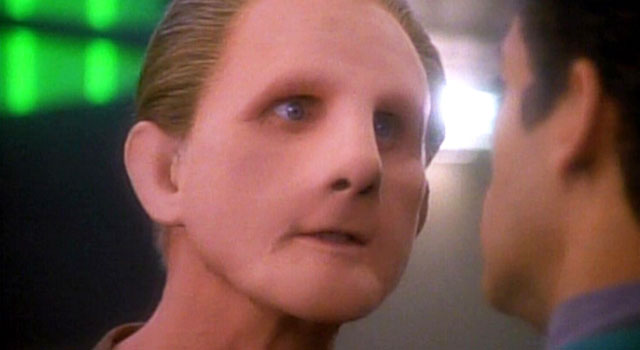
DS9's Odo

Changelings, also known as the Founders, play an important role in science fiction as deceivers and impersonators. On Star Trek: Deep Space Nine, they are the leaders of the dreaded Dominion, the vast empire that controlled the entire Gamma Quadrant and fought a violent three-year war with the Federation and the Klingon Empire. Their ability to change shape into any object and impersonate any member of society makes them one of the most feared races in the Star Trek Universe.

What physiological processes are involved in shape-shifting? The first thing that comes to mind is differentiation. Cell differentiation is a phenomenon of biology in which cells can replicate and branch out into new types of cells. This is displayed in the remarkable properties of pluripotent stem cells, which not only have the ability differentiate into any cell but they also generate “immortal” cell lines (see my previous Science Fiction or Science Fact article on regenerative medicine for more information). Changelings are probably nothing more than a sophisticated collection of stem cells that forms an even larger network, all communicating and adapting together, generating some form of collective intelligence or self-awareness (i.e. the Great Link).

The Great Link
The Great Link on the Founders’ homeworld

Of course, stem cells really don’t differentiate overnight. It can take several months of rigorous lab work to generate one stem cell line and differentiate it into something new. Furthermore, there are no instances of stem cells differentiating into cells of another species; the ability of Changelings to quickly shape-shift into a Romulan or a human cannot be explained by our current knowledge of stem cell biology, but rather by some other unknown biological process (which may be impossible, in my opinion).

Perhaps the most disturbing notion about Changelings is that the very nature of shape-shifting seems to breach the universal Law of the Conservation of Mass. Mass can neither be destroyed nor created (at least in conventional physics). In accordance to the law, the mass of a Changeling does not change when shape-shifting. Essentially, the bird-form of a shape-shifter would have about as much mass as a 200-pound person. That’s way too heavy for a shape-shifter to fly on Earth!

This always disturbed me because Changelings on the show seem to transform into objects that were easily carried around by individuals without significant exertion. Consider the scene in the DS9 episode, “Homefront”, where Captain Sisko and Vice Admiral Layton walk in with a seemingly light briefcase which turned out to be the shape-shifted form of Odo. How can all the mass of one person be so condensed into the size of a briefcase and not feel quite as heavily? Sisko should’ve been dragging Odo on the ground, using all of his strength and weight to pull him!

Changelings are gelatinous in their native form. Every 16 hours they must revert to this state in order to regenerate from a day’s worth of shape-shifting. This implies, as it should be obvious, that morphing into and maintaining different structures require metabolic energy, and reverting to their gelatinous state “saves” energy.

Odo unable to hold his shape
Odo’s cellular structure destabilizes and turns gelatinous when unable to maintain his form

We still have yet to see a Changeling eat and metabolize food. No organism, no matter what species it is, can survive without sustenance; it is a foundational principle of cell biology. Where and how do the Founders get the energy to survive, let alone shape-shift? They certainly don’t get it while sleeping because sleep does not recuperate energy; it still consumes it, albeit at a lower rate. If rapidly differentiating and mass-altering stem cells don’t bother you, then an organism that can survive without food should! Obviously, they must get it somewhere and somehow.

Other aliens of Star Trek may seem unlikely in terms of biology, but Changelings are certainly one of the least plausible (and most bizarre) races described in the canon. If you can imagine a species that exists as a huge mass of extra-potent, immortal stem cells that can instantly change its own shape and mass and thrive on no metabolism, then you have yourself a Founder! One thing is for certain: there is nothing in conventional biology that could help us rationalize the way Changelings are put together, so I leave it to our greater imagination to find the answers.

 
Tom Caldwell holds a Bachelor’s of Science in biochemistry from UCLA. He is currently working towards a Ph.D. in molecular biology.

Science Fiction or Science Fact: Regenerative Medicine

bones-mccoy

Recently, we reported on the Roddenberry Foundation’s 5-million-dollar gift to the Gladstone Institute at the University of California, San Francisco to build a new stem cell research center in the name of Gene Roddenberry. It will help pave the way for the development of regenerative medicines that may one day cure chronic illnesses, from Amyotrophic Lateral Sclerosis to Diabetes.

Of course, on Star Trek, there is little mention of the common diseases with which we are so familiar today. It is implied that Mankind would one day cure and eradicate such diseases, no matter how debilitating. On several occasions, a Starfleet doctor would administer some magical serum that not only cures a harmful disease but actually strengthens the patient’s organ systems. But if there is anything consistent on Star Trek, it’s that nothing on the show is meant to be explained in terms of mysticism: that “miracle drug” McCoy, Crusher, Phlox, the Doc, and even Bashir give their patients is in fact a powerful example of regenerative medicine. Nothing fancy here, just real science at work.

In this installment of Science Fiction or Science Fact, we will discuss the science behind stem cells’ elaborate properties and why it is so important to start work on them today to make those wonder cures of Star Trek a reality tomorrow.

The Breakdown

In developmental biology, scientists study cellular phenomena of complex organisms in order to understand and rationalize the apparent body plans in different species. One of the foremost facets of developmental biology is embryogenesis: the way in which a single zygotic cell with a particular function could differentiate and “stem out” (if you will) into a diverse array of cells with different functions, shapes, sizes, genetic markers, and location in a fully matured organism.

Neuron vs. WAT

Believe it or not, these very distinct, unrelated cells have different functions, shapes, and sizes, but they came from the exact same source: pluripotent stem cells!

Stem cells are the reason for this phenomenon of differentiation. The first demonstration of the ability of hematopoietic stem cells to differentiate was reported in the February 2nd 1963 issue of Nature (vol. 197, page 452). It wasn’t until 35 years later that the Thomson group from the University of Wisconsin would derive human embryonic stem cells (hESC) from the inner cell mass of in vitro fertilized (IVF) blastocysts (reported in the November 6th 1998 issue of Science, vol. 282). Their analyses identified several genes (i.e. Oct4, Sox2, ALKP) that permit the self-renewal trait in embryonic stem cells.

Deriving stem cells is no easy task. It takes months of work: culturing blastocysts on a bed of fibroblasts, finding just the right conditions to support pluripotent stem cells, and then finally proving that they are, in fact, stem cells. Once you finally establish a line of embryonic stem cells, it will continue to grow, maintain its own passages, self-renew, and differentiate given a particular set of conditions. To make this concept a little easier to understand, consider the analogy of starting a bonfire using only two rocks, a collection of wooden logs, and lighter fluid: it is particularly tedious to start a bonfire without a match or lighter, but once the spark hits the wood, the fire will spontaneously grow and flourish. Just like embryonic stem cells, deriving and differentiating them are difficult, but when they finally do emerge, they practically maintain themselves! Today, we have 136 embryonic stem cell lines available for therapeutic and research purposes (see http://grants.nih.gov/stem_cells/registry/current.htm)

Well, that’s great! We can create immortal cell lines from destroyed embryos that can differentiate into any cell type. So what? Thomson’s discovery in 1998 sparked a paradigm shift in developmental biology. Embryogenesis was an unknown to scientists at the time: the physiological characteristics of the fetus were mystical to us, and the biochemistry that guides gene regulation was illusive, even contradictory. The discovery and derivation of stem cell lines not only provided us with invaluable insight into mechanisms that govern embryonic development but also inspired a completely new and revolutionary style of medicine: regenerative therapy, the theory and practice that could potentially treat, possibly cure, genetic and chronic illnesses. A stem cell line could be differentiated into insulin-producing beta cells to replace the dead ones in Type-1 (juvenile) diabetics. A stem cell line could even reprogram neurons to produce a vital neurotransmitter absent in patients with Parkinson’s Disease. Regenerative medicine really is the next great step in countermanding disease.

Stem Cell Differentiation Scheme

A General Scheme of Stem Cell Differentiation and Reprogramming

(A) Cloning (reproductive or therapeutic)
(B) Reprogramming adult cells into pluripotent stem cells
(C) Reprogramming adult cells into multipotent stem cells, then into a different adult cell in the same germ layer
(D) Reprogramming an adult cell directly into a new kind of adult cell

The Final Verdict

It should be obvious by now — it is a SCIENCE FACT! We’ve already shown that stem cells can be derived in the lab. The clinical applications of pluripotent stem cells are remarkably infinite! Even more astounding (and I certainly hope this circumvents all the ethical issues people have with stem cells today), Shinya Yamanaka reported that terminally differentiated (somatic) cells can be converted into pluripotent stem cells via reverse-differentiation (Cell, vol. 131, page 861). It works by activating the expression of genes that promote pluripotency in somatic cells, causing them to generate the same characteristics and functions as any embryonic stem cell, which is truly remarkable as it means that we no longer need to use human embryos and we can rely more on reprogramming adult cells (i.e. skin tissues). A video interview of his explanation of induced pluripotent stem (iPS) cells can be found on my previous article regarding Eugene Roddenberry’s donation to stem cell research.

With all the recent advances in biomedical science and the Roddenberry Foundation’s support for stem cell research, it should be apparent that we are making a bold step into a Golden Age of science, one in which Mankind would dominate disease and defy mortality (not overcome but defy). It was a dream and vision shared by Gene Roddenberry and all of his fans. It was the universal premise of Star Trek: Mankind shall evolve and journey proudly into the Undiscovered Country, a place and time where there is little room for disease and irrationality. This is the eternal promise of stem cell research. Let us continue our path to those great heights of knowledge and achievement from the farthest star…to the smallest stem cell.

Tom Caldwell holds a Bachelor’s of Science in biochemistry from UCLA. He is currently working towards a Ph.D. in molecular biology.

Roddenberry Foundation Donates $5 Million to Stem Cell Research

Rod Roddenberry

On October 19th 2011, the Roddenberry Foundation donated $5 million to the Gladstone Institute of the University of California, San Francisco. The generous gift will allow the biomedical research group to establish a new center for stem cell studies and regenerative medicine, which will be named in honor of the legendary founder of Star Trek: Gene Roddenberry.

Gene Roddenberry was an influential writer and producer of science fiction. His concept of Star Trek, an epic vision of a future graced by reason and peaceful exploration, forever changed the genre. Like many original film writers at the time, Roddenberry felt science fiction needed a serious rewrite, something that portrays Mankind in His finest moments, to make struggles more realistic and practical; he wanted a science fiction that not only encouraged its fans to make the world a better home but also represented science as an attainable goal rather than a mystical construct. “No more magical gadgets that launch spaceships to nearby planets,” was probably Roddenberry’s thinking when he conceived of Star Trek. “We are going to warp space in accordance with Einstein’s Theory of Relativity!”

Established by philanthropist Eugene “Rod” Roddenberry, Gene’s son, the Roddenberry Foundation honors and continues the progress toward that glorious future so imagined by the man himself, even after his passing. Their mission is to support the efforts of individuals, companies, and organizations to advance society on four different fronts: (1) Education, (2) the Environment, (3) Humanitarianism, (4) Science and Technology. On the fourth pillar, the Roddenberry Foundation fulfills a small, but very important aspect of Gene Roddenberry’s goals for a better future by donating the sum of five million dollars to the Gladstone Institutes in order to advance stem cell research toward clinical applications.

Rod Roddenberry Stem Cell Center
Rod Roddenberry announces the donation at the Gladstone Institute

Funding stem cell research is perhaps as crucial as space exploration is in supporting a dynamic, diverse world. In their promotion of stem cell research, the Roddenberry Foundation is in fact bringing Mankind a step closer to that future where “diseases are a thing of the past.”

Watch the video below, as Gladstone’s Dr. Shinya Yamanaka explains induced pluripotent stem cells.

Read the release below.

SAN FRANCISCO, CA—October 19, 2011—The Gladstone Institutes and the Roddenberry Foundation today inaugurated the Roddenberry Center for Stem Cell Biology and Medicine at Gladstone, a new unit founded on an unprecedented $5 million gift from the foundation that was established to honor the legacy of Star Trek creator Gene Roddenberry.

“This gift is our largest to date, and with it, we hope to help accelerate advances in biomedical research,” said Gene Roddenberry’s son Rod Roddenberry, who is co-founder and chair of the board of directors of the Roddenberry Foundation. “In addition, if our support can inspire one child to become a scientist, one organization to become more charitable, one person to simply invest himself or herself in improving the future of our world, then our foundation can be a catalyst in making the future envisioned through Star Trek a reality.”

The center will build on Gladstone’s existing expertise in stem cell science, helping to speed the process by which discoveries are turned into therapies for a host of devastating illnesses.

“Today’s biggest challenge for solving disease is getting the investments required to transform our basic-science discoveries into health solutions that can alleviate human suffering,” said Deepak Srivastava, MD, who directs both stem cell and cardiovascular research at Gladstone. “We are a basic science institute—but with the purpose of solving three major disease groups.”

Indeed, Gladstone focuses on disease areas that afflict millions of people and their families: cardiovascular disease, viruses such as HIV/AIDS and neurological conditions such Alzheimer’s disease. Alzheimer’s alone afflicts 5.4 million people in the United States at an annual cost $183 billion, estimated the Alzheimer’s Association. Without a therapeutic breakthrough, the number of Americans with Alzheimer’s disease is expected to double by 2050.

On top of this, no single disease-modifying therapy exists for Alzheimer’s or other devastating neurodegenerative diseases, said Steven Finkbeiner, MD, PhD, a senior investigator at Gladstone, adding that it takes an average of 12 years and as much as $1 billion to develop a drug for a neurodegenerative disease. “The tsunami is coming and we have nothing in the drug pipeline to treat Alzheimer’s,” he added.

Research at the new center can help to change that, in part by building on pioneering work done by Gladstone senior investigator Shinya Yamanaka, MD, PhD. In 2006, Dr. Yamanaka and his Kyoto University team discovered how to reprogram skin cells into cells that, like embryonic stem cells, can develop into other cells in the body. This discovery of induced pluripotent stem cells, or iPS cells, has since altered the fields of cell biology and stem cell research, opening promising new prospects for both personalized and regenerative medicine. Dr. Yamanaka currently divides his time between Kyoto and San Francisco, as the director of Kyoto University’s Center for iPS Cell Research and Application (CiRA)—which focuses on drug discovery and regenerative medicine—and as a senior investigator at Gladstone.

To further develop Dr. Yamanaka’s iPS technology in order to create patient solutions, the Roddenberry Center for Stem Cell Biology and Medicine at Gladstone today is also announcing a collaboration agreement with CiRA. This accord will clear a path for these two leading stem cell centers to freely exchange materials and knowledge—all in order to accelerate the advancement of their stem cell research results into therapeutics to improve human health.

Ideally suited to do that, iPS cell technology and subsequent cell-reprogramming discoveries opened the door for scientists to create human stem cells from the skin cells of patients with a specific disease for research and drug discovery, rather than using conventional models made in yeast, flies or mice. As a result, the cells contain a complete set of the genes that resulted in that disease—representing the potential of a far-superior human model for studying disease development, new drugs and treatments—while also avoiding the controversial use of embryonic stem cells.

“The Roddenberry gift will help us create the human, iPS-based disease models that we need to accelerate the development of drug therapies for a host of devastating diseases, honoring Gene Roddenberry’s call to ‘live long and prosper,’” said Dr. Srivastava.

About the Gladstone Institutes
Gladstone is an independent and nonprofit biomedical-research organization dedicated to accelerating the pace of scientific discovery and innovation to prevent illness and cure patients suffering from cardiovascular disease, neurological disease or viral infections. Gladstone is affiliated with the University of California, San Francisco.

About the Roddenberry Foundation
The Roddenberry Foundation supports and inspires efforts that create and expand new frontiers for the benefit of humanity. It funds innovative solutions to critical global issues in the areas of science and technology, the environment, education and humanitarian advances.

About CiRA
Following the generation of human iPS cells by Dr. Shinya Yamanaka and his team in November 2007, Kyoto University established the Center for iPS Cell Research and Application within the Institute for Integrated Cell-Material Sciences (ICeMS) in January 2008 to further promote scientific advances in the fields of induced pluripotency and reprogramming. CiRA is the world’s first institute to focus specifically on these areas, and its researchers strive to realize the potential medical benefits of these cells as rapidly as can safely and responsibly be done. CiRA became an independent institute in April 2010, under the leadership of Dr. Yamanaka.

###

For more information, visit the Roddenberry Foundation.

Photo: Roddenberry Facebook page.

Strangers of the Cosmos: Tholians

Tholian

Welcome to the first official installment of “Strangers of the Cosmos,” a new column here on TrekNews.net. Each week we’ll take an in-depth look at an alien race within the Star Trek universe.

The series unofficially debuted as part of my “Science Fiction or Science Fact” column, featuring the biology and evolution of Romulans, Vulcans, Klingons, and Andorians.

In this installment, we will pay close attention to Tholians and how evolution might favor physiological and anatomical qualities that are so unique to this race on the shows.

Mentioned on at least two Star Trek series, Tholians are aliens, whose biochemistries appear to be humanoid in nature, but their carapaces are crystalline and their body plans bear both male and female sex organs. They also thrive under extreme heat and pressure, conditions that would vaporize any human.

In the Star Trek: Enterprise episode, “In a Mirror, Darkly I,” there is indirect evidence that Tholians have a cardiovascular system. The Mirror Universe Phlox synthesized a sedative that rendered a Tholian prisoner unconscious; by understanding how sedatives work on animals, we could speculate how it would work on Tholians and appreciate the complexity of their body systems.

The chemical would have to be administered locally and circulated throughout the body until the central nervous system is affected. On the show, the sedative was released in the holding cells as a gas, which is treated locally by absorption into the bloodstream from the lungs, further implying that Tholians not only have a circulatory system, but perhaps a respiratory one as well. Whether they have an open or closed circulatory system is unknown with the given information.

Tholian

The most interesting feature about Tholian anatomy is the fact that they have both male and female parts, a suggestion that the species is hermaphroditic. Hermaphrodites are not uncommon on Earth and their origins are well explained in context of natural selection. According to the Theory of Sex Allocation (an attempt by science to rationalize the apparent male-to-female sex ratios in a given population), hermaphrodites can have a reproductive advantage in nature if the benefit to their fitness is greater than the resource costs required to maintain both sexual functions (male and female) in the same individual. If it requires more energy to maintain both sexes in each individual with little gain in fitness, then the members of a species could only afford to be distinctly male or female (as is the case in humans) and the hermaphroditic trait is potentially disadvantageous. Sexuality in hermaphrodites (i.e. snails) are so primitive that they require even less energy to maintain both sexual parts with an even greater increase in reproductivity, meaning essentially that every member of a species is reproductively compatible.

Tholians, by implication, may reproduce primitively, requiring only a few resources to support the simplistic male/female traits present in every individual. Their mating may not be any more complex than the way snails reproduce.

Snails Mating
Snails mating

Hermaprhoditism in Tholians also implies, though indirectly, that their evolutionary ancestors lived in a very harsh environment, with limited resources, constantly stalked by predators. It is equally likely that their evolution as a species was influenced by lower population numbers, requiring the emergence of hermaphroditism to counter the threat of extinction. In other words, every member of society would have to be reproductively compatible with one another (even themselves) in order to prevent their own population from dwindling.

It is important to note that, while Tholians evolved to master their own environment and probably no longer need the hermaphroditic trait to survive, it could’ve been maintained after millions of years past its usefulness due to morphological constraints on their body plans: the entire species may have become so dependent on this mode of reproduction that any deviation from it might have promoted lower reproductive success. In other words, they don’t remain hermaphrodites because they need it to survive in their given environment; they remain hermaphrodites simply because the entire race has adapted so well to hermaphroditism that they cannot revert to anything else.

RELATED: Science Fiction or Science Fact: The Strangers of the Cosmos

Tom Caldwell holds a Bachelor’s of Science in biochemistry from UCLA. He is currently working towards a Ph.D. in molecular biology.

Science Fiction or Science Fact: The Strangers of the Cosmos

star-trek-aliens

Previously, science determined the implausibility of silicon- and ammonia-based life. Silicon is an element similar to carbon, which is why some astrobiologists consider it a candidate for the emergence of organisms; however, silicon compounds are limited to only a few stable molecular arrangements and crystals, so abiogenesis isn’t very probable.

Ammonia, on the other hand, has chemical and physical properties similar to water, though ammonia doesn’t promote the hydrophobic effect quite as strongly as water does, and, more importantly, stabilizing ammonia in the liquid state requires either (a) a below-zero global temperature or (b) an atmosphere nearly 12 thousand times as dense as Earth’s: the latter being difficult to find in the universe and the former hardly favoring the process of abiogenesis altogether.

But what of these strange new worlds, new life, and new civilizations so explored on Star Trek? Everything ranging from crystalline entities to Changelings, they appear to have such unique and exotic body plans that science couldn’t even begin to describe them or to determine how molecules could possibly compose sufficiently to generate these life forms. Indeed, they seem more fantasy than fact, and, unfortunately, there is a lot to biology that we still don’t understand, even of life on Earth.

We can hardly predict how life could emerge and evolve on exosolar planets; let alone how any alien could emerge from the abiogenesis of substances so unlike our own. That is why this article will discuss and speculate the different forms of life and their biology as presented on the shows. I present to you: the Strangers of the Cosmos.

Romulans and Vulcans

Romulans and Vulcans may be more plausible as water-based, carbon-based life forms on exosolar planets with Earthlike characteristics. Both breathe the same atmosphere, drink the same water, and even have nearly the same physical appearance as humans (minus the ears). There are also subtle differences: Vulcans are telepathic and Romulans are not, Romulans have head ridges and Vulcans do not, and one is a very warlike species while the other promotes peace.

Vulcan & Romulan

As most Trekkers know, Romulans are descended from Vulcans over the course of millennia and both evolved into separate races. This is a classic example of reproductive isolation in the theory of evolution that gives rise to speciation. When a population in one area experiences an emigration (i.e. half the population leaves to a different locale) and the original population is now located in two different areas, the two populations are said to be reproductively isolated, meaning that they don’t interbreed simply because they hardly come into contact.

Over time, both populations will accrue enough random mutations that natural selection affects both groups differently, and so the two groups would adapt preferentially to their respective environments and be so genetically different from one another that they would be unable to interbreed; this is known as a speciation event, in which one group evolves from an original group into a new species. However, Romulans and Vulcans are perhaps easier to interbreed than say humans and Vulcans; in fact, it has been stated on the shows that Romulans and Vulcans are so physiologically similar that they can mate without any medical intervention. This leads me to believe that Romulans and Vulcans haven’t speciated and are perhaps members of the same species, though different cultures.

Romulans and Vulcans both have green blood. The color of blood is determined, at least on Earth, by the assimilation of transition metals in their oxygen-carrying proteins. For all mammals and avian species, blood is red because the oxygen carrier, hemoglobin, uses iron, a transition metal that appears reddish brown in solution. For the horseshoe crab, hemocyanin utilizes copper, which is blue. Vulcans and Romulans have green blood, which, if their oxygen-carriers are anything like hemoglobin or hemocyanin, may be an indication that their proteins utilize nickel to bind oxygen (or copper if their blood contained a high salt content). Nickel is another transition metal similar to iron and copper, except that it emits a green color in solution.

Klingons

KlingonThe fiercest warriors in the galaxy, next to the Jem’Hadar and the Hirogen, Klingons are known for their codes of honor, battle hunger, brooding mentality, and their head ridges (at least up from the end of the TOS era). On Star Trek: The Next Generation episode “Ethics,” in which Worf becomes paralyzed and must deliberate between an honorable suicide or a risky, medical procedure to restore his spinal column, it is mentioned that Klingons have redundant body systems to allow them to “switch” to a back-up organ whenever one is damaged. Evolving on a world in which survival is threatened by predators and natural hazards calls for intense natural selection: any trait that increases a species’ fitness would be favored by its selective advantage over traits that would otherwise hinder a species’ survival. Natural selection may have favored the emergence of redundant organs in Klingon ancestors to maintain biological functionality in case the body was ever harmed. In fact, humans also have “redundant” organs (two kidneys, two lungs), though they evolved to work together and are no where near as sophisticated as the redundancy found in Klingons. This trait would, undoubtedly, remain an essential aspect of Klingon physiology if the selection for it was maintained by millions of years of violent lifestyles; considering they are a warlike race, the Klingons may have maintained the trait in the course of their evolution and, clearly, it still benefits them in battle.

Klingon head ridges are also a notable feature on the show. Not including The Original Series or the “Afflictions/Divergence” ark on Star Trek: Enterprise, almost all Klingons have head ridges, and many of them have different cranial patterns. The head ridges appear to be an exoskeletal extension of the Klingon’s spine over the cranium and ending just above the base of the nose. The head ridges were more pronounced and a lot broader in the Klingon’s evolutionary predecessor as shown in the TNG episode, “Genesis”; the purpose and function of the head ridges were likely to protect the Klingon from predators and enemies, a phenotype that may have had a greater advantage in some past when the Klingons were constantly hunting and competing for food and women.

Another observation I made about the head ridges is that they only seem to be similar in family units. For example, Worf, his borther Kurn, and his son Alexander all have similar cranial patterns obviously because the traits are heritable. But Worf’s head ridges by no means share the same resemblance with other Klingons’ ridges; in fact no two patterns are alike.

Just as humans have different appearances among different ethnicities (i.e. African, Asian, White, Latino), the Klingon head ridges may be an ethnic trend native to specific locales on Qo’nos, in which the frequency of a set of alleles that give rise to a particular cranial pattern is maintained by breeding within a population. Klingons with different head ridges may be a sign of a diverse culture.

In Star Trek VI: The Undiscovered Country, Klingon blood was shown to be pink in color, though it appears red in every other movie and episode where Klingon blood was “spilled.” The writers may not have thought this through enough to remain consistent with canon, but if there is ever a consensus among the Star Trek community that would canonize the pink blood phenotype, then their blood-borne proteins may assimilate cobalt, a transition metal that appears pink or violet in solution, instead of the reddish brown iron that we are used to on Earth or the greenish nickel (or high chloride copper) one finds in Vulcans and Romulans.

Andorians

Klingon

While on the topic of blood, let’s talk about blue blood. Andorians are a race on Star Trek with a similar code of honor as the Klingons, two antennae, white yellowish hair, blue skin, and blue blood. The color of their blood may indicate that their proteins carry copper, which appears blue in its highest oxidation state.

The antennae are also a unique attribute of Andorian anatomy. No one really knows why they need them or what they detect. Insects use antennae to detect food sources, sense environmental hazards, navigate terrain, and communicate with other insects. But Andorians clearly aren’t insects; they are warm blooded mammals (we know they’re warm blooded because their metabolism is higher than humans, generating much needed heat to survive the cold climates of Andoria, as inferred from the Enterprise episode “United”).

What could the antennae possibly be used for? On the episode “United,” Archer was able to defeat Commander Shran without killing him by cutting off one of his antennae (don’t worry, they grow back). The crippled Andorian said that he would make a “poor guardsman” without both antennae; in addition to the statement, he had poor balance for a few hours after the incident. The antennae may have had some previous function in detecting food sources in their evolutionary past, but since then Andorian physiology probably co-opted the antennae to help coordinate their movements the same way post-anal tails help cats maintain their balance and pelvic bones help humans stand upright.

Another point of interest regarding Andorians is their closely related cousins: the Aenar. The Aenar are a blind, telepathic race of Andorians that have a white pigment instead of blue; they reside in icy caves as shown on Star Trek: Enterprise. Like Romulans and Vulcans, the Aenar and Andorians have a common ancestor and both remain reproductively compatible, so they are technically the same species. By inferring from the blindness and telepathic abilities of the Aenar, the Aenar may have migrated to the polar ice caps from warmer climates (perhaps following game animals) and became an offshoot of the main Andorian evolutionary branch. In their new home, they may have lost the selection for eye sight as a new ability of telepathy emerged, allowing them to communicate, sense, and survive better in the environment of the planet’s less hospitable regions. As for the telepathy itself, no one could possibly explain scientifically how that emerged.

 
Tom Caldwell holds a Bachelor’s of Science in biochemistry from UCLA. He is currently working towards a Ph.D. in molecular biology.

Science Fiction or Science Fact: Ammonia-Based Alien Life

Andorian

Previously, the science behind silicon-based life was determined to be science fiction. Silicon compounds are limited to invariable crystalline arrangements, while carbon compounds, namely organics, can form a large variety of molecules such that any stable molecular arrangement could be formed spontaneously and that natural selection would favor those molecules that support life. In the prebiotic competition between the silicon and carbon bases for life, carbon would most likely dominate. But consider the alternative where water was replaced by a very familiar, yet unlikely, chemical. Could life exist in a world dominated by oceans, lakes, and rivers of ammonia?

The Breakdown

Ammonia is a toxic substance to humans, insects, even bacteria. It is the main ingredient in some industrial solvents and cleaning solutions and is hazardous to the environment. Ammonia is even an essential part of a recipe used to make high-yield explosives. How could something as lethal as ammonia possibly permit the emergence and evolution of living organisms? Believe it or not, ammonia has a lot of the same molecular properties as another familiar compound that is essential for life: water. Some astrobiologists propose that life may evolve in an ammoniated medium the same way life on Earth grew in a hydrated one. Imagine: the same substance that is known to dissolve metals, burn skin, pollute the environment, and blow up if mixed improperly may very well be the “Water of Life” on some extraterrestrial worlds (and I’m not talking about Dune).

Let’s first consider why ammonia is a potential candidate. Ammonia and water are both polar molecules. The electronegativities of the oxygen and nitrogen atoms are greater than the electronegativity of their hydrogen counterparts. The difference in electronegativity between the central atom (whether nitrogen or oxygen) and the hydrogen atoms causes the molecules to become polar. The central atom adopts a slightly negative charge and the hydrogens become slightly positive. This makes ammonia and water powerful solvents, as it can dissolve salts and small polar molecules.

Water and Amonia

Several of the physical properties in water are also shared by ammonia. Both media can conduct electricity, though weakly, and the coordination of positively charged hydrogens with negatively charged parts on nearby molecules forms one of the strongest intermolecular forces known in chemistry: the hydrogen bond. This is analogous to taking an object with a positive charge at one end and electrostatically binding it to a negative charge on another object. In Layman’s terms, hydrogen bonds allow polar molecules to stick to each other very well, hence the reason why water has such a high surface tension and boiling point.

To that extent, water is a versatile solvent: it can dissolve almost “anything,” and solubility is essential under prebiotic conditions. It can dissolve many salts and small, polar organic molecules like sugars and amino acids. Solubility of organic compounds and salts is very important for life because it buffers reaction mixtures to resist changes in pH, salinity, and even oxidation states. An environment that best supports life is one with stable concentrations of essential biomolecules.

Another very important feature of water’s physical properties is the hydrophobic effect of large, nonpolar compounds. Nonpolar and polar substances do not mix very well in solution, which is why nonpolar molecules tend to conglomerate in a solution of polar molecules. In other words: non polar molecules stick to each other much more tightly when surrounded by polar molecules.

The hydrophobic effect is crucial in the process of abiogenesis because it drives the formation of micelles and proteins. Without the hydrophobic effect, lipids could not anneal to form cell membranes, and amino acid polymers could not fold to form functional proteins and enzymes.

While ammonia may have the ability to form hydrogen bonds, its polarity pales in comparison to that of water. Ammonia is less able to form hydrogen bonds and by consequence the hydrophobic effect and solubility of organic molecules are also weaker.

This presents problems for abiogenesis. Small bioorganic molecules would not dissolve very well in ammonia. Proteins and membranes may be unstable in a solution of ammonia because they may not fold properly. Membranes and lipids become an even bigger issue; if cell membranes do not sufficiently pack together, then cells could break apart in even mild environmental changes. Life would be less adaptable in an environment of ammonia than in an environment of water.

The stability of liquid ammonia itself warrants concern. Theoretically, life can only be supported in a liquid, not a gas or solid. If boiled off too quickly or too easily, organisms may find it harder to adapt to the environment. Ammonia exists as a gas at room temperature, while water is stable as a liquid from a temperature range of 0 to 100 degrees Celsius. This is due to the strength of hydrogen bonding: the stronger the hydrogen bonds, the more likely the molecules will stick together long enough to condense into a liquid. Ammonia has weak hydrogen bonding, which is why the temperature must be lowered dramatically under normal atmospheric pressure to stabilize ammonia in the liquid state; we are talking about a world that must undergo a 4-billion-year Ice Age. A cold, dead planet is hardly an ideal candidate to support life.

Andorian Surface
Surface of Andoria.

Ammonia’s boiling point is -33 degrees Celsius under 14.7 psi of pressure, which means that liquid ammonia is only stable below this temperature at Earth’s atmospheric pressure. Supposing for a moment that the folding, conglomeration, and solubility of organic molecules were thermodynamically probable, a global temperature would have to be maintained from -78 degrees Celsius and -33 degrees at 14.7 psi. This is too narrow a band for organisms to thrive; any mild climate fluctuation may actually threaten the survival of ammonia-based life. The metabolism of nutrients and the replication of organisms would be disrupted by periods of extreme lows and highs.

Amonia and water temperature scales

The only workaround solution for this problem is the condensation of a gas using a higher atmospheric pressure rather than a lower temperature. Gas can be condensed to a liquid under extreme pressures, and the temperature can be maintained well above its normal boiling point (which is good news for an ammoniated climate in which life requires heat to thrive). Ammonia condenses to a liquid under a pressure equivalent to 12.1 thousand Earth atmospheres at around 37 degrees Celsius. Unfortunately, we have yet to discover or hypothesize a way in which a planet could harbor such a dense atmosphere. Venus, a terrestrial planet with the densest known atmosphere today, has a pressure value of 93 bars at the surface; this hardly meets the atmospheric demand of 12,000 bars. Jupiter, the next best choice, only has a maximum pressure of around 1000 bars at the center of the planet; again, hardly ideal for our purposes. Similar planets are unlikely to have atmospheric pressures high enough to condense ammonia into a liquid, though that does not mean ammonia-based life cannot emerge by some other means.

The Final Verdict

Ammonia-based life isn’t a major theme of Star Trek, and I’ve always wondered why it was never included on the shows. Unfortunately, it is unlikely to be a Science Fact. It is important to note that many things initially considered impossible in science were eventually proven by science, or at least to some extent. As I always stress in my articles: just because something seems highly unlikely, it doesn’t mean it can’t happen. We have yet to discover ammonia-based life, or any life elsewhere for that matter, before anyone, even me, can say that ammoniated aliens can or don’t exist. In the absence of absolute evidence, speculation is the best we can hope for.

On that note, I would like to conclude with this awesome edited excerpt from Carl Sagan’s Cosmos, in which he hypothesizes a likely scenario in which life could evolve on a world like Jupiter.

Just because something seems improbable to occur, we are always amazed in science to find that sometimes, no matter how unlikely, the opposite is true. Even if ammonia-based organisms may not exist by our Earthly standards, it does not imply by any means that it cannot happen any other way.

Tom Caldwell holds a Bachelor’s of Science in biochemistry from UCLA. He is currently working towards a Ph.D. in molecular biology.