Browsing Archive

April, 2011

Science Fiction or Science Fact: Matter-Antimatter Reactors

Geordi LaForge inspects the warp core

In the last installment of Science Fiction or Science Fact, I talked about warp technology and how faster-than-light travel was theoretically possible because it does not violate any of the laws of physics. Unfortunately, warp travel is impractical because of its energy requirements—it would require an amount of energy equivalent to the mass of Jupiter. Like most things in Star Trek, there is a scientifically valid solution to such problems (or a very clever circumvention that ignores the laws of physics). In this case, the employment of matter-antimatter reactions is a theme of Star Trek that resolves almost every energy issue one would expect from a science fiction show: from powering warp engines to phaser technology. The big question, however, concerns the concept of harnessing energy from matter-antimatter reactions; is it scientifically plausible…or pure science fiction?

In order to understand what matter and antimatter are, it is necessary to understand their origins and how they fit into the “big picture” of the universe. Matter is the “stuff” with which we are all so familiar. We are made of matter. Everything in the universe is made of matter—from atoms to stars and planets. Matter is a very “normal” object made of smaller particles known as atoms, which are themselves made of even smaller particles termed subatomic particles (like protons and neutrons). Protons consist of a positive charge, and according to physics, there is an even smaller particle that gives it a positive charge: the positron. Positrons are the very essence of positive charges in the entire universe.

The Breakdown

As the name implies, antimatter is the exact mirror opposite of matter. So for every particle in the universe, there exists an antiparticle with reciprocal properties. The antiparticle to a particle with a positive charge is one with a negative charge: the electron. The electron is the negatively charged particle that orbits around the atom. Electrons never collide with the positively charged center of the atom because they are constrained in orbitals around the nucleus.

Atomic

This atomic model demonstrates how electrons never collide with the nucleus as their angular momentum around the nucleus keeps them in a “stagnant” orbit (though this model is not completely accurate in light of Molecular Orbital Theory). For the most part, this is the basic structure of the atom.

But what would happen if an electron were to collide with a positron? According to some scientists, that may have been the driving force of the Big Bang, the very moment in which the universe was created. When matter collides with antimatter, the two essentially annihilate one another and are converted into pure energy at 100% efficiency. At the moment of the Big Bang, trillions (this is a severe underestimate of the real thing) of particles collided and released tremendous amounts of energy, causing a nearly infinite expansion of space and time. Fortunately, there was a little more matter than there was antimatter, so the remaining particles coalesced into atoms, then eventually to galaxies, consisting of stars and planets.

As it should be apparent, the collision of an electron with a positron is a highly energy-releasing process. The scientists of Star Trek have already found a way to harness that energy. However, scientists today are only beginning to produce antimatter, and that is the most exciting part. Particle colliders, like the one at FermiLab and the Large Hadron Collider at CERN, are used to mash protons together in order to produce positrons—the antimatter equivalent of electrons. The only drawback is that we’ve only ever produced a few milligrams of antimatter and it is a costly process. Furthermore, scientists haven’t even begun to imagine how such energy could be harnessed.

This video demonstrates how antimatter is produced and how costly it is.

The Final Verdict

And now my final verdict: Science Fiction. Though we are now able to produce antimatter and its application in energy production appears to solve many of our problems in the future, from energy crises to warp technology, it has one serious drawback—a drawback that makes burning fossil fuels a better alternative. The energy required to produce antimatter is far greater than the energy we could possibly harness from its annihilation. Essentially, the matter-antimatter reactors of Star Trek consume more energy than they generate; so humans from a future Earth that become reliant on this technology would not be speeding toward other star systems, rather they would be speeding toward an early death. No energy-producing plant would ever utilize a process that requires more energy to run than it actually produces. So it is, unfortunately, a technically flawed design.

If you’d like further information, you can check out NASA’s status on antimatter technology.
Tom Caldwell is upperclassman at UCLA, currently investigating functional kinases that down-regulate muscle growth and studying biochemistry with a career goal of earning a Ph.D. in molecular biology

FedCon 2011 Day 2 Report and Photos featuring Robert Duncan McNeill, Marina Sirtis and Scott Bakula

fedcon-robert-duncan-mcneill

Following a great opening yesterday, FedCon XX continued on Friday in Düsseldorf, Germany with a bevy of celebrity guests.

Special thanks to Zack Nicodemous of TrekRadio, who provided photos and notes from today’s events.

The second day of panels included Robert Duncan McNeill who spoke about his time as Lt. Tom Paris on Voyager and his latest endeavors as director and producer of NBC’s Chuck.

Marina Sirtis, who portrayed Deanna Troi on The Next Generation answered several audience questions and shared some of her memories from her seven years on TNG and four feature films.

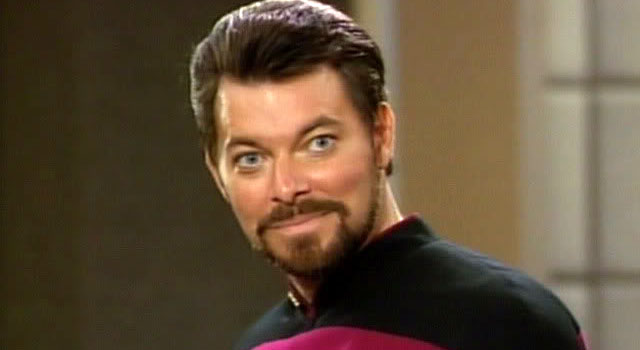
Richard Dean Anderson, who played Colonel Jack O’Neill on Stargate SG-1 and is probably best known for his time on the action-adventure television show MacGyver was joined on stage by droves of fans dressed in Stargate uniforms. During his panel Anderson joked about wanting to do a sci-fi television show with his friend and former Star Trek actor, Jonathan Frakes saying “It would be a lot of fun.”

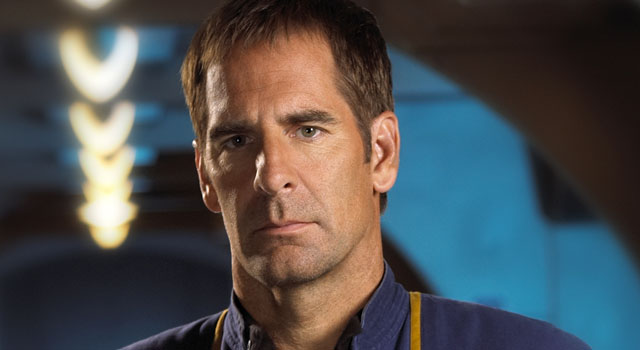
Scott Bakula was welcomed on stage to thunderous applause The former Captain Jonathan Archer not only answered audience questions but also entertained the audience with his renditions of John Lennon’s “Imagine” and the Star Trek: Enterprise theme “Faith of Heart”.

Star Trek Voyager's Garrett Wang and Robert Duncan McNeill

Robert Duncan McNeill

Star Trek Voyager's Robert Duncan McNeill

Scott Bakula

Scott Bakula

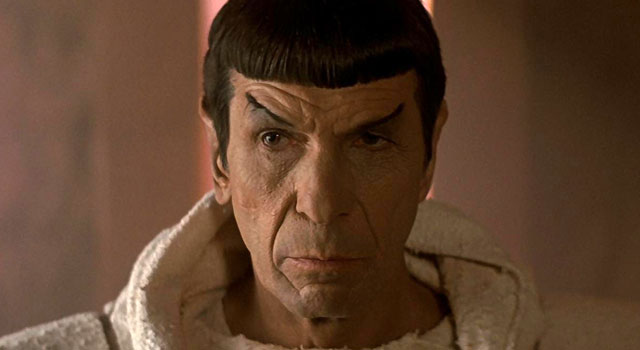
Leonard Nimoy to Speak at Boston University on May 9th

leonard-nimoy-tsfs

Star Trek‘s original Spock and Boston native Leonard Nimoy will be discussing his acting career and artistic pursuits on Monday May 9th at 6pm at Boston Universities Metcalf Hall. The event will be hosted by the Howard Gotlieb Archival Research Center.

Metcalf Hall is located at 775 Commonwealth Ave. Boston, MA, 02215

Tickets are $25 each, but free to members of the Friends of the Libraries and Boston University community.

For more information, visit http://www.bu.edu/archives or call (617) 353-3696

Federation Follies: Rank Amateurs

Star Trek's John Cho

I want to make sure I start this column off by making one thing perfectly clear: I LOVED JJ Abrams 2009 Star Trek film. It was a fun, it was fast-paced, and it was, in my opinion, true to the sense of adventure that so many of us respond to in Star Trek. I always tell people about dragging my dad down to the theater on opening day and seeing how excited he was after; he never gets into movies like that, and the last few Star Trek films had left him a bit cold. Not this one, though. This one he could get behind.

Most folks agree with him. I think.

That being said, the film is still far from perfect. The out-of-left-field Spock/Uhura romance. The overly busy starship interiors. The lens flares. I forgive all of that, though, because the movie is THAT GOOD. Still, there’s one thing about the movie that is nigh unforgivable:

The complete and utter disregard for rank. Holy cripes.

I think most of you already know what I’m griping about, but for those who don’t: aboard this starship Enterprise is basically being run by a bunch of college kids. There is ONE seasoned veteran on that bridge, and he disappears partway through! I get that there’s some crazy business in the Laurentian system and that most of remaining ships get sent to the big Risa In The Sky while defending Vulcan, but… seriously? We’re going to just hand the ship over to the rookies?

Let’s look at the command crew of the Enterprise here, the ship named for the historic vessel that helped found the United Federation of Planets and is Starfleet’s “brand new” flagship:

• Captain James Kirk: I know there was a ceremony at the end and Tyler Perry was there and everybody was happy… but they were going to kick this kid out a few days ago?

• Chief Science Officer Spock: Okay, the OTHER seasoned veteran… who should be in COUNSELING. He watched his mother die… if he had been younger, he would have been halfway to Batman status.

• Chief Medical Officer Leonard McCoy: Rank of commander because why not? Heck, we never even see her onscreen, but you kind of get the impression Nurse Chapel has more field experience than he does.

• Chief Engineer Montgomery Scott: Had been banished to some backwater facility on Hoth, basically. Suddenly learns to do Impossible Transportations, and is thus given command over each and every surviving engineer already on the ship.

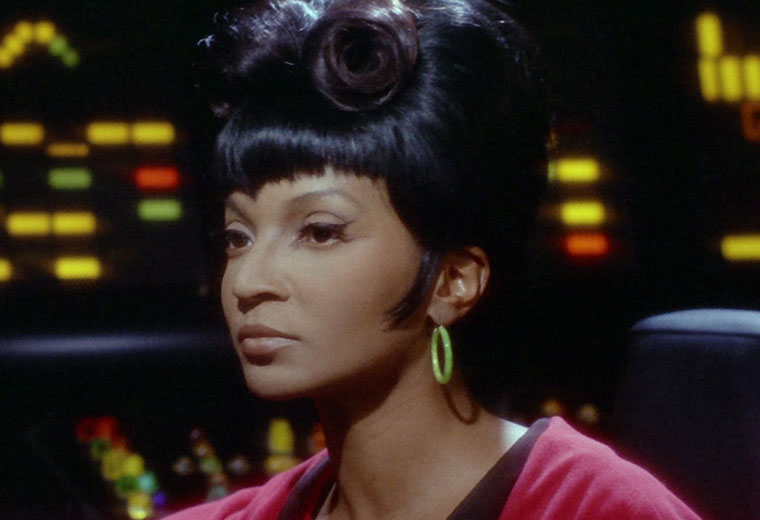
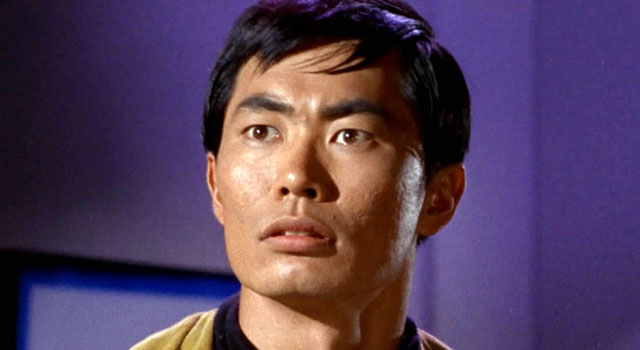
If I were Sulu I would be seriously cranky every darn day at work. Really, shouldn’t he have been next in line? I’ve got his officially-licensed movie action figure and I know that little stripe on his sleeves says he was a lieutenant. Don’t even get me started on Uhura, and how nobody can decide if she’s a lieutenant or a cadet for most of the movie. They never released her action figure in a duty uniform, so the jury is out on this end.

Again, I loved this movie and we all know that the crew needed to end up assembled as it is. I just think it’s worth keeping in mind the next time you watch: Sulu should be at the helm of that ship! Forget Starfleet or the chain of command (everybody else sure did); Hikaru Sulu gave Kirk that bad boy. “Oh my,” indeed.
 

“Federation Follies” is a weekly humor column by Willie Laundrie, taking a look at the lighter side of Star Trek.

FedCon 2011 Day 1 Coverage featuring Garrett Wang, Wil Wheaton, Marina Sirtis and more

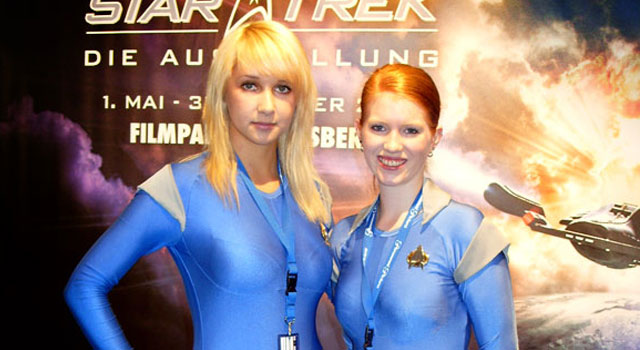
star-trek-girls-fedcon

FedCon, Europe’s largest yearly Star Trek and science-fiction convention kicked off today in Dusseldorf, Germany. During the opening ceremony many of the celebrity guests including Scott Bakula, Wil Wheaton, Nicole de Boer, Richard Dean Anderson were brought out on stage to welcome the crowd at the Maritim Hotel.

The two panels generating the most buzz with live attendees were those by Voayager‘s Garrett Wang and Wil Wheaton of TNG, The Guild and The Big Bang Theory fame.

During Wang’s panel he described his “utter dismay” in Harry Kim for turning down Seven of Nine’s on-screen offer of copulation. He went on to talk about some of the practical jokes that were played on the set of Voyager.

Below are a few photos courtesy of our friend Zach Nicodemous over at TrekRadio.

Garrett Wang at FedCon XX

Garrett Wang at FedCon XX

FedCon guests

Wil Wheaton & Marina Sirtis

FedCon babes

Klingons

Orion Slave Girl

We’ll have continued coverage of FedCon throughout the weekend.

Two New Star Trek Posters by Mondo Go On Sale Today

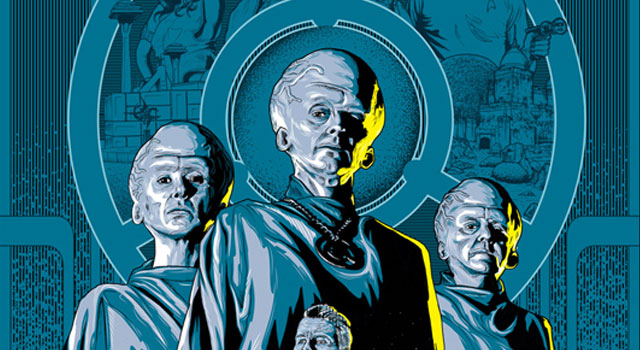
mondo-the-menagerie

Mondo, a small, quirky Austin-based company who produces some amazingly creative and high quality limited edition art prints will be adding to their already impressive Star Trek series tomorrow with the release of two new prints, inspired by episodes of Star Trek: The Original Series.

Both will be available sometime tomorrow, Thursday April 28th. Follow @MondoNews on Twitter for the official sale announcement.

Mondo's "Mirror, Mirror" print

“Mirror, Mirror” by Tomer Hanuka, inspired by the 1967 will be limited to 125 prints, hand numbered and screen printed on high quality 24″ x 36″ paper. Available for $45.

Mondo's "The Menagerie" print

“The Menagerie” by Mike Saputo, inspired by the 1966 two-part episode will be limited to 175 prints, hand numbered and screen printed on high quality 24″ x 36″ paper. Available for $45.

UPDATE:

Both prints went on sale around 9:30am PST and were completely sold out within 2 minutes.

A List of Genuine Star Trek Personalities on Twitter

Jeri Ryan

From The Original Series to Enterprise and even the 2009 feature film, Star Trek actors and personalities are all over Twitter. You’ll find friendly jabs between William Shatner and Leonard Nimoy, humor from the one and only George Takei, and all kinds of great geekiness from Wil Wheaton.

Below is our list of genuine Trek celebs currently tweeting away on the ultra-popular microblogging platform.

Additionally, if you’d like to follow TrekNews on Twitter, we’re available at @TrekNewsNet.

Star Trek: The Original Series

William Shatner
Star Trek‘s original Captain James T. Kirk currently starring in the CBS comedy $#*! My Dad Says.
@WilliamShatner

Leonard Nimoy
Star Trek‘s original Mr. Spock.
@TheRealNimoy

Nichelle Nichols
Star Trek‘s original Nyota Uhura.
@RealNichelle

George Takei
Star Trek‘s original Hikaru Sulu.
@GeorgeTakei

Star Trek: The Next Generation

Brent Spiner
Lt. Commander Data and current star of the Youtube web series Fresh Hell.
@BrentSpiner

LeVar Burton
Best own for his role as Geordi LaForge on TNG and the former host of Reading Rainbow.
@LevarBurton

Wil Wheaton
Everyone’s favorite child genius, Wesley Crusher.
@WilW

Star Trek: Deep Space Nine

Chase Masterson
Deep Space Nine‘s sexy Dabo Girl, Leeta.
@ChaseMasterson

Star Trek: Voyager

Jeri Ryan
The beautiful former Borg Drone, Seven of Nine and current star of Mortal Kombat: Legacy.
@JeriLRyan

Garrett Wang
Voyager‘s Operations Officer, Harry Kim.
@GarrettRWang

Star Trek: Enterprise

Jolene Blalock
NX01′s beautiful Vulcan Science Officer, T’Pol.
@JoleneBlalock

Star Trek (2009)

Zachary Quinto
Star Trek 2009′s Spock and former star of NBC’s Heros.
@ZacharyQuinto

Zoe Saldana
Star Trek 2009′s Nyota Uhura and star of James Cameron’s Avatar.
@ZoeSaldana

John Cho
Star Trek 2009′s Hikaru Sulu.
@JohnTheCho

Simon Pegg
Star Trek 2009′s Scotty and star of Shawn of the Dead.
@SimonPegg

Roberto Orci
Star Trek 2009, Fringe and Alias Executive Producer
@boborci

More

Star Trek
The official Twitter account of StarTrek.com.
@StarTrek

Michael Okuda
Graphic designer for several Star Trek series, best known for the LCARS interface and “Okudagrams.”
@MikeOkuda

Larry Nemecek
Star Trek author, editor, archivist, consultant and producer.
@LarryNemecek

Denise Okuda
Star Trek Encyclopedia co-author.
@DeniseOkuda

Ronald B. Moore
Visual effects coordinator for several Star Trek episodes and series.
@RonBM

Rod Roddenberry
Son of the Star Trek creator Gene Roddenberry.
@Roddenberry

Trekette: In the Body of a Woman

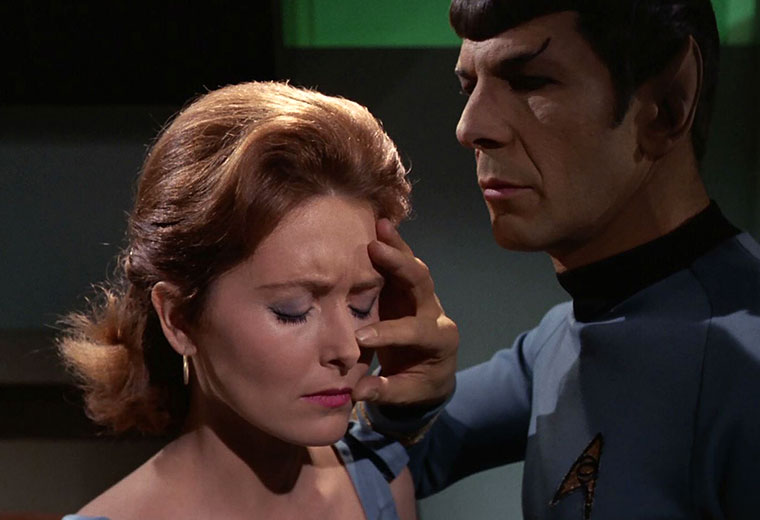
Turnabout Intruder

In this week’s installment of Trekette, we’re going to take a look at The Original Series episode, “Turnabout Intruder.” The 79th and final episode of the series ventures into new territory: an admission by Kirk of the sexism that Lester had faced in Starfleet Academy. Dr. Lester attributes her sex as the reason for her failed ambition to become a spaceship captain. Kirk even agrees with Lester, who claims, “Your world of spaceship captains doesn’t admit women. It isn’t fair.”

Ah, the plight of women’s equality in the workplace. It’s so unjust to think that a person’s gender, something over which they have no control, could dictate the direction of their career. We are left to assume that there is some kind of glass ceiling which no female could shatter to enter into the ranks of starship captains. However, in this case, Dr. Lester’s gender was not the factor that curbed her ambitions.

Now you know the indignity of being a woman. For you this agony will soon pass, as it has for me. Quiet. Quiet! Believe me, it’s better to be dead than to live alone in the body of a woman. It’s better to be dead.

It is Stardate 5928.2. The Enterprise has sent an away team to the surface of the planet Camus Two in response to a distress call from a group of scientists stationed there to explore ruins of a now-dead civilization. Among those scientists is an old flame of the Captain’s, Dr. Janice Lester, who is one of only two survivors found on the planet. Dr. Lester, the expedition’s leader, is apparently suffering from an ailment which her companion, the expedition’s surgeon Dr. Arthur Coleman, claims is radiation damage. The other members of their company are all dead. As the rest of the away team leaves to search for life signs, Kirk and Lester find themselves alone, discussing the unhappy end of their former relationship.

Dr. Janice Lester has little in common with other females who were single-use, disposable love interests for the captain or other members of the crew. Her status is that of a leader, in charge of a scientific expedition. Clearly, Lester possesses qualities which would qualify her for this in her own right, whereas many other one-episode female characters on the show came into their authority through family connections, or tradition. Nor has her fate descended upon her due to her feminine helplessness, as is common in other female non-recurring characters. Lester is nothing like one of Mudd’s women. For example, her motives are inspired by a desire for power, not a desire to catch herself a husband.

Turnabout IntruderDr. Lester’s failing stems from her pathological need to grasp for more than she rightly qualifies for. Being a leader of a scientific expedition, a position rewarded to her based on her qualifications, is not enough for her- instead, she craves authority which she neither deserves nor has the temperament for. She couldn’t cut it as a candidate for command, but instead of looking to her own deficiencies, she externalizes her failings. Sexism means to be prevented from an equal opportunity based solely on ones gender, despite any skills they might have to make them an equal or better candidate for a position. There are many women who have experienced this, but Dr. Janice Lester is not one of them. Rather than accept that her actions and personality have barred her from the elite order of captains, she indulges in the idea that she has been unfairly dismissed due to her gender.

A starship captain must face his (or her) Kobiashi Maru: accepting that there are “no-win scenarios.” A good captain must have the temperament to move forward in the face of difficulties. You’d never catch Captain Janeway stamping her foot and throwing temper tantrums — this is the very reason that Lester could never have become a captain. Deeply disturbed, hysterical and sadistic, Dr. Lester presents no redeeming qualities which would lend sympathy to her cause. To suggest that her character represents an unfair treatment of women in general would be highly illogical. In this case, the blame which she shifts from her own shortcomings delegitimizes the plight of others who have actually faced sexism.

Dr. Lester, you are making all female Starfleet personnel look bad. Clearly, it is not your sex which caused you to fail in her pursuit of a command- instead, it is your mental instability, your willingness to go to murderous lengths to get your way, which disqualify you. Luckily, Uhura didn’t appear on this last episode- she would have been ashamed on behalf of all female professionals.

So beam me up, Scotty: there are no positive female role models on this episode.

Trekette OUT!

 
“Trekette” is an ongoing series by Victoria Wright looking at Star Trek through a female perspective.

FedCon XX Kicks off Thursday in Düsseldorf, Germany with Star Trek’s Scott Bakula, Marina Sirtis, Wil Wheaton, Garrett Wang, and more.

scott-bakula-2

Europe’s largest Star Trek and science fiction convention, FedCon (short for Federation Convention) kicks off this off this Thursday, April 28 and runs through Sunday, May 1. Taking place this year at the Maritim Hotel in Düsseldorf, Germany, FedCon has been held in Germany each spring since 1992, attracting approximately 5,000 sci-fi and pop culture fans. Each year some of the biggest names in Star Trek, Battlestar Galactica, Star Wars, and other genre television shows are flown in to take part in the weekend’s festivities.

This year’s event has quite a guest list. Some of the stars appearing include Scott Bakula, Marina Sirtis, Wil Wheaton, Richard Dean Anderson, Robert Duncan McNeill, Garrett Wang, Dirk Benedict, and many more.

Along with this weekend’s Anaheim Comic Con coverage, we’ll have news coming out of FedCon 2011, with updates from our friends at TrekRadio.

Use the hashtag #FedCon on Twitter if you plan to tweet live from Düsseldorf.

For more information, visit the official FedCon website.

Science Fiction or Science Fact: The Warp Engine

star-trek-warp

Welcome to the first installment in a web series of reviews entitled: Science Fiction or Science Fact, in which I will assess the credibility of Star Trek’s popular technological concepts and themes to determine whether they are just science fiction…or if indeed they are “science facts” (rather, that they are scientifically plausible). For this week’s analysis, I will introduce the science of faster-than-light travel and ultimately determine whether or not Mankind can “boldly go where no man has gone before.”

Many science fiction series include futuristic concepts and highly advanced technologies that either complement today’s scientific understanding of the universe or, as is usually the case, contradicts it entirely. Fortunately, Star Trek is the type of fiction that tends to fit the former description. Many of the themes and inventions show-cased in Gene Roddenberry’s vision of the future not only have a basis in fact, but they potentially push the very boundary of our technological limits. Does this mean that everything on Star Trek is truly possible?

Unfortunately, no. There are certain limitations we cannot overcome, either because the technology would never be possible or simply because science doesn’t allow it.

The Breakdown

Albert Einstein’s Special Theory of Relativity redefines the relationship between an object’s momentum and its apparent velocity; essentially, it states that no object of a finite mass can ever travel at or faster than the speed of light because an infinite amount of energy is required to maintain an object’s momentum at luminous speeds. Even protons cannot travel faster than 99% of the speed of light. This seems to suggest that faster than light travel is impossible—if one of the smallest particles in the universe can’t break the “light barrier,” how could a starship?

Enterprise Momentum

While it is impossible to accelerate an object to light speed using conventional physics (i.e. using rocket propulsion), an engine with the ability to warp space around an object so to bring it closer to its destination faster than the speed of light without ever breaking the rules of special relativity is theoretically possible. Herein lies the key to the warp engine.

One of the stranger facets of Einstein’s theory of relativity is that space and time are interconnected in a non-Euclidean continuum (not to be confused with the Q Continuum). This is harder to explain in words and the mathematics illustrating this concept are even more complicated, but to best imagine a space-time continuum in the relativistic sense, space can be described as a curvature, and that gravity is the tendency of objects to fall into the curvatures of space-time.

This quick video demonstrates how gravity is caused by warps in space-time the same way a bowling ball would warp the two-dimensional surface of a trampoline:

A scientist named Miguel Alcubierre theorized a method of faster than light travel using this same concept of space-time curvatures. He theorized that if one were to warp space around an object in such a way that the object were enclosed by an expansion of space behind it and a contraction of space in front of it, then the “warp bubble” could move at the speed of light while the object remains “motionless” inside this warp bubble. In a manner of speaking, it is not the object that moves; it is space that moves. Alcubierre’s warp theory circumvents the problems that arise from traveling at relativistic speeds.

Warp Effect

In the above image, space is contracted ahead of the Enterprise-D and expanded behind it; the warping effect is what would allow the starship to travel at the speed of light without violating relativistic physics.

Drs. Cleaver and Obousy at Baylor University theorized that an application of String Theory in conjunction with Alcubierre’s warp drive may be the final key to traveling faster than the speed of light. Theory suggests that oscillations at the 11th dimension of space (from which dark energy is believed to originate) could simulate the faster-than-light expansion of the universe as predicted to occur at the moment of the Big Bang. Should such a warping effect occur in the space surrounding an object, the space and the object enclosed within it would travel faster than the speed of light.

The following video makes it easier to visualize the warp effect on a two-dimensional surface.

The Final Verdict

The final verdict on the warp engine: Science Fiction; though it is theoretically possible to travel faster than the speed of light, its energy requirement renders it impractical. The scientists from Baylor University state that in order to vibrate the 11th dimension at a magnitude great enough to create a warp bubble would require an amount of energy with a mass equivalent of Jupiter. Which means, in Cleaver’s own words, “we are still a…long ways off.” Until scientists can find a way to “harness that (kind of) energy,” we will never be able to reach the stars.

More information on Cleaver’s and Obousy’s predictions can be found in this Science Daily article.

An update on the status of the warp drive theory can be found at NASA’s website.

Tom Caldwell is upperclassman at UCLA, currently investigating functional kinases that down-regulate muscle growth and studying biochemistry with a career goal of earning a Ph.D. in molecular biology

Federation Follies: Singin’ In The Sonic Shower

Brent Spiner

Last week I talked briefly about William Shatner’s new album, “Searching For Major Tom,” and how not many fans may be aware of his storied musical career. Even fewer fans may be aware that Admiral Kirk is not the only talented Trekker; putting together a “Star Trek Sings!” show would be pretty easy to do:

Brent Spiner

If you thought Data belting out “Blue Skies” at the Rikers’ wedding was an isolated incident, prepare to have your mind blown. We start with Brent Spiner, because there’s just something totally wild about everyone’s favorite android crooning “archaic musical forms” … and as good as he is, it’s impossible NOT to hear him as Data when you listen. Not that he’s trying to avoid that, of course: I know it’s an homage to Frank Sinatra, but c’mon. “Ol’ Yellow Eyes.”

… more than anything, though, you know it has to be amazing because the only new copy currently available on Amazon.com is going for $260 (shipping is a steal at $2.98, though).

The Enterprise Blues Band

I admit to being a bit less familiar with this group, featuring Vaughn Armstrong (Admiral Forrest on Enterprise), Casey Biggs (Damar on Deep Space Nine), Richard Herd (Admiral Paris on Voyager), and a handful of other talented show-biz alums. I’ve heard from Trekkers more in-the-know that they’re quite enjoyable and that they frequently perform at major conventions. Their song about Mr. Sulu is pretty excellent (it was worth visiting MySpace to listen to, if that tells you anything). Their setup sounds a bit like the start to a really bad Trek joke, though: “Two admirals, a Cardassian, and their friends walk into a bar…”

James Darren

I wasn’t going to include James Darren (Vic Fontaine on Deep Space Nine) at first, since he was actually a singer BEFORE being cast in a Trek series… but at the eleventh hour I decided this list would be incomplete without him. Darren was a singing teen idol in the sixties, and (as my mother loves to remind me) played the character Moondoggie in the original Gidget movies. If “Moondoggie” doesn’t sound close enough to an old TOS alien for you, he was also apparently in T.J. Hooker, so the Shatner Connection remains legit.

… but seriously. “Moondoggie.” It’s fun to say. Try it.

Leonard Nimoy & William Shatner

Now we get to the big guns (no sleight intended to Damar, there). Most of my experience with the music these gentlemen have graced us with comes from listening to bits of “Golden Throats: The Great Celebrity Sing Off” or an old throw-away gag from a “Freakazoid” cartoon. There is so much more, though; so very much more:

So next time you’re watching Star Trek, remember just how much talent our favorite performers have beyond simply pushing buttons and throwing themselves out of chairs when the photons hit. These folks can SING. In the meantime, I’m going to get started on setting up that “Star Trek Sings!” show… with luck, it’ll even be ON ICE.

Six Straight Hours of Star Trek: The Next Generation to air Thursday nights on SyFy beginning April 28

jonathan-frakes2

Today SyFy announced via their Twitter account that beginning April 28, six hours of Star Trek: The Next Generation will air on the channel every Thursday night, starting at 7pm.

SyFy currently airs an episode of Enterprise at 6pm on Monday and Tuesday and Wednesday nights and a single episode of The Next Generation 7pm on Mondays. So this is a substantial (and welcomed) jump in the amount of Trek on SyFy.

The current lineup according to TV Guide for next Thursday is:

7pm – Star Trek: The Next Generation - Sins of the Father
8pm – Star Trek: The Next Generation - Allegiance
9pm – Star Trek: The Next Generation - Captain’s Holiday
10pm – Star Trek: The Next Generation - Tin Man
11pm – Star Trek: The Next Generation - Hollow Pursuits
12am – Star Trek: The Next Generation - The Most Toys